When specifying corrosion-resistant plate for structural applications, many assume stainless steel sheet—especially ASTM stainless steel grades like 316 angle or cold rolled steel—is the only reliable choice. But in reality, high-performance alternatives such as coated cold formed angle, engineered angle plate steel, and optimized L shape angles offer superior cost-efficiency and tailored durability. As a leading structural steel manufacturer & exporter from China, Hongteng Fengda delivers certified corrosion-resistant plate solutions—including 90 angle metal and angle bars—that meet EN, ASTM, JIS, and GB standards without defaulting to premium stainless. Discover what truly performs—and why it matters for your project’s budget, timeline, and safety.
Beyond Stainless: Why Corrosion Resistance ≠ Stainless Steel
Stainless steel is often treated as the default benchmark for corrosion resistance—especially in structural contexts where long-term integrity is non-negotiable. Yet this assumption overlooks critical engineering realities: not all corrosive environments demand austenitic stainless alloys, and not all projects justify their 2–3× material cost premium over engineered alternatives.
For example, atmospheric exposure in coastal industrial zones may be effectively managed with hot-dip galvanized (HDG) angle steel meeting ASTM A123 and EN ISO 1461—offering 50–80 µm zinc coating thickness and proven field performance exceeding 25 years at less than 40% of the unit cost of 316 stainless. Similarly, duplex-coated cold-formed sections deliver targeted protection against chloride-induced pitting while maintaining weldability and tensile strength ≥450 MPa.
The misconception arises from conflating *corrosion resistance* with *stainless composition*. True performance depends on three interdependent factors: environment-specific coating integrity, substrate metallurgy, and mechanical load compatibility—not just chromium content.
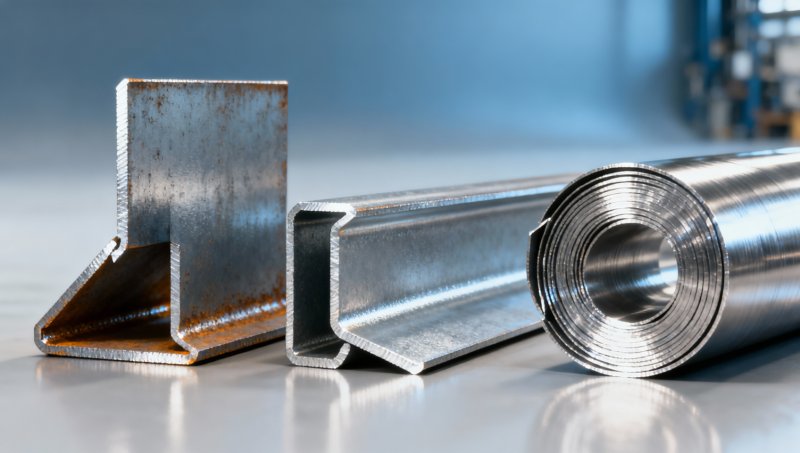
Performance Comparison: Stainless vs. Engineered Alternatives
Selecting the optimal corrosion-resistant plate requires objective evaluation across six measurable dimensions: initial cost, service life expectancy, maintenance frequency, temperature resilience, fabrication flexibility, and compliance readiness. The table below compares four widely specified options under standardized marine-industrial conditions (ISO 9223 C5-M classification).
Key insight: While 316 stainless excels in extreme chemical immersion, HDG and Aluzinc alternatives outperform it in atmospheric and splash-zone applications—particularly when combined with post-fabrication touch-up protocols. At Hongteng Fengda, our certified corrosion-resistant angle bars undergo salt-spray testing per ASTM B117 for 1,000+ hours, validating real-world durability without premium alloy dependency.
Where 202 Stainless Fits In: Niche Performance, Strategic Value
There are scenarios where stainless remains indispensable—not because it’s universally superior, but because its unique metallurgical profile solves specific operational constraints. 202 Stainless Steel Coil exemplifies this precision application logic: an austenitic grade offering 55–60% elongation, yield strength ≥275 MPa, and thermal stability up to 800°C—ideal for dynamic components requiring both ductility and oxidation resistance.
Unlike 304 or 316, 202 substitutes part of its nickel with manganese, achieving comparable corrosion resistance in mild chemical, food processing, and agricultural environments at ~30% lower cost. Its density of 7.8 g/cm³ and modulus of elasticity at 197 GPa ensure predictable structural behavior during roll-forming and bending—critical for conveyor frames, vehicle chassis brackets, and modular kitchen systems.
Hongteng Fengda supplies 202 coils in widths from 610mm to 2000mm, thicknesses 2.5–10.0mm, and surface finishes including BA, 2B, NO.4, and HL—enabling direct integration into OEM production lines without secondary finishing. All batches carry ISO, SGS, and BV certifications, with full traceability down to heat number and mechanical test reports.
Procurement Decision Framework: 5 Criteria That Matter Most
Technical evaluation alone rarely drives final selection—especially in cross-functional procurement decisions involving finance, operations, and safety teams. Based on 12+ years of global project support, we recommend evaluating corrosion-resistant plate using these five weighted criteria:
- Environment Mapping: Classify exposure per ISO 9223 (C1–C5-M) and verify coating thickness requirements—e.g., C5-M demands ≥120 µm Zn or equivalent barrier performance.
- Total Cost of Ownership (TCO): Factor in fabrication labor (stainless requires specialized welding gas and post-weld cleaning), installation time (galvanized parts install 20–30% faster), and lifecycle inspection intervals (every 5 years vs. annual for painted carbon steel).
- Compliance Alignment: Confirm standard coverage: ASTM A36 + A123 for structural HDG; EN 10025-2 + EN ISO 1461 for EU projects; GB/T 700 + GB/T 13912 for domestic Chinese infrastructure.
- Supply Chain Resilience: Assess lead times: standard HDG angle bars ship in 7–15 days from stock; custom stainless orders require 8–12 weeks minimum.
- End-of-Life Considerations: Zinc-coated steels are fully recyclable without alloy segregation; stainless recycling requires precise grade sorting to maintain value.
Why Global Projects Choose Hongteng Fengda
From prefabricated warehouse systems in Saudi Arabia to modular hospital frameworks in Vietnam, Hongteng Fengda delivers corrosion-resistant structural steel that balances technical rigor with commercial pragmatism. Our vertically integrated facility in Jiangsu Province maintains 15,000+ tons monthly production capacity across angle, channel, beam, and cold-formed profiles—with in-house galvanizing, coating, and laser-cutting capabilities.
Every shipment includes third-party mill test reports (MTRs), dimensional inspection certificates, and corrosion test summaries. For complex projects, we provide engineering support including CAD modeling, load-path analysis, and weld procedure specification (WPS) validation—ensuring seamless integration from design through commissioning.
Whether you need 90° angle metal for seismic bracing, custom L-shape angles for solar mounting rails, or certified 202 Stainless Steel Coil for food-grade conveyors, our team works directly with your technical, procurement, and quality teams to align specifications, timelines, and documentation requirements—no intermediaries, no markup layers.
Next Steps: Optimize Your Corrosion Strategy
Corrosion resistance isn’t a binary specification—it’s a system-level decision shaped by environment, economics, and execution capability. Defaulting to stainless steel risks overspending on unneeded performance, while underspecifying exposes projects to premature failure and costly remediation.
Hongteng Fengda helps global buyers make evidence-based choices through free technical consultation, sample kits with certified test data, and rapid quotation turnaround (within 24 business hours for standard items). We serve clients across North America, Europe, the Middle East, and Southeast Asia with stable lead times, consistent quality, and transparent documentation.
Ready to validate your corrosion-resistant plate selection? Contact our engineering sales team today to request a customized comparison report—including cost-per-linear-meter analysis, compliance mapping, and delivery schedule simulation for your next project.
Please give us a message


Please enter what you want to find