For operators and site teams, choosing the right steel profile affects installation speed, structural reliability, and long-term performance.
A cold formed steel channel offers a practical balance of strength, light weight, and dimensional accuracy for many site applications.
This guide explains where it works best, what to check before use, and how supplier selection reduces sourcing and installation risks.
Why a Cold Formed Steel Channel Needs a Practical Checklist
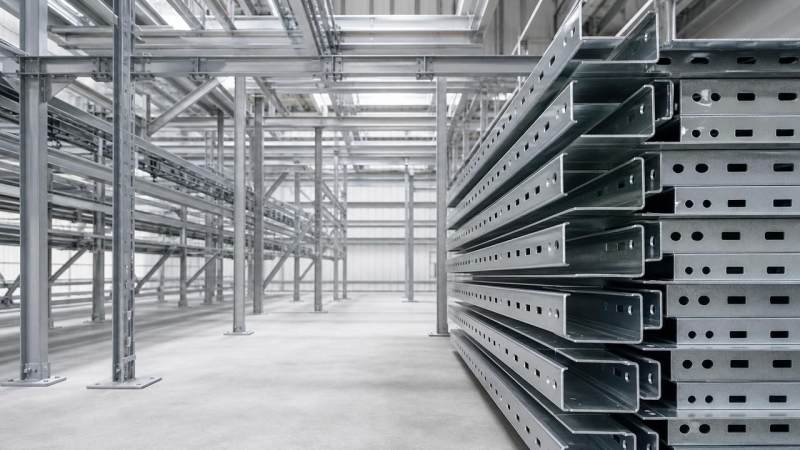
A cold formed steel channel is made by bending steel at room temperature into a precise channel profile.
The process improves dimensional consistency and supports efficient production of repeatable sections for construction and manufacturing use.
However, every project has different load paths, corrosion exposure, fastening methods, and tolerance requirements.
A checklist helps compare technical needs before ordering a cold formed steel channel for framing, bracing, supports, or equipment bases.
It also reduces the chance of selecting a section that looks suitable but performs poorly after installation.
Core Checklist for Selecting a Cold Formed Steel Channel
Use the following points before confirming drawings, quotations, or shipment schedules for a cold formed steel channel order.
- Confirm the load type, including axial force, bending, shear, and vibration, before choosing the channel size and thickness.
- Check span length and support spacing, because longer unsupported spans may require heavier sections or additional bracing.
- Review local code requirements and project specifications before replacing hot rolled sections with cold formed alternatives.
- Match steel grade, yield strength, and coating options to the service environment and expected project life.
- Verify hole positions, slot patterns, end cuts, and tolerances when the channel will connect to prefabricated assemblies.
- Plan the fastening method, including bolts, screws, clamps, or welding, before finalizing edge dimensions and lip design.
- Evaluate transportation, bundle weight, site handling, and storage conditions to prevent deformation before installation.
- Request mill certificates, inspection records, and standard references such as ASTM, EN, JIS, or GB where required.
This checklist is especially useful when a cold formed steel channel is used across repeated floors, frames, or modular units.
Where Cold Formed Steel Channel Works Best
Light Structural Framing
A cold formed steel channel performs well in light structural framing where accuracy and weight control matter.
It is commonly used for wall framing, roof purlins, secondary beams, partition supports, and non-heavy-load skeleton systems.
Its consistent profile helps reduce rework when frames must align with panels, boards, brackets, or mechanical components.
Industrial Supports and Equipment Frames
In industrial facilities, a cold formed steel channel is often selected for cable trays, pipe supports, platforms, and equipment frames.
The channel shape allows easy fastening while keeping material use efficient for medium-duty support systems.
When vibration or impact is present, section thickness, bracing, and connection design should be reviewed carefully.
Modular Construction and Prefabrication
A cold formed steel channel suits modular construction because profiles can be produced with repeatable dimensions and prepared connection details.
Prefabricated walls, container units, service racks, and ceiling systems benefit from stable tolerances and predictable assembly behavior.
For repetitive work, pre-punched holes and fixed lengths can shorten site time and improve installation accuracy.
Interior Fit-Out and Support Rails
A cold formed steel channel also works well for interior support rails, ceiling grids, backing members, and service mounting frames.
These applications usually need clean geometry, manageable weight, and easy fastening rather than extreme load capacity.
Where Extra Review Is Required
A cold formed steel channel is not always the first choice for every structural condition.
Heavy primary beams, high-impact structures, or long-span members may require hot rolled sections or engineered built-up members.
Cold formed profiles have thin walls compared with many hot rolled shapes, so local buckling must be considered.
Connection zones also need attention, because concentrated loads can deform flanges or webs without reinforcement.
In outdoor or humid environments, coating selection becomes critical for any cold formed steel channel exposed to moisture.
Material, Standards, and Related Steel Products
Material selection should match project drawings, design calculations, and the required international standard.
Common references include ASTM, EN, JIS, and GB standards, depending on destination market and engineering requirements.
A reliable supplier can provide channel steel, angle steel, beams, and custom cold formed steel profiles under controlled production.
In some projects, a cold formed steel channel is ordered together with bars, beams, plates, or connection components.
For related fabrication needs, A36 Carbon Steel Round Bar may support construction, manufacturing, and engineering applications.
It is available in A36 material, multiple lengths, and diameters from 5 mm to 2500 mm for different machining needs.
Surface options include oiling, passivation, galvanizing, painting, transparent oil, and anti-rust oil for different storage conditions.
When channels and round bars are sourced together, confirm grade compatibility, documentation, packing method, and shipment schedule.
Application Notes by Project Condition
Dry Indoor Construction
For dry indoor areas, a cold formed steel channel can provide efficient framing with basic surface protection.
Focus on straightness, length tolerance, hole alignment, and compatibility with wall panels or ceiling systems.
Outdoor Exposed Structures
For outdoor use, corrosion control should be reviewed before finalizing any cold formed steel channel specification.
Galvanized surfaces, suitable paint systems, or other protective treatments may be needed for long-term service.
Manufacturing and Assembly Lines
Manufacturing lines often need repeatable brackets, equipment rails, guards, and workbench frames.
A cold formed steel channel helps maintain repeatability when parts are assembled in batches or connected to standard fixtures.
Export and Multi-Site Projects
For export projects, packaging, labeling, marking, and certificate consistency are as important as steel dimensions.
A cold formed steel channel should arrive with clear bundle identification and documents matching the purchase order.
Common Risks Often Missed
Ignoring Local Buckling
Thin-walled channel sections can buckle locally when compression loads are high or edge restraint is insufficient.
Check web depth, flange width, thickness, and bracing before using a cold formed steel channel in compression areas.
Overlooking Connection Strength
Fasteners can tear thin steel if holes are too close to edges or loads are concentrated.
Use washers, plates, reinforced zones, or revised hole patterns when connection loads are significant.
Choosing Price Before Tolerance
Low unit price can create hidden costs when profiles require straightening, re-drilling, or sorting on site.
For a cold formed steel channel, dimensional accuracy often determines installation speed and total installed cost.
Forgetting Surface Damage During Handling
Coated steel can lose protection when bundles are dragged, stacked incorrectly, or stored in wet ground conditions.
Specify packing, lifting points, and storage instructions for every cold formed steel channel shipment.
Execution Advice for Ordering and Installation
- Share drawings, load requirements, hole details, coating needs, and destination standards before requesting a final quotation.
- Ask for tolerance ranges, inspection methods, and sample confirmation when the channel must fit prefabricated parts.
- Compare total cost, including processing, packaging, inland transport, sea freight, and possible site modification work.
- Inspect the first delivered batch against drawings before releasing large-scale installation or repeated production work.
- Store channels on level supports, protect coatings, and avoid water traps between bundled sections.
Hongteng Fengda supports global projects with structural steel manufacturing, export service, and customized steel profile solutions.
Products include angle steel, channel steel, steel beams, cold formed steel profiles, and OEM structural components.
Stable production capacity and strict quality control help reduce sourcing uncertainty for repeated international orders.
Quick Decision Table
Summary and Next Step
A cold formed steel channel works best in applications needing accurate shape, moderate strength, light weight, and efficient installation.
It is a practical choice for framing, support rails, industrial assemblies, modular units, and many secondary structural systems.
Before ordering, confirm load conditions, span, grade, coating, tolerances, connections, packing, and documentation.
For dependable supply, choose a structural steel partner able to provide standard products and customized solutions.
Share project drawings and specifications early to select the right cold formed steel channel and avoid costly site adjustments.
Please give us a message


Please enter what you want to find