Many coil coated steel failures begin long before installation—with the wrong finish, poor environmental matching, or overlooked performance demands. For buyers comparing hrc coil, gi sheet coil, and other coated materials, understanding finish selection is critical to durability, corrosion resistance, cost control, and long-term project reliability across construction, manufacturing, and industrial applications.
In steel-intensive projects, the finish is not a cosmetic add-on. It directly affects corrosion behavior, UV stability, forming performance, repainting frequency, and expected service life. A mismatch between coating system and operating environment can shorten useful life from 15-20 years to less than 5 years in aggressive conditions such as coastal exposure, chemical vapor zones, or high-humidity industrial plants.
For procurement teams, technical evaluators, quality managers, and project leaders, the challenge is rarely just choosing the lowest price per ton. The real issue is selecting a finish that fits substrate type, fabrication process, exposure level, and maintenance expectations. That is where early specification discipline prevents later claims, rework, downtime, and replacement costs.
Why the Wrong Finish Causes Early Coil Coated Steel Problems
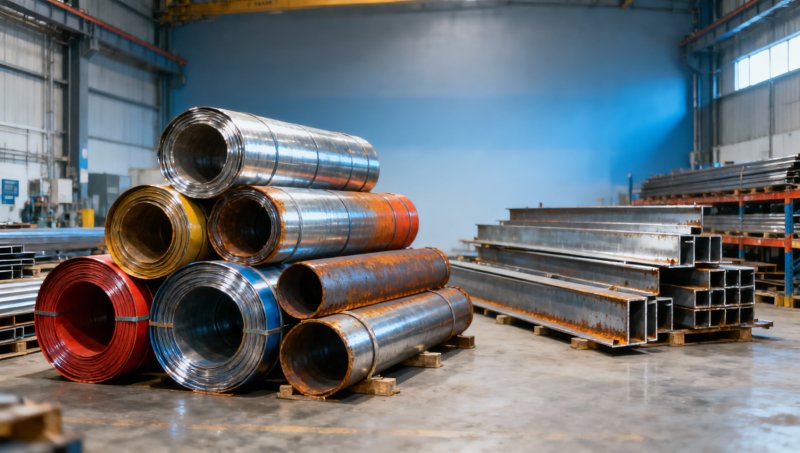
Coil coated steel problems often begin with a specification gap. A buyer may select a standard polyester finish for a roof panel exposed to salt spray, high UV, and temperature swings from -10°C to 45°C, even though that environment may require SMP, PVDF, or a heavier metallic coating system. The initial savings look attractive, but the finish may chalk, fade, crack, or lose barrier protection much earlier than expected.
Another common mistake is treating all galvanized or coated steel as functionally equivalent. HRC coil, GI sheet coil, and prepainted products serve different purposes. Hot rolled coil may require later processing and coating decisions. GI sheet coil provides zinc-based corrosion protection, but the coating mass, forming requirements, and service conditions still matter. Prepainted systems add another layer of selection complexity, including primer chemistry, topcoat thickness, and backside coating requirements.
The failure pattern usually follows 4 stages: early aesthetic change, localized coating damage, substrate exposure, and accelerating corrosion. In practical terms, buyers may first notice gloss loss within 12-24 months, edge rust in 18-36 months, and more serious section degradation after repeated moisture cycles. In load-bearing or semi-structural applications, even small finish failures can create expensive maintenance events.
The table below shows how common finish-selection errors translate into actual operating risks across steel projects.
The key lesson is simple: finish selection must happen before order confirmation, not after production starts. Once the wrong system is on the coil, corrective action becomes slow and costly.
Three hidden variables that buyers often miss
First, fabricated shape matters. Tight bending radii, perforation, punching, and roll forming all increase coating stress. Second, exposure is often mixed rather than uniform. A warehouse roof may face mild conditions inside but severe condensation underneath. Third, maintenance access affects finish choice. If repainting is difficult after installation, a higher-grade finish is often more economical over 10-15 years.
- Check whether the steel will be cut, perforated, hemmed, or cold formed after coating.
- Define exposure level: indoor dry, outdoor rural, urban, industrial, coastal, or chemical.
- Confirm expected service interval, such as 5 years, 10 years, or more than 15 years.
How to Match Finish Type to Environment and Steel Application
Choosing the right finish starts with environmental classification. In many steel projects, the coating system should be selected by combining 5 factors: substrate type, humidity level, chemical exposure, solar radiation, and maintenance accessibility. A low-rise storage building in a dry inland area may perform well with a standard system, while a processing plant near the sea usually needs stronger metallic and organic protection.
In practice, buyers should compare not only price per metric ton, but also expected coating life, recoating interval, and the risk cost of shutdown or replacement. A finish that costs 8%-15% more upfront can often reduce repainting frequency and service disruption over a 10-year project cycle. This is especially relevant for roofing sheets, wall cladding, purlins, brackets, and formed sections exposed to rainwater retention or airborne contaminants.
The following comparison provides a practical guide for evaluating common finish options in steel applications.
The point is not that one finish is universally better. It is that the right finish must fit the use case. For example, sheet products for visible cladding prioritize color retention and weathering, while structural secondary members often emphasize corrosion reserve, edge protection, and forming compatibility.
Recommended evaluation sequence
- Identify the steel component and whether it carries load, supports panels, or acts as a bracket.
- Classify exposure by moisture, salinity, dust, chemicals, and UV.
- Confirm fabrication steps such as punching, cold bending, or welding.
- Set a realistic maintenance cycle, such as inspection every 6-12 months.
- Request coating and substrate details in the purchase specification, not only in general drawings.
Why environment matching matters for global buyers
Global sourcing requires extra caution because the same steel profile may be used in Canada, the Middle East, Europe, or Southeast Asia under very different climates. Hongteng Fengda supports international buyers by aligning structural steel products and customized solutions with ASTM, EN, JIS, and GB-oriented requirements, helping reduce sourcing risk when specification language varies across markets.
Finish Selection Is Also a Structural Decision in Formed Steel Components
Many buyers separate “coating” from “structure,” but in real fabrication they interact closely. Formed steel components, purlins, wall beams, light roof members, and brackets experience cutting, bending, and fastener contact points that can concentrate stress on the finish. If the finish cracks during shaping or fails at edges, corrosion can begin even when the base steel grade is correct.
This is especially relevant for cold formed profiles used in workshops, manufacturing buildings, and support frames. In such cases, substrate grade, dimensional tolerance, and coating choice should be reviewed together. For example, a profile produced from Q235B, Q345B, S275, S355, A36, or A572 may satisfy the mechanical requirement, but the operating life still depends on whether the finish can withstand the installation environment and post-processing steps.
A practical example is Z-beam used in steel structure construction purlins, wall beams, lightweight roofs, brackets, and mechanical columns. With thicknesses from 6-25mm, lengths of 2-12m or customized, and tolerance around ±1%, such components may be supplied in perforated or non-perforated versions. Where galvanized coated surfaces are specified, buyers should verify not only the steel grade but also how the coating performs after roll forming and during long outdoor service.
In export projects, details such as CE, SGS, BV, or ISO-related documentation, packaging condition, and moisture protection during transport can also affect finish quality at delivery. A good coating can still be compromised by poor storage for 30-60 days in humid containers if separation, ventilation, and handling are not controlled.
What technical teams should verify before approval
- Base material grade and whether it matches load design and fabrication method.
- Thickness range and tolerance, such as 6-25mm and ±1%, for fit-up consistency.
- Perforated versus non-perforated configuration and coating exposure at edges.
- Whether silver or zinc appearance indicates the actual protection system specified in the order.
Mid-project changes create the highest risk
One of the costliest scenarios is changing the finish after shop drawings are approved. A switch from one coated solution to another can affect lead time, bending behavior, fastener compatibility, and inspection criteria. For project managers and financial approvers, locking specification before production is usually less expensive than handling site-level replacement, especially for large-batch structural members.
Quality Control Checks That Prevent Coated Steel Claims
Quality control for coil coated steel should begin at 3 points: incoming material review, in-process verification, and pre-shipment inspection. Problems such as uneven film build, adhesion weakness, edge damage, surface contamination, and mismatched gloss are easier to catch before installation than after the steel reaches site. For distributors and project owners, these checks reduce dispute probability and improve batch traceability.
A workable inspection routine does not need to be complicated. In many B2B steel orders, 6 core items are enough to control most coating-related claims: substrate grade confirmation, coating description, dimensional tolerance, surface condition, packaging integrity, and marking traceability. Where applicable, buyers may also request salt-spray references, adhesion verification, bend performance, or dry film thickness checks according to the relevant order standard.
The table below summarizes a practical inspection checklist used by many steel buyers before accepting coil coated or formed steel products.
The most important conclusion is that inspection should be tied to use scenario. A light manufacturing beam, roof support, or wall member does not need the same emphasis as exposed architectural panels, but both need documented acceptance criteria before shipment.
Four field practices that extend finish life
- Store bundles off the ground and keep them dry; trapped water can stain zinc-coated surfaces within days.
- Avoid dragging members during unloading; edge abrasion often becomes the first corrosion point.
- Seal or treat cut edges where required by project specification.
- Schedule inspections every 6-12 months in coastal or industrial environments.
Procurement Advice, Common Misunderstandings, and Supplier Coordination
The biggest procurement mistake is assuming that finish selection can be delegated entirely to price comparison. In reality, coated steel purchasing is a cross-functional decision involving engineering, quality, operations, finance, and sometimes local installation teams. A low quoted cost can become expensive if the finish creates repainting, labor interruption, or premature replacement after only a few seasonal cycles.
A better sourcing method is to request a complete technical-commercial review before purchase order release. This review should cover substrate, profile geometry, finish type, exposure assumptions, documentation, packing, delivery schedule, and inspection points. For many export steel projects, clarifying these 7 items in advance saves more money than negotiating a small unit-price reduction.
As a structural steel manufacturer and exporter from China, Hongteng Fengda supports buyers across North America, Europe, the Middle East, and Southeast Asia with standard and customized structural steel solutions. With stable production capacity, modern manufacturing facilities, and control aligned to ASTM, EN, JIS, and GB-oriented requirements, the value is not only in supply volume but in reducing sourcing uncertainty from specification to shipment.
Common misunderstandings to avoid
- “Galvanized” alone is enough information. In fact, coating mass, finish system, and use environment still need definition.
- Any painted steel can replace coil coated steel. Fabrication method and adhesion performance may differ significantly.
- Indoor applications are always low risk. Condensation, chemical vapor, and washdown cycles can still create severe corrosion.
- Packaging is only a logistics issue. For coated steel, packaging quality directly affects arrival condition.
FAQ: What buyers ask before placing an order
How do I choose between hrc coil, gi sheet coil, and coated formed sections? Start with end use. HRC coil is usually a base material for further processing, GI sheet coil suits corrosion-resistant sheet applications, and formed coated sections fit structural support roles. The right choice depends on whether the part is decorative, structural, exposed, or post-fabricated.
How long is a typical lead time? For standard structural steel and common formed sections, lead times often fall within 2-6 weeks depending on quantity, customization, and export packing requirements. Special finish or OEM configurations may require additional production coordination.
Which indicators matter most during approval? Focus on 5 areas: steel grade, dimensions, finish description, inspection method, and packing condition. If one of these is vague, future claim risk rises sharply.
When should a higher-grade finish be specified? It is usually justified in coastal, chemical, high-humidity, high-UV, or difficult-to-maintain installations, especially when the planned service period exceeds 10 years.
The wrong finish is rarely a minor detail. It affects service life, maintenance budget, installation reliability, and the credibility of the entire steel procurement decision. By matching coating system to environment, fabrication method, and inspection discipline, buyers can avoid many of the coil coated steel problems that appear only after the project is already in operation.
If you are evaluating structural steel sections, cold formed profiles, or customized export steel solutions, Hongteng Fengda can help you review specifications, reduce sourcing risk, and align product selection with real project conditions. Contact us now to discuss your application, request technical details, or get a customized solution for your next steel project.
Please give us a message


Please enter what you want to find