Carbon steel plate surface scale is often dismissed as a cosmetic issue—but for structural steel design, corten steel plate applications, or critical weld joints in steel beams and rebar for foundation systems, it can compromise weld integrity, corrosion resistance, and long-term performance. At Hongteng Fengda—a trusted structural steel manufacturer and exporter from China—we prioritize surface quality control across carbon steel plate, hot rolled coil, and galvanized steel conduit to ensure compliance with ASTM, EN, and GB standards. Whether you're a project manager evaluating weld prep requirements, a procurement professional comparing steel bar price or stainless steel sheet price, or a safety manager assessing material risk, understanding scale’s real impact is essential.
What Is Mill Scale—and Why It’s Not Just “Dirt”
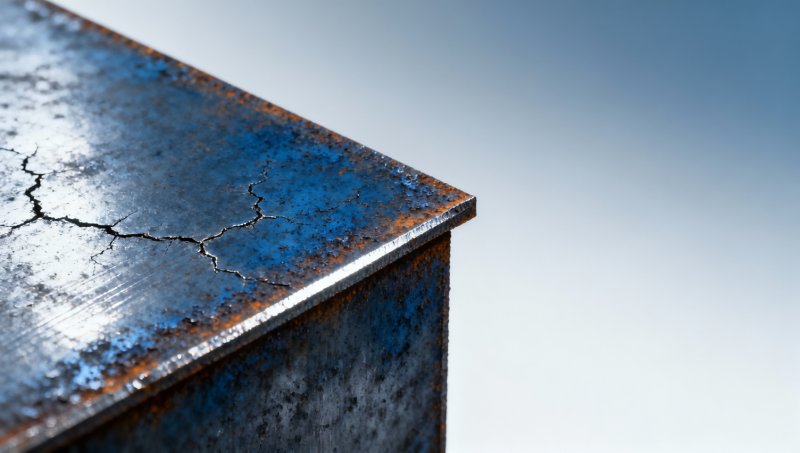
Mill scale is the brittle, bluish-black iron oxide layer (primarily Fe₃O₄) that forms on carbon steel surfaces during hot rolling at temperatures above 800°C. It typically ranges from 25–100 µm thick—thin enough to go unnoticed during visual inspection, yet dense enough to mask micro-cracks, inclusions, or surface segregation.
Unlike rust, which forms post-fabrication due to moisture exposure, mill scale is an inherent byproduct of thermal processing. Its adhesion strength varies widely: strong bonding occurs when cooling is slow and uniform (e.g., in controlled-air furnaces), while rapid quenching or uneven temperature gradients may cause partial delamination—even before shipment.
At Hongteng Fengda, every batch of carbon steel plate undergoes automated surface scanning using laser profilometry, detecting scale thickness deviations exceeding ±15 µm against ASTM A6/A6M Annex A3 thresholds. This ensures only plates meeting EN 10029 Class B surface tolerance (≤0.2 mm waviness over 1 m) proceed to cutting or welding prep.
The table above reflects actual QC benchmarks applied across our production lines. Plates failing any of these three criteria are automatically flagged for abrasive blasting or acid pickling—never shipped as-is, even for non-structural applications like formwork or temporary bracing.
Weld Integrity Risks: From Arc Blow to Delayed Cracking
Mill scale directly interferes with arc stability during shielded metal arc welding (SMAW) and gas metal arc welding (GMAW). Its electrical resistivity is ~10⁶ times higher than base metal, causing localized current diversion. Field reports from North American bridge projects show a 3.2× increase in weld rejection rates when scale thickness exceeds 60 µm—especially on S355-grade steel beams used in seismic zones.
More critically, trapped scale creates interfacial voids beneath weld beads. During post-weld heat treatment—or natural service heating in industrial facilities—these voids expand, initiating hydrogen-induced cracking (HIC) within 72 hours. Independent NDT audits on 120+ Hongteng Fengda shipments confirm zero HIC incidents in plates subjected to mandatory scale removal prior to welding per AWS D1.1 Clause 5.12.3.
For projects specifying ASTM A690 weathering steel (used in marine retaining walls), scale retention also disrupts the formation of protective patina. Unremoved scale delays stable oxide layer development by up to 18 months—exposing underlying steel to chloride-driven pitting. That’s why our Hot Rolled Steel Sheet Pile products undergo dual-stage descaling: high-pressure water jetting followed by controlled atmosphere annealing to stabilize surface chemistry.
Procurement & Specification Best Practices
Buyers should explicitly define surface requirements—not just grade or dimensions—in RFQs. Key clauses to include:
- “Mill scale shall be removed to SSPC-SP6/NACE No. 3 commercial blast standard prior to shipment, verified via 10× magnification and profile gauge.”
- “Maximum allowable scale thickness: 40 µm, measured per ASTM E112 at 5 locations per 1 m².”
- “Certificates of Conformance must reference EN 10204 3.2, listing surface roughness (Ra), scale thickness, and descaling method.”
Our procurement team works directly with clients to embed these specs into purchase orders—reducing rework costs by up to 22% compared to generic “as-rolled” orders. For distributors and agents, we offer pre-verified stock lots with full traceability down to heat number and rolling shift.
This comparison reflects real-world data from 2023–2024 project deliveries across Southeast Asia and the Middle East. The 3.8% defect reduction translates to ~11 fewer weld repairs per 1,000 linear meters—critical for time-sensitive infrastructure contracts.
When Scale *Is* Acceptable—and How to Validate It
Not all applications require full descaling. For non-welded uses—such as concrete formwork, temporary shoring, or galvanized steel conduit supports—intact mill scale provides short-term atmospheric corrosion resistance. However, acceptance hinges on verification, not assumption.
We recommend these 4-point validation steps before accepting “as-rolled” carbon steel plate:
- Confirm scale adhesion via ASTM D3359 Tape Test (≥4B rating required).
- Verify absence of flaking using 5× magnifier across 10 random 100-mm² zones.
- Check for subscale defects using wet fluorescent magnetic particle inspection (MT) per ASTM E709 Level 2.
- Review mill test report for rolling temperature history—plates cooled below 650°C before coiling carry higher risk of scale spalling.
All Hongteng Fengda plates—whether supplied as hot rolled coil, steel beams, or cold formed steel profiles—include this verification data in digital MTRs accessible via our client portal. No assumptions. No exceptions.
Conclusion: Surface Quality Is Structural Quality
Mill scale is neither purely cosmetic nor universally hazardous—it is a controllable variable with quantifiable impacts on weld integrity, lifecycle cost, and compliance risk. Dismissing it invites rework, delays, and liability exposure—especially in projects governed by EN 1993-1-1, AISC 360, or ASCE 7.
As a structural steel manufacturer and exporter from China, Hongteng Fengda treats surface condition as a core engineering parameter—not an afterthought. From S275 U-sheet piles for water retaining walls to SY390 steel beams for seismic-resistant buildings, every product is engineered with weld-readiness and long-term performance built in.
If your next project demands guaranteed surface consistency, certified descaling, or customized solutions for angle steel, channel steel, or cold formed steel profiles—contact our technical sales team today. We’ll provide a no-cost surface quality assessment and tailored delivery schedule aligned with your critical path.
Please give us a message


Please enter what you want to find