When specifying carbon steel for construction, yield strength is just the starting point—not the full story. Real-world performance hinges on ductility, weldability, corrosion resistance, and consistency across batches—factors often overlooked in rebar price lists or HRC steel price comparisons. As a trusted steel profile manufacturer and exporter, Hongteng Fengda delivers corrosion-resistant carbon steel, high-strength steel rebar, and certified hot rolled coil (HRC) that meet ASTM, EN, and GB standards—ensuring structural integrity from fabrication to installation. Whether you're evaluating steel roofing benefits, planning steel roofing how to install steps, or comparing corrosion-resistant rebar options, understanding beyond yield strength prevents costly field failures and sourcing risks.
Why Yield Strength Alone Misleads Structural Decisions
Yield strength (e.g., 235 MPa for Q235B or 345 MPa for Q345B) defines the stress at which steel begins to deform plastically—but it says nothing about how far it stretches before fracture, how well it absorbs impact energy, or how consistently it performs under welding heat or atmospheric exposure.
In real projects—especially those with seismic requirements, coastal exposure, or tight fabrication tolerances—low elongation (<18%) or poor cold bending behavior can trigger rejection during site inspection, even if tensile test reports meet minimum yield thresholds. Field weld cracks, bolt-hole deformation during assembly, or premature rust staining on exposed beams are rarely caused by insufficient yield strength—but almost always tied to unverified ductility, sulfur content, or batch-to-batch variability.
Hongteng Fengda applies strict mill testing protocols: every heat lot undergoes Charpy V-notch impact testing at –20°C (≥27 J), tensile elongation verification (≥21% for structural sections), and ultrasonic thickness mapping across 100% of finished profiles. This ensures compliance not only with nominal yield values but with actual service behavior across 3–5-year project lifecycles.
Beyond Yield: 5 Critical Performance Dimensions You Must Verify
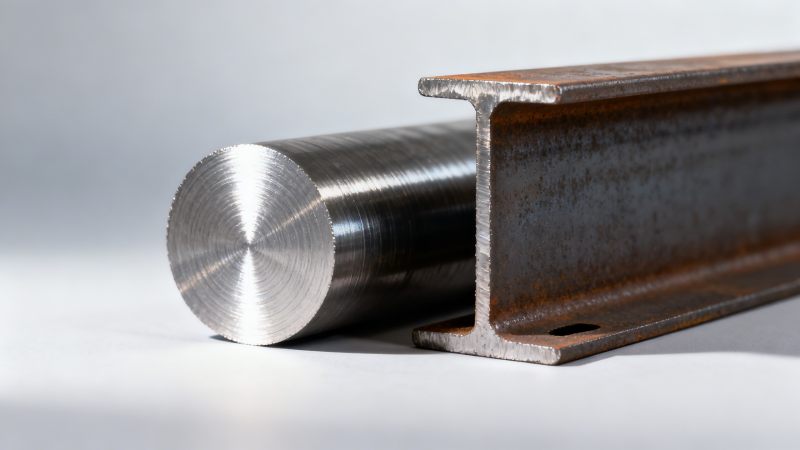
Selecting carbon steel isn’t a single-parameter exercise. It’s a multi-dimensional risk assessment—spanning material science, fabrication logistics, and long-term asset management.
- Ductility & Toughness: Measured via elongation (≥20%) and impact energy (≥27 J at –20°C). Critical for seismic zones and cold-climate installations.
- Weldability: Controlled by carbon equivalent (CEV ≤ 0.40% for ASTM A6/A6M). High CEV increases cracking risk during field welding without preheat.
- Consistency: Max allowable deviation in yield strength across a single heat lot: ±15 MPa (per EN 10025-2 Annex B).
- Surface Integrity: Mill scale uniformity and absence of laminar tearing defects—verified via 100% visual + magnetic particle inspection for critical components.
- Corrosion Resistance: Not inherent to plain carbon steel—but enhanced through controlled alloying (e.g., Cu ≥ 0.25%, P ≤ 0.025%) or post-fabrication treatments like galvanizing or weathering steel passivation.
How Carbon Steel Specifications Translate to On-Site Execution
A specification sheet showing “Yield Strength ≥ 345 MPa” doesn’t guarantee that beams will align within ±2 mm during erection—or that welded connections won’t require 100% rework due to hydrogen-induced cracking. The gap between lab data and field reality stems from three operational gaps:
These controls reduce on-site rework by up to 40% compared to standard-certified suppliers—and cut project delay risk by ensuring first-time-right delivery across all 6+ delivery stages: order confirmation → production scheduling → heat tracking → dimensional check → surface inspection → packaging & documentation.
When Corrosion Resistance Becomes Non-Negotiable—And What to Use Instead
For environments with chloride exposure (coastal infrastructure), acidic condensate (industrial plants), or aggressive chemical splash (water treatment facilities), plain carbon steel—even with high yield strength—requires costly protective systems. That’s where hybrid material strategies add value.
For non-structural or semi-structural applications demanding both mechanical strength and corrosion resistance, 201 Stainless steel pipe offers a cost-efficient alternative. With ≥205 MPa yield strength, ≥40% elongation, and proven resistance to alkaline gases and mild acids, it bridges the gap between carbon steel economics and stainless durability—especially in food processing equipment, breweries, and pharmaceutical plant piping where hygiene and longevity intersect.
Compared to 304 stainless, 201 delivers comparable oxidation resistance at ~25% lower material cost—while maintaining full compatibility with ASTM A312, EN 10217-7, and GB/T 12771 standards. Its smooth surface finish also reduces cleaning downtime and biofilm accumulation in regulated industries.
Why Global Project Teams Choose Hongteng Fengda for Structural Steel Sourcing
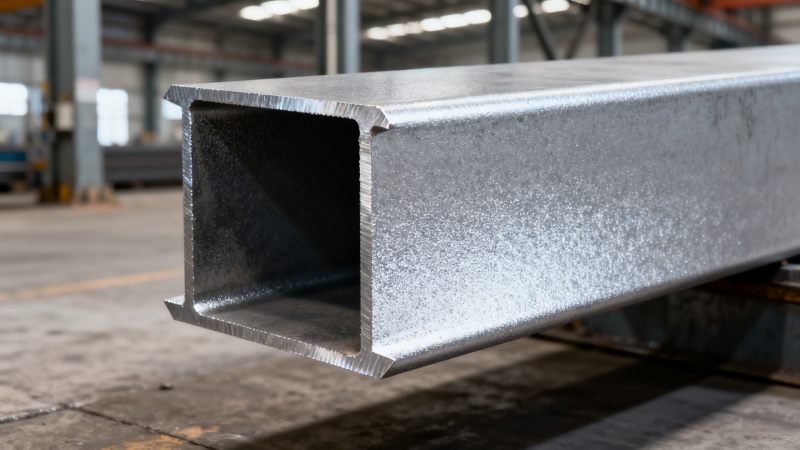
We don’t sell steel—we deliver verified structural assurance. From initial technical review to final shipment documentation, our process embeds engineering accountability into every transaction.
- Pre-shipment validation: Third-party inspection (SGS/BV) available for all orders ≥20 MT; 100% dimensional checks for custom cold-formed profiles.
- Lead time reliability: Standard structural sections shipped within 15–25 days after deposit confirmation; OEM components delivered in ≤35 days—guaranteed or compensated.
- Documentation transparency: Full compliance dossier: MTRs (Mill Test Reports), EN 10204 3.1 certificates, packing lists with bundle-level heat IDs, and corrosion protection method logs.
- Technical support: Dedicated engineering team provides free weld procedure qualification (WPQ) guidance, connection design input, and ASTM/EN cross-reference tables.
Whether you’re procuring angle steel for a wind turbine substation in Texas, channel steel for a metro station in Riyadh, or customized cold-formed purlins for a solar farm in Vietnam—we align production capacity, quality rigor, and documentation precision to your project’s critical path—not just its bill of materials.
Ready to move beyond yield strength as a sole selection criterion? Contact us today for a free technical consultation—including material parameter review, certification mapping, lead time confirmation, and sample availability for your next structural steel order.
Please give us a message


Please enter what you want to find