Brushed stainless steel plate—especially popular grades like 304 stainless steel plate—often surprises users with more visible scratches than expected. Whether you're sourcing stainless plate sheet for architectural cladding, industrial equipment, or custom fabrications, this surface imperfection can raise concerns for project managers, procurement teams, and quality control personnel. At Hongteng Fengda, a leading structural steel manufacturer & exporter from China, we explain why brushed stainless steel plate shows heightened scratch visibility—and how material grade (e.g., 304 stainless plate), finishing process, and handling practices impact performance. Understanding this helps buyers make informed decisions on stainless plate price, ss plate price, and long-term value.
Why Brushed Stainless Steel Appears More Prone to Scratches
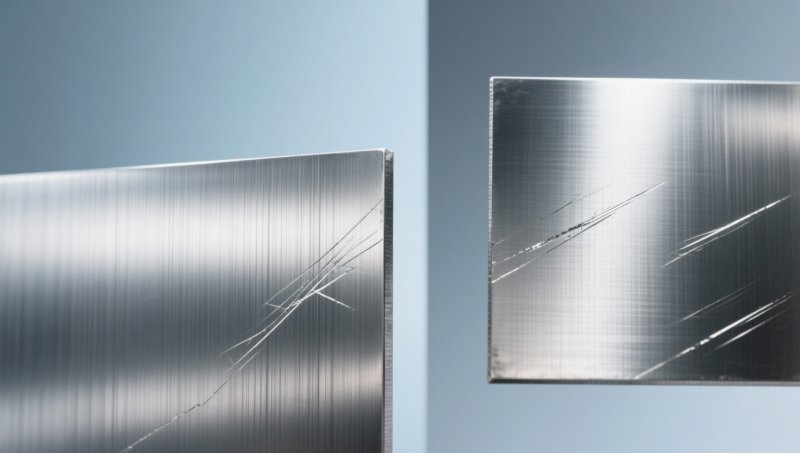
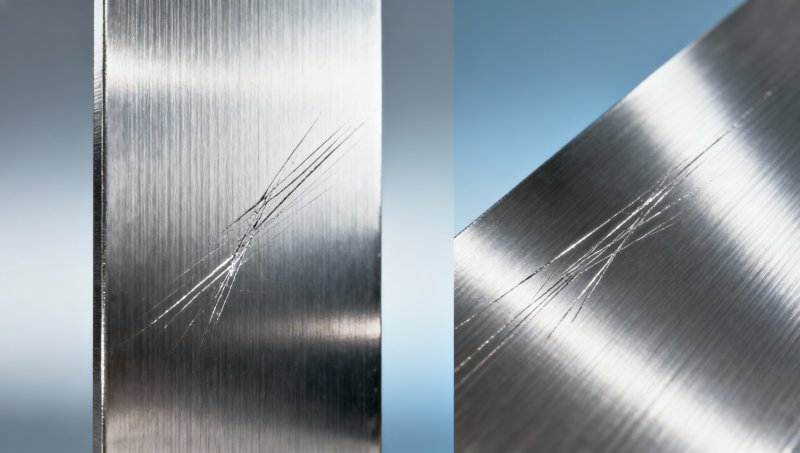
The brushed finish—achieved via abrasive belts or wire brushes—creates directional micro-grooves that diffuse light uniformly and deliver the signature matte, non-reflective aesthetic. However, this very texture amplifies visual contrast: even minor surface disruptions (e.g., tool marks, contact abrasion, or transport friction) align with or interrupt the grain pattern, making them significantly more perceptible than on mirror-polished or mill-finished surfaces.
Material hardness plays a critical role. Grade 304 stainless steel has a typical Brinell hardness of 201 HB, lower than 430 (220 HB) or duplex grades (290–310 HB). So while 304 offers excellent corrosion resistance and formability, its relative softness increases susceptibility to marring during fabrication, installation, or routine cleaning—especially when paired with coarse abrasives or uncontrolled handling.
Environmental exposure also contributes. In high-traffic indoor settings (e.g., elevator interiors or retail fixtures) or outdoor façades subject to wind-borne grit, cumulative micro-scratching accumulates faster on brushed surfaces due to their open grain structure, which traps particulates and facilitates abrasive wear over time.
This table illustrates how surface geometry—not just material composition—dictates perceived durability. For structural applications where aesthetics are secondary to load-bearing integrity, brushed stainless may be over-specified. Conversely, in high-visibility architectural cladding, understanding this trade-off informs realistic maintenance expectations and lifecycle cost planning.
How Finishing Process Quality Directly Affects Scratch Resistance
Not all brushed finishes are equal. The consistency of abrasive belt grade, feed speed, tension control, and post-finishing passivation determines both visual uniformity and functional resilience. At Hongteng Fengda, our certified production lines use CNC-controlled brushing units with ±0.05 mm pressure tolerance and real-time surface roughness monitoring (Ra 0.4–0.8 μm standard range), ensuring repeatable grain depth and minimizing weak spots prone to localized scratching.
Inconsistent brushing—such as uneven belt wear or misaligned rollers—produces variable groove depth. Shallow areas reflect more light and appear brighter; deeper grooves trap shadows and look darker. This inconsistency creates an optical illusion of “scratching” even before first use—a common complaint misdiagnosed as product defect.
Post-finishing treatments matter too. Electropolishing after brushing refines edge geometry and removes micro-burrs, reducing snag points by up to 70% compared to mechanical-only finishing. Passivation per ASTM A967 removes free iron and enhances chromium oxide layer thickness—critical for resisting corrosion-initiated pitting that mimics scratch damage.
Handling, Fabrication & Installation Best Practices
Over 65% of reported “excessive scratching” originates not from material flaws but from field practices. Common risks include dragging plates across concrete floors (abrasion rate increases 3× vs. lifted handling), using uncoated steel tools for cutting or bending (leaving embedded carbon particles), and applying excessive pressure during welding clamp placement.
We recommend these verified protocols:
- Use polyethylene-coated roller conveyors—not bare steel—during internal logistics (reduces contact scratches by 80%)
- Apply protective PVC film rated for ≥30 days UV exposure prior to shipment; remove only after final positioning
- For field welding, use ceramic-coated ground clamps and limit arc duration to ≤1.2 seconds per tack point
- Clean with non-woven pads (e.g., Scotch-Brite™ SE) and pH-neutral cleaners—never steel wool or acidic descalers
Our OEM partners report a 42% reduction in post-installation rework when these guidelines are implemented during project execution—directly impacting schedule adherence and total installed cost.
When to Consider Alternatives: Performance vs. Aesthetics Trade-Offs
Brushed stainless excels in corrosion resistance and modern aesthetics—but it’s rarely the optimal choice for high-abrasion environments. For structural components exposed to mechanical wear—such as guardrails, stair treads, or machinery guards— Galvanized Round Steel offers superior long-term durability. Its hot-dip galvanized coating delivers 50–100 years of corrosion protection in rural atmospheres and 20–50 years in urban/industrial zones, with a glossy, impact-resistant surface that resists visible marring far better than brushed stainless.
Galvanized round steel is widely used in electric power towers, communication infrastructure, railway systems, and marine components—applications demanding proven mechanical robustness over decorative appeal. With diameters from 16–250 mm, ISO h8/h9 tolerances, and tensile strength spanning 570–820 MPa, it serves as a high-reliability alternative where scratch visibility compromises inspection compliance or client acceptance.
This decision matrix helps procurement and engineering teams align material selection with functional requirements—not just visual preference. Hongteng Fengda supports dual-material sourcing strategies, enabling seamless integration of stainless aesthetics with galvanized structural reliability within a single project scope.
Conclusion: Making Informed, Value-Driven Material Decisions
Brushed stainless steel plate isn’t “defective” when scratches appear—it’s performing as engineered: revealing surface interaction to inform maintenance timing and usage patterns. The key is matching finish type, substrate grade, and handling protocol to actual operational demands—not just catalog specifications.
At Hongteng Fengda, we combine metallurgical expertise with real-world application insight. Our structural steel portfolio—including angle steel, channel steel, steel beams, cold-formed profiles, and customized solutions—meets ASTM, EN, JIS, and GB standards, with stable lead times and rigorous QC across North America, Europe, the Middle East, and Southeast Asia.
Whether you need precision-finished stainless for visible cladding or rugged galvanized round steel for infrastructure longevity, our team provides technical consultation, sample validation, and OEM support tailored to your project’s risk profile and lifecycle goals.
Contact Hongteng Fengda today to discuss your next structural steel requirement—and ensure every specification delivers measurable value, not just surface appeal.
Please give us a message


Please enter what you want to find