Beam weight miscalculations can lead to costly design issues, procurement delays, and safety risks. In this guide, we explain the most common beams weight errors to avoid, helping engineers, buyers, and project teams make better decisions when selecting steel beams, Q235 steel, S235JR steel, and related structural products for reliable project performance.
Why beam weight errors happen so often in steel projects
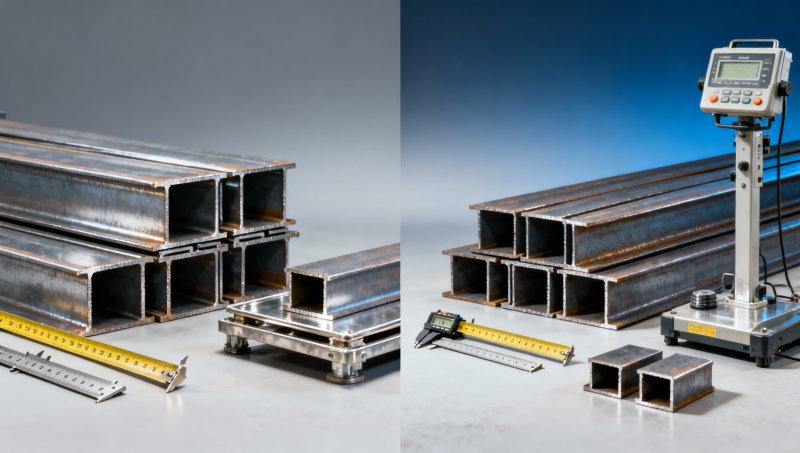
Beam weight looks simple on paper, but in real steel procurement and fabrication, errors usually appear at the intersection of design assumptions, section standards, and supply chain communication. A buyer may compare theoretical mass from one standard with actual delivered mass from another. An engineer may calculate based on nominal dimensions, while the workshop prices according to available stock lengths. In projects with 2–4 approval stages, even a small mismatch can spread from budgeting to installation.
For structural steel users, the problem is not only math. It also involves grade selection, beam profile type, coating, cutting allowance, and length tolerance. For example, an I beam, H beam, channel, or custom cold formed profile may all be called a “beam” in loose communication, yet their unit weight per meter differs significantly. When the project team uses Q235 steel in one document and S235JR steel in another without confirming the exact standard basis, confusion becomes likely.
This matters to multiple decision makers. Procurement teams care about tonnage and budget control. Technical evaluators care about section properties and load paths. Quality and safety teams care about compliance with ASTM, EN, JIS, or GB references. Finance approvers need confidence that the quoted tonnage reflects usable material, not hidden waste from cutting, splicing, or over-ordering by 3%–8%.
At Hongteng Fengda, global buyers often ask the same practical question: why does the weight in the drawing differ from the supplier quote? In most cases, the issue is not a single mistake. It is a chain of assumptions that were never aligned early enough. That is why beam weight review should happen before quotation lock, before production release, and again before shipment documentation.
The 4 most common sources of mismatch
- Using theoretical weight tables from one standard while purchasing profiles manufactured to another standard with different web or flange dimensions.
- Calculating only net design length and ignoring trim loss, cut allowance, end preparation, and connection details.
- Mixing beam type names, such as I beam and H beam, without checking exact section designation and unit mass per meter.
- Assuming all steel grades with similar strength designations have identical density treatment and commercial supply conditions in quotations.
Quick comparison of where beam weight errors start
The table below helps project teams identify where beam weight errors typically enter the process and which function should review them first.
A useful rule is to review beam weight at least 3 times: during design confirmation, before purchase order release, and before dispatch. That simple discipline reduces downstream disputes and helps every stakeholder work from the same unit basis.
Which beam weight mistakes create the biggest cost and safety risks?
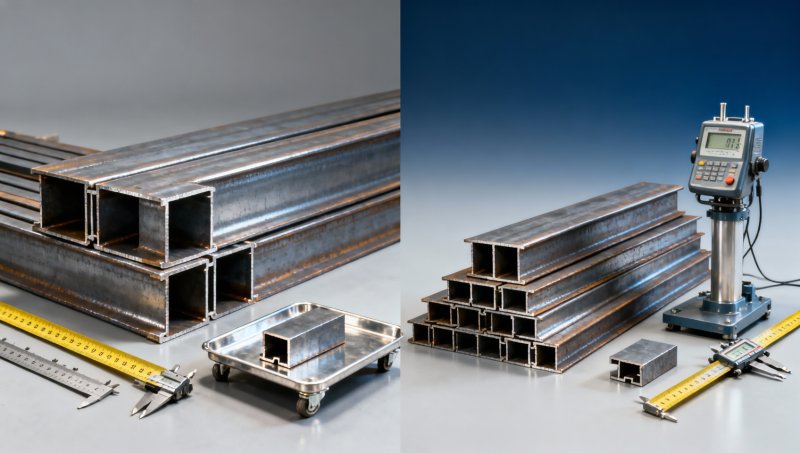
Not every beam weight error has the same impact. Some only affect freight budgeting. Others influence load calculations, crane planning, connection detailing, and even erection sequencing. In heavy-duty steel structures, a mistake in the unit weight of a major member can alter transport planning, lifting equipment selection, or material takeoff by several tons across one project package.
One frequent error is confusing theoretical section weight with delivered fabricated weight. Theoretical weight usually reflects standard profile geometry only. Delivered fabricated weight may include stiffeners, end plates, weld metal, or surface treatment. If the team budgets only the first number, the difference may appear later as “unexpected” tonnage, even though it is a normal result of fabrication scope.
Another risk appears when beam dimensions are rounded too early. A project may use a convenient estimate in the early stage, but if that estimate remains unchanged into procurement, the final order can be wrong. Even a modest deviation in kg/m becomes meaningful across 6 m, 8 m, or 12 m stock lengths and across dozens or hundreds of pieces. This is especially relevant in industrial plants and long-span structures where section counts are high.
From a safety perspective, the most serious issue is not paying for excess steel. It is underestimating member self-weight in design coordination, handling, or installation. Temporary supports, lifting plans, and connection checks all depend on accurate mass assumptions. For project managers, this means beam weight verification is both a technical control point and a schedule protection measure.
High-impact errors to review first
1. Section designation confusion
A similar-looking section name does not guarantee the same dimensions. Regional standards can define different flange widths, web thicknesses, and radii. Always confirm the exact designation, standard source, and unit weight per meter before issuing an RFQ.
2. Net length versus purchasing length
Designers often think in clear span or centerline dimensions. Mills and fabricators often think in raw material lengths such as 6 m or 12 m. The conversion from net requirement to purchasable length can change cost, nesting efficiency, and scrap ratio.
3. Ignoring accessories and connection steel
Base plates, splice plates, brackets, stiffeners, and cleats are often omitted from early weight planning. In some packages, these items add a meaningful percentage to the shipped tonnage and should be listed separately for budget control.
In reinforced concrete and composite structure packages, beam weight review should also connect to reinforcement planning. For high-load zones, project teams may combine steel beams with seismic reinforcement solutions such as HRB500 Rebar. This hot ribbed steel rebar is used in building structures subjected to significant loads, super high-rise buildings, long-span bridges, and heavy-duty industrial plants, with common diameters from φ6 to φ50 and supply lengths such as 1 m, 4 m, 6 m, 8 m, and 12 m.
For technical teams, that integration matters because incorrect beam weight assumptions can affect not only steel frame takeoff but also the surrounding reinforcement, anchorage detailing, and seismic performance review. When projects require ASTM, GB, JIS, DIN, bs, or AiSi reference compatibility, early coordination between beam sections and reinforcement specifications helps avoid scope gaps and re-approval cycles.
How should buyers and engineers verify beam weight before ordering?
A reliable procurement process does not rely on one drawing note or one supplier spreadsheet. It uses a repeatable verification method. In steel sourcing, the most practical approach is a 5-point check: confirm section type, confirm standard, confirm unit mass, confirm length basis, and confirm fabrication additions. This takes little time compared with the cost of a revised purchase order or delayed shipment.
For overseas buyers sourcing from China, one more control point matters: alignment between inquiry language and manufacturing language. If your internal team uses one naming convention while the factory uses another, ask for a section list with dimensions and kg/m in writing. This is especially important for standard and OEM structural steel components, where custom machining or punching changes the practical shipping weight.
Hongteng Fengda supports this review by matching product specifications with project requirements before mass production. For buyers in North America, Europe, the Middle East, and Southeast Asia, that means checking standard references, workable lead time, and realistic production scope before tonnage is locked. In many cases, this early clarification reduces sourcing risk more effectively than simply choosing the lowest initial quote.
The next table provides a practical beam weight verification guide that can be used by purchasing teams, project managers, QC staff, and distributors comparing multiple offers.
Using this table during supplier comparison creates a common review framework. It also helps finance and management teams understand why two quotations with similar beam sizes may still show different total weights, freight estimates, or lead times.
A practical 4-step verification workflow
- Collect the beam schedule, drawings, and required standard references in one document set.
- Check every major section against an approved unit weight table and note the length basis.
- Add fabrication extras and identify whether the quote is for raw material, processed steel, or completed components.
- Review commercial terms, packing list logic, and shipment tonnage before deposit or production release.
This process is especially useful when the delivery window is tight, such as 2–6 weeks for standard sections or longer for customized structural steel components. A clear workflow prevents technical ambiguity from becoming a commercial dispute later.
What standards, materials, and project scenarios affect beam weight decisions?
Beam weight is never judged in isolation. It connects to standards, design loads, fabrication methods, and site constraints. In international projects, it is common to compare steel products under ASTM, EN, JIS, and GB frameworks. Even when grades like Q235 steel and S235JR steel are discussed in the same procurement meeting, teams should remember that naming similarity does not replace full specification review.
Application also changes the decision. For warehouse frames, repetitive sections may favor straightforward weight optimization and easier stock planning. For super high-rise buildings, long-span bridges, and heavy-duty industrial plants, the focus shifts toward load path integrity, seismic performance, and compatibility with associated reinforcement systems. In these cases, the weight question is tied closely to engineering coordination rather than price alone.
Quality control teams should also distinguish between certification compliance and dimensional suitability. A beam may be manufactured under a recognized standard, but if the purchased section does not match the approved drawing schedule, the compliance value is limited. That is why receiving inspection should include at least 3 checks: marking verification, dimensional spot check, and bundle-to-packing-list consistency.
For distributors and project owners, another practical concern is lead time stability. A lighter but uncommon section may appear economical in theory, yet create delays if it requires a special rolling schedule or non-standard production run. In contrast, a readily available section with stable supply may reduce total project risk even if its material weight is slightly higher.
Scenario-based decision points
- For general building frames, prioritize section availability, standard conformity, and transport efficiency over theoretical minimum tonnage alone.
- For industrial plants, review beam self-weight together with lifting method, crane capacity, and installation sequence.
- For export sourcing, confirm whether the quote covers raw section supply, processed members, or complete customized structural steel components.
- For seismic projects, coordinate beam specification with reinforcement strategy, including high-strength options where required by design.
Frequently asked questions about beams weight errors
How many checks are usually enough before placing an order?
For most projects, 3 levels of checking are practical: design review, supplier quotation review, and pre-shipment review. If the project includes customized machining, galvanizing, or mixed standards, a fourth check at fabrication approval stage is advisable.
Is theoretical beam weight enough for budgeting?
It is acceptable for early estimation, but not for final procurement. Once the project moves into purchasing, buyers should account for stock length, cutting loss, connection materials, and finishing scope. Otherwise, the final delivered tonnage may differ from the initial budget.
Do Q235 steel and S235JR steel create the same purchasing outcome?
Not automatically. They may be compared in some commercial discussions, but actual procurement must verify standard basis, required properties, project approval conditions, and customer acceptance. Substitution should never be assumed without technical confirmation.
What is the biggest warning sign in a steel beam quotation?
If the quotation lists total tonnage without clear section details, standard reference, or length basis, ask for clarification immediately. A low price with vague weight logic often creates higher downstream cost through revision, shortage, or compliance delay.
Why work with a structural steel supplier that can reduce weight-related risk?
Accurate beam weight control depends on more than a catalog. It requires a supplier that understands manufacturing reality, export documentation, standard compliance, and project communication. Hongteng Fengda manufactures and exports structural steel products from China, including angle steel, channel steel, steel beams, cold formed steel profiles, and customized structural steel components. This product range helps buyers coordinate one package instead of solving each item separately.
For international projects, the key value is disciplined alignment. Our team supports buyers with specification confirmation, standard matching, and practical quotation logic based on real production conditions. With modern manufacturing facilities and strict quality control, we work to help customers reduce sourcing risk, control costs, and keep lead times dependable across different markets and project types.
If your team is comparing beam sections, reviewing Q235 steel or S235JR steel options, or coordinating beams with reinforcement products such as HRB500 Rebar, we can help clarify the specification path before mistakes reach the purchase order. That is especially useful for project managers, distributors, and commercial evaluators handling mixed technical and budget responsibilities.
You can contact us for specific support on 6 key topics: section parameter confirmation, beam weight checking, product selection, delivery schedule review, certification and standard matching, and customized quotation planning. If needed, we can also discuss supply scope, sample support, OEM requirements, and packaging details for export shipment, so your project team can make decisions with fewer assumptions and better control.
Please give us a message


Please enter what you want to find