Angle vs Channel Steel Strength: Selection Risks
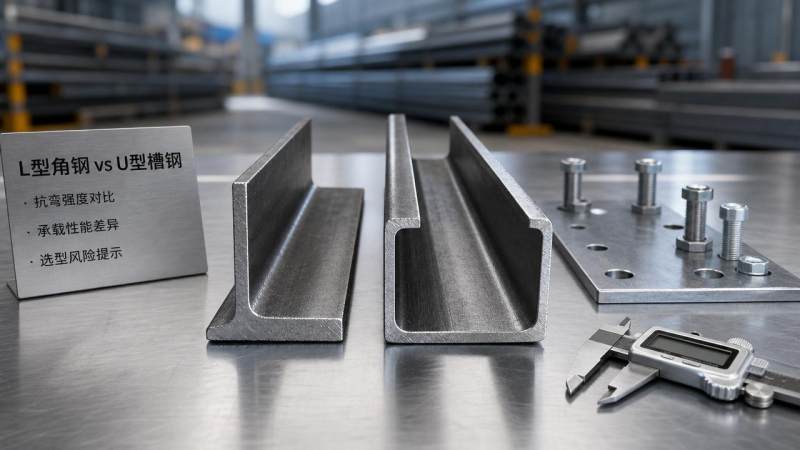
Selecting between angle steel and channel steel is not only a matter of shape or price—it directly affects load performance, installation safety, and long-term project reliability.
This angle vs channel steel strength comparison helps technical evaluators understand bending resistance, torsional stability, connection behavior, and application suitability before committing to a specification.
By identifying selection risks early, projects can control steel costs, reduce fabrication errors, and maintain compliance with ASTM, EN, JIS, or GB requirements.
Why a Checklist Matters in Angle vs Channel Steel Strength Comparison
Angle steel and channel steel both serve structural framing, bracing, supports, and fabricated assemblies.
However, their geometry creates different behavior under bending, compression, shear, and torsional loads.
A simple shape-based choice may overlook eccentric loading, bolt layout, welding access, and lateral restraint.
A structured angle vs channel steel strength comparison prevents assumptions from becoming safety issues during installation or service.
It also helps align design drawings, procurement specifications, mill tolerances, and fabrication methods before production starts.
Core Checklist for Strength-Based Selection
Use the following checklist when reviewing structural steel profiles for frames, platforms, brackets, equipment bases, or secondary supports.
- Verify the primary load direction before selection, because angle steel and channel steel resist bending differently across their principal axes.
- Check section modulus and moment of inertia, not only weight per meter, when comparing bending strength and deflection control.
- Assess torsional stability carefully, as angle steel is more sensitive to twisting when loads do not pass through the shear center.
- Review connection eccentricity, because one-sided bolting or welding can reduce effective strength and increase local deformation.
- Confirm lateral bracing intervals, especially where long members may buckle under compression or bending-induced instability.
- Compare fabrication access, since channel webs and flanges may simplify some connections but complicate internal welding locations.
- Match steel grade to design demand, instead of assuming a stronger profile shape compensates for insufficient yield strength.
- Check coating, galvanizing, and drainage details, because corrosion performance can influence long-term structural capacity.
- Review applicable standards early, including ASTM, EN, JIS, or GB, to avoid mismatched dimensions and mechanical properties.
- Document tolerances and straightness requirements, since minor deviations can affect assembly fit and load transfer in steel structures.
This angle vs channel steel strength comparison should be repeated whenever loads, spans, connection layouts, or site conditions change.
Angle Steel Strength: Where It Performs Well
Angle steel is widely used for bracing, small frames, shelf supports, tower members, brackets, and reinforcement details.
Its L-shaped geometry provides practical connection surfaces and efficient use in light to medium structural applications.
Equal angle steel is useful when balanced leg dimensions simplify detailing and reduce orientation errors during fabrication.
Unequal angle steel can fit special connection geometry, but it requires closer review of load direction and axis behavior.
In an angle vs channel steel strength comparison, angle steel is often attractive for diagonal bracing and compact support points.
The main risk is torsion, especially when the applied load is offset from the member’s effective center of resistance.
Best-Fit Uses for Angle Steel
- Use angle steel for diagonal bracing where axial tension or compression dominates and connection eccentricity is controlled.
- Select angle steel for compact brackets when the load path is short, visible, and easy to reinforce.
- Apply angle steel in secondary framing where low weight, simple cutting, and quick bolting support project efficiency.
Channel Steel Strength: Where It Adds Value
Channel steel has a U-shaped section with a web and two flanges, giving it strong bending performance in many framing layouts.
It is commonly used for equipment supports, edge beams, floor framing, vehicle frames, rails, and structural channels.
Compared with angle steel, channel steel usually offers better stiffness along its strong axis for similar applications.
This makes it suitable where deflection control matters, such as platforms, loaded frames, and longer-span support members.
In an angle vs channel steel strength comparison, channel steel often performs better when the load is aligned with the web direction.
However, channels can also twist under eccentric loading, especially if the open side is not laterally restrained.
Best-Fit Uses for Channel Steel
- Use channel steel for beams or rails where bending stiffness and straight load transfer are primary design needs.
- Select channel steel for equipment bases when the web can receive concentrated loads through plates or stiffeners.
- Apply paired channels when torsional resistance, symmetrical behavior, or wider connection surfaces are required.
Mid-Project Product Note: Steel for Heavy Civil Support
Some projects extend beyond angle and channel members into retaining systems, deep water works, and temporary excavation support.
For these conditions, Steel Sheet Piles can support cofferdams, waterfront structures, and hard soil penetration requirements.
Available grades include S275, S355, S390, S430, SY295, SY390, and ASTM A690 for different strength and durability demands.
Production can follow EN10248, EN10249, JIS5528, JIS5523, and ASTM standards, with single lengths up to over 80m.
Relevant certifications include ISO9001, ISO14001, ISO18001, and CE FPC for quality, environmental, safety, and compliance control.
This product category is different from an angle vs channel steel strength comparison, but it shows why matching section type to site demand matters.
Application Scenarios and Selection Guidance
Industrial Platforms and Walkways
Platforms often require members that control deflection, accept grating connections, and resist repeated foot or equipment loads.
Channel steel may suit edge beams and joists, while angle steel works well for bracing, handrail posts, and small brackets.
Equipment Frames and Machine Supports
Equipment frames need stable alignment, controlled vibration, and accurate mounting surfaces.
A detailed angle vs channel steel strength comparison should include bolt patterns, base plate thickness, weld sequence, and service load cycles.
Bracing, Trusses, and Light Structural Frames
Angle steel is frequently used in trusses and bracing because axial load paths can be efficient and economical.
Channel steel may be preferred when the member also carries bending or needs broader contact with connected plates.
Construction Temporary Works
Temporary works require clear load assumptions, safe installation details, and fast replacement if damage occurs.
Use conservative checks because site loads, impact, uneven ground, and field welding can change actual structural behavior.
Common Selection Risks Often Overlooked
Risk 1: Comparing Weight Instead of Structural Properties
A lighter section may seem economical, but weight alone does not describe stiffness, buckling resistance, or connection performance.
Always compare section modulus, radius of gyration, web thickness, flange thickness, and expected deflection.
Risk 2: Ignoring Torsion Under Eccentric Load
Open sections can twist when load paths are offset, even when calculated bending stress appears acceptable.
This is a key issue in any angle vs channel steel strength comparison for brackets, cantilevers, and one-sided connections.
Risk 3: Underestimating Connection Details
Bolts, welds, gusset plates, and stiffeners may govern the real capacity of a steel assembly.
Poor detailing can make a stronger member underperform because force transfer becomes uneven or locally overstressed.
Risk 4: Selecting the Wrong Standard
Similar nominal sizes may differ across ASTM, EN, JIS, and GB standards.
Confirm dimensions, tolerances, yield strength, elongation, and testing requirements before finalizing purchase documents.
Risk 5: Missing Corrosion and Service Environment
Outdoor, marine, chemical, or humid environments can reduce useful service life without suitable protection.
Include coating thickness, galvanizing suitability, drainage holes, and inspection access in the selection process.
Practical Execution Checklist Before Ordering
- Define all load cases, including dead load, live load, wind, impact, vibration, and temporary installation loads.
- Request section property data from the supplier and compare it with engineering calculations or design software output.
- Confirm the steel grade, production standard, inspection method, and certificate format required by the project documents.
- Review shop drawings for bolt spacing, weld size, cope cuts, stiffeners, and member orientation before fabrication.
- Check transport length, packing method, straightness tolerance, and handling requirements to avoid deformation before installation.
- Test-fit critical assemblies when possible, especially for repeated frames, modular supports, or export projects.
- Keep a documented angle vs channel steel strength comparison with drawings, standards, calculations, and approval records.
How Hongteng Fengda Supports Better Selection
Hongteng Fengda manufactures and exports structural steel products from China for construction, industrial, and manufacturing projects worldwide.
Core product capabilities include angle steel, channel steel, steel beams, cold formed profiles, and customized structural components.
Standard and OEM solutions can be supplied according to ASTM, EN, JIS, and GB requirements.
Stable production capacity, strict quality control, and dependable lead times help reduce sourcing risks for global steel projects.
Technical communication should include drawings, load assumptions, material grades, surface treatment needs, and delivery schedules.
Summary and Action Guide
A reliable angle vs channel steel strength comparison must go beyond price, appearance, and nominal size.
It should evaluate bending resistance, torsional behavior, connection details, steel grade, standard compliance, and installation conditions.
Choose angle steel when compact bracing, simple brackets, or axial load paths are the main design needs.
Choose channel steel when stronger bending stiffness, longer support spans, or better framing surfaces are required.
Before ordering, prepare drawings, load cases, preferred standards, coating needs, and inspection requirements for supplier confirmation.
The safest decision comes from matching section geometry, material strength, fabrication method, and real service conditions.
Please give us a message


Please enter what you want to find