Choosing the wrong angle stainless steel can cause costly fit-up issues, welding delays, and structural rework. For buyers, fabricators, and project engineers comparing steel standards, dimensions, and material grades, understanding how angle stainless steel relates to other structural options—such as Mild Steel Plate, steel sheet metal, and I beam vs H beam—is essential to achieving accurate assembly, corrosion resistance, and reliable project performance.
In steel fabrication, fit-up problems rarely come from one issue alone. They usually result from a chain of small selection mistakes: unequal leg dimensions, excessive tolerance variation, wrong inside corner radius, unsuitable grade for the environment, or mismatched surface condition after cutting and welding. For fabricators, procurement teams, and quality managers, these mistakes can increase labor hours by 10% to 30% on medium-volume assemblies and create installation delays that affect downstream work.
For global buyers sourcing from multiple standards such as ASTM, EN, JIS, and GB, angle stainless steel selection should not be based on nominal size alone. It should be evaluated as a fit-up system that includes dimensional tolerance, fabrication method, welding sequence, corrosion exposure, and compatibility with connected parts. This is especially important in construction, industrial frames, support brackets, equipment bases, and custom structural assemblies where even a 1 mm to 3 mm deviation can create cumulative alignment problems.
Why angle stainless steel fit-up problems happen in real projects
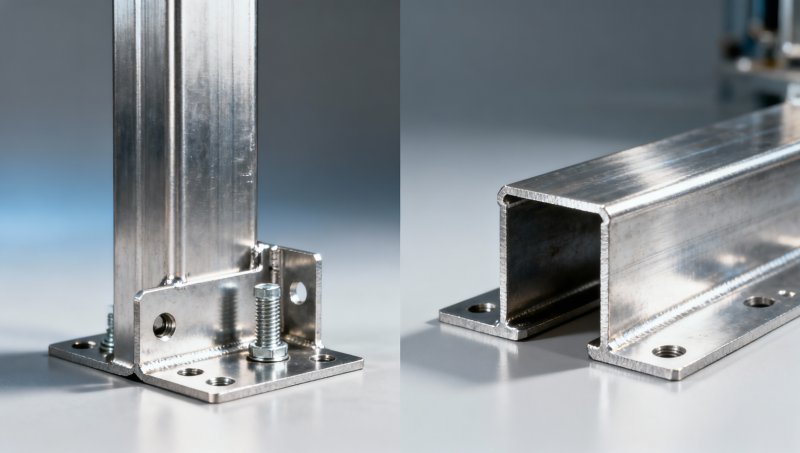
Angle stainless steel is widely used in brackets, edge reinforcement, support frames, ladder structures, machinery housings, and architectural trim. On paper, the part may look simple. In production, however, fit-up depends on at least 5 variables: leg length accuracy, thickness consistency, straightness, squareness, and edge condition after processing. If any of these are overlooked during material selection, assembly time can rise quickly.
One common mistake is assuming all equal angles or unequal angles from different mills behave the same during fabrication. In reality, rolling methods, tolerance control, and standard interpretation can differ. A 50 × 50 × 5 mm angle may be acceptable by one standard range, but if the connected plate or bolt pattern is designed with tight fabrication limits of ±0.5 mm to ±1.0 mm, the actual fit-up may still fail without pre-checking mill tolerance and corner geometry.
Another frequent issue is selecting a stainless angle grade based only on price or basic corrosion resistance. In welded assemblies, thermal expansion, weld distortion, and local heat tint can affect final geometry. When the environment includes moisture, chlorides, cleaning chemicals, or outdoor exposure, the wrong grade can trigger early staining, surface degradation, or maintenance complaints within 6 to 24 months depending on service conditions.
Typical sources of fit-up mismatch
Before placing an order, teams should review not only the nominal section size but also the fabrication route. Laser cutting, punching, sawing, drilling, bending, and welding each react differently to stainless steel angle profiles. The list below highlights where mismatch usually begins.
- Leg length tolerance is suitable for stock supply but too loose for pre-drilled connection assemblies.
- Material thickness varies enough to affect clamp force, bolt seating, or root gap in welding.
- Inside corner radius interferes with tight contact against plates, channels, or formed parts.
- Straightness deviation creates twisting over lengths of 3000 mm to 6000 mm.
- Wrong finish condition increases grinding and rework after welding or polishing.
In large projects, these issues are amplified when angle sections are paired with channel steel, steel beams, or sheet metal parts from other suppliers. That is why a structural steel manufacturer with cross-product experience can reduce sourcing risk by reviewing the complete assembly rather than just supplying one line item.
How fit-up mistakes affect cost and schedule
The cost impact of wrong angle stainless steel selection is not limited to material replacement. Most losses appear in hidden fabrication hours. Re-measuring, tack adjustment, re-clamping, local trimming, slot enlargement, and post-weld correction can add 15 to 45 minutes per assembly on repetitive parts. Over 200 to 500 assemblies, that becomes a meaningful labor and delivery issue.
The table below shows how early selection decisions influence fit-up results in common steel fabrication scenarios.
The key takeaway is simple: fit-up is a dimensional and process issue, not just a material issue. Buyers that define 4 to 6 critical checks before ordering usually reduce downstream correction work significantly.
Selection mistakes in dimensions, grades, and standards
The most expensive angle stainless steel errors usually happen before the material reaches the workshop. Drawings often specify only the section size and grade, while leaving out important details such as standard source, tolerance class, finish, or whether the angle will be welded to plate, bolted to a beam, or exposed outdoors. For procurement and technical evaluation teams, this missing information creates ambiguity across suppliers.
Standard conversion is a major risk point. ASTM, EN, JIS, and GB may define stainless steels, dimensions, and tolerances differently. Even when the nominal size appears equivalent, actual leg tolerance, thickness range, and permissible straightness may not match the fabrication requirement. If the project combines imported angle sections with locally processed Mild Steel Plate or steel sheet metal, mismatch at the connection area becomes more likely.
Design teams also compare angle members against other structural sections. In support frames, the decision between angle, channel, and beam sections is not only about load. It also affects welding access, connection detail, and assembly speed. Similar confusion appears when engineers compare I beam vs H beam for primary framing but use angle stainless steel for secondary bracing or finishing components. The section interface must be checked early.
Dimensional checks that should be on every inquiry sheet
A complete inquiry should state more than “stainless angle 50 × 50 × 5 mm.” It should include the application, assembly method, and inspection expectations. The following table provides a practical checklist for sourcing and engineering teams.
When these 4 categories are defined in advance, sourcing becomes more consistent and supplier quotations become easier to compare. It also helps finance and commercial reviewers evaluate whether a lower unit price may create a higher installed cost.
Common grade-selection misunderstandings
Many buyers focus on the difference between 201, 304, and 316 stainless steels but do not connect grade choice to the fabrication process. For example, a grade with acceptable corrosion resistance for indoor decorative use may still require different welding practice or surface treatment if the final assembly is exposed to water, heat cycling, or chemical splash. Material selection should consider both service life and production behavior.
- Do not use grade substitution without checking environment, forming requirement, and post-weld finish.
- Do not assume all stainless angles can replace carbon steel details without redesigning hole, weld, or contact surfaces.
- Do not compare raw material price only; compare installed cost over the full project cycle of fabrication, transport, erection, and maintenance.
For international projects, experienced suppliers usually help map grade and standard equivalents, then review whether the chosen profile is best supplied as angle, plate-cut component, or cold formed section.
How related stainless and structural products support better fit-up
Angle sections do not exist in isolation. In many fabrication projects, they are combined with stainless plate, sheet components, beams, channels, and custom formed parts. That is why material coordination matters. For some assemblies, using coil or sheet as the starting material for brackets, gussets, covers, or folded connectors can improve dimensional consistency compared with forcing every detail into a stock angle section.
A practical example is custom support fabrication where the main frame uses angle steel, but the mating cover plates or formed connector parts are made from coil-processed stainless stock. In this situation, selecting a stable raw material with known thickness, formability, and finish can reduce mismatch during bending, cutting, and welding. One relevant option for such secondary components is 201 Stainless Steel Coil, especially for applications where cold working performance and cost control are both important.
This product is based on 201 stainless steel and is commonly used in tabletops, countertops, kitchenware, outdoor decoration engineering, medical equipment construction, automotive parts, conveyor belts, bolts, nuts, springs, and screens. Its typical mechanical data includes tensile strength of at least 520 MPa, yield strength of at least 275 MPa, elongation of about 55% to 60%, hardness up to 183 HB or 100 HRB, density of 7.8 g/cm³, and elastic modulus of 197 GPa. Available thickness is typically 2.5 mm to 10.0 mm, with widths from 610 mm to 2000 mm and common lengths including 2000 mm, 2440 mm, 3000 mm, 5800 mm, and 6000 mm.
When coil-based parts are better than stock angles
For certain fabricated components, coil or sheet material gives engineers more control over flatness, blank size, hole location, and formed geometry. This is useful when the final structure needs precise mating with beams, plates, or equipment surfaces. If the component is decorative, enclosed, or lightly loaded, a formed part may provide better appearance and easier assembly than a cut-and-weld angle arrangement.
The table below compares typical use decisions between angle stainless steel and coil-processed parts in fabrication.
The conclusion is not that one product replaces another. Rather, better fit-up comes from choosing the right steel form for each function. A supplier that can provide angle steel, channel steel, beams, cold formed profiles, and stainless raw material options is often better positioned to optimize the full assembly.
What procurement teams should verify
For project buyers comparing multiple quotations, it is useful to verify 6 points: material grade, dimensional tolerance, finish, processing route, standard compliance, and packaging for transport. Certifications such as ISO, SGS, and BV may also support routine quality review when requested as part of the supply package, especially for export projects where documentation consistency matters.
A practical selection process for buyers, engineers, and QC teams
A reliable angle stainless steel selection process should be simple enough for purchasing teams and detailed enough for engineering and quality control. In most B2B projects, the best approach is a 5-step review carried out before order confirmation, not after material arrival. This reduces ambiguity and limits approval cycles that can delay production by 3 to 7 days.
Hongteng Fengda, as a structural steel manufacturer and exporter from China, supports this process by supplying angle steel, channel steel, steel beams, cold formed steel profiles, and customized structural components under major international standards including ASTM, EN, JIS, and GB. For overseas customers, the advantage is not only production capacity but also coordinated review of dimensions, standards, and application requirements across different steel products.
When the supplier understands both stock sections and custom fabrication needs, buyers can reduce sourcing risk, avoid cross-standard confusion, and improve lead-time reliability. This matters for projects in North America, Europe, the Middle East, and Southeast Asia, where approval chains often include technical, commercial, and financial reviewers before release.
5-step fit-up focused selection workflow
- Define the application clearly: load role, environment, connection type, and final finish requirement.
- Confirm section details: equal or unequal angle, size, thickness, cut length, and tolerances needed for assembly.
- Match material grade to service conditions: indoor, outdoor, humid, chemical, food-contact adjacent, or decorative use.
- Review mating parts: plate thickness, beam or channel interface, hole patterns, and weld access zones.
- Set inspection and delivery requirements: dimensional checks, surface checks, packing method, and target lead time.
This 5-step sequence helps different stakeholders work from the same decision framework. Operators care about ease of welding and handling, engineers care about geometry and performance, purchasers care about comparability, and finance teams care about total installed cost. A shared checklist reduces misunderstanding between departments.
Recommended pre-order quality checkpoints
The final checkpoint should happen before production starts. At that stage, teams should review shop drawings, sample dimensions, and tolerance expectations. Even a short pre-production review of 20 to 30 minutes can prevent days of correction later.
- Check leg length and thickness against drawing requirement, not only against general standard allowance.
- Confirm straightness and twist over the full ordered length, especially above 3000 mm.
- Verify whether cut edges require deburring, passivation, polishing, or weld preparation.
- Review packaging for export transport so sections do not deform or scratch during shipping.
For custom projects, requesting a sample piece, a dimensional report, or a first-article review is often a cost-effective step. It is especially useful when the angle section will be integrated with beam connections, equipment frames, or decorative stainless assemblies.
FAQ: common questions about angle stainless steel fit-up and sourcing
How do I know whether an angle size is suitable for precise assembly?
Start by checking the full tolerance requirement, not just the nominal size. If the assembly includes pre-drilled holes, close-contact plates, or repeat production above 100 pieces, you should ask for leg tolerance, thickness tolerance, straightness, and twist data. In tighter assemblies, even a 1 mm to 2 mm variance can change welding gap or bolt alignment.
Is lower-cost stainless always a risk?
Not always. Lower-cost grades can be suitable when the environment, finish requirement, and fabrication method are properly matched. The risk appears when material is selected only on purchase price without considering humidity, chloride exposure, heat, or forming and welding behavior. The correct question is not “what is cheapest?” but “what meets the service condition with acceptable fabrication cost?”
What lead time should buyers expect for structural steel and stainless-related items?
Lead time depends on product type, quantity, and whether the order is standard or customized. Common industry ranges for export supply can be around 2 to 4 weeks for standard items and 4 to 8 weeks for more customized structural components, subject to production schedule, processing scope, and shipping arrangement. Buyers should confirm documentation needs early because inspection and export packing may add several days.
What should distributors and project managers ask a supplier before ordering?
They should ask about standard compliance, tolerance capability, processing support, available sizes, packaging method, and whether related products can be supplied together. If one supplier can cover angle steel, channels, beams, cold formed profiles, and custom components, coordination becomes easier and the risk of fit-up mismatch between product categories is lower.
Selecting angle stainless steel correctly is not only a material decision. It is a fit-up decision that influences fabrication efficiency, appearance, corrosion performance, inspection workload, and total project cost. The most common mistakes come from incomplete dimensional review, weak standard comparison, unsuitable grade choice, and poor coordination with related steel parts.
For buyers, engineers, QC teams, distributors, and project managers, the practical path is clear: define the application, specify tolerances, review connected components, and work with a supplier that understands complete structural steel assemblies. Hongteng Fengda supports global customers with angle steel, channel steel, steel beams, cold formed profiles, and customized structural steel solutions designed for reliable production and dependable delivery.
If you are evaluating angle stainless steel for a current project, contact us to discuss your drawings, standards, and fit-up requirements. You can also request a customized solution, material recommendation, or quotation for coordinated structural steel supply.
Please give us a message


Please enter what you want to find