Angle iron for construction is widely used in frames, supports, and reinforcement, but when is it truly strong enough for your project? From load requirements to material grades and fabrication methods like structural steel bending, choosing the right section affects safety, cost, and performance. This guide explains how to evaluate angle steel in practical applications while comparing related materials such as rebar for concrete slab and deformed rebar for concrete.
How do you judge whether angle iron is strong enough?
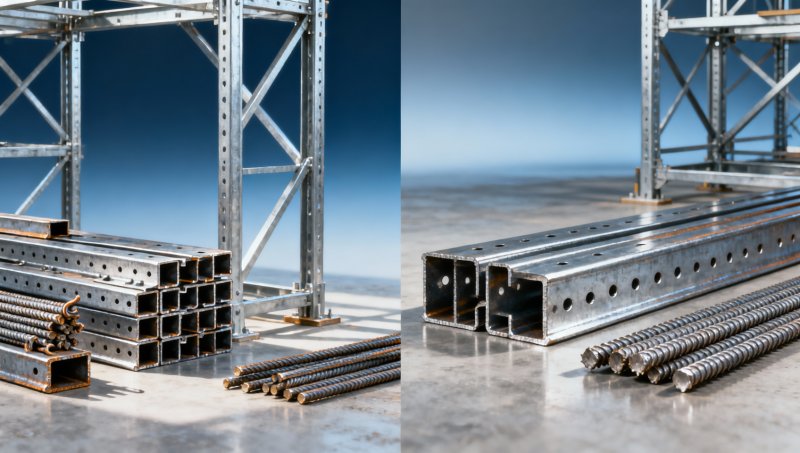
For construction buyers and engineers, strength is not a simple yes-or-no question. Angle iron is strong enough only when its section size, steel grade, connection method, span, and load type all match the actual working condition. In practice, the first check usually covers 3 core items: the expected load, the unsupported length, and the safety requirement defined by the project standard.
A small angle section may perform well in light bracing, cable trays, ladder frames, and equipment supports, yet the same section can fail in long-span structural frames or impact-prone industrial areas. This is why technical evaluation should consider both static load and dynamic factors such as vibration, repeated loading, or temporary construction forces over 7–30 day installation phases.
Material grade also matters. Structural angle steel commonly follows ASTM, EN, JIS, or GB standards, and the selected grade influences yield strength, weldability, and fabrication behavior. A higher grade does not automatically mean the lowest total cost, because machining, bending, and welding requirements may change production efficiency and downstream installation time.
For procurement teams, the real question is often broader: not only “Is this angle iron strong enough?” but also “Is it sufficient without overbuying?” Overspecification raises steel weight, freight cost, and fabrication cost. Underspecification increases safety risk, rework, and delivery delays. A balanced decision usually comes from coordinated review among design, purchasing, quality control, and project management.
Key factors that define usable strength
- Section dimensions: leg size and thickness directly affect bending resistance, local buckling risk, and connection capacity.
- Steel grade: common structural grades such as S275 or S355 influence the allowable design stress and performance reserve.
- Load condition: concentrated load, distributed load, compression, tension, and torsion do not affect angle steel in the same way.
- Installation detail: bolted, welded, or gusset-connected members can behave differently even with the same section size.
- Corrosion environment: outdoor and coastal exposure may require coating or grade adjustments for long-term service.
In many projects, engineers separate angle steel applications into 2 broad categories: primary load-bearing and secondary support. For secondary support, a conservative standard section may be adequate. For primary framing or critical bracing, structural calculation and code-based verification are necessary. This distinction helps avoid confusion between “commonly used” and “structurally sufficient.”
Which construction scenarios are suitable for angle steel?
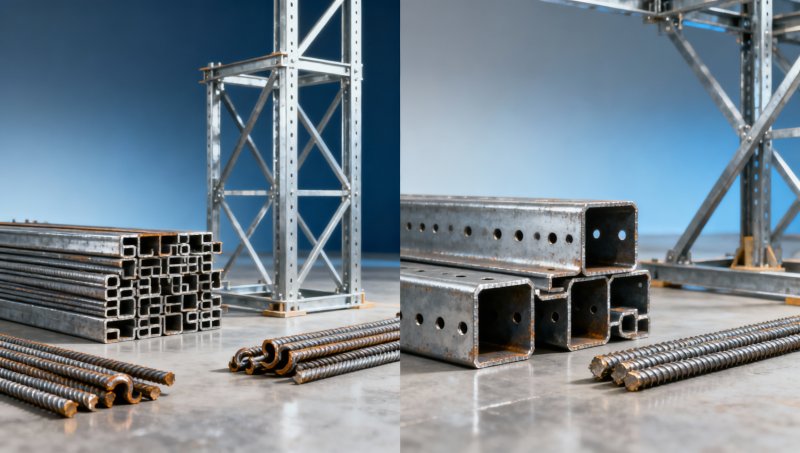
Angle iron for construction is highly versatile, but it is not intended for every structural role. It is often selected for edge framing, platform supports, brackets, machine bases, stair components, warehouse racks, solar support parts, and reinforcement members where compact geometry and simple fabrication are important. In these cases, angle steel offers a practical balance between strength, availability, and processing speed.
In reinforced concrete work, angle steel and rebar do different jobs. Rebar for concrete slab and deformed rebar for concrete are designed to work inside concrete under bond and tensile stress. Angle steel, by contrast, works as an exposed or embedded section resisting bending, compression, tension, or local support loads. Confusing these roles can lead to poor detailing and unnecessary material substitution.
For project managers, one practical rule is this: if the member needs direct shape stability, edge stiffness, or bolted framing convenience, angle steel is often a strong candidate. If the member must act within cast concrete as tensile reinforcement, rebar remains the proper solution. This distinction becomes especially important in mixed systems such as slab-edge supports, trench covers, and prefabricated assemblies.
Fabrication requirements also influence suitability. If the part needs cutting, hole punching, welding, or structural steel bending in moderate complexity over 2–4 processing stages, angle steel is usually easier to handle than many built-up shapes. For highly specialized retaining or water barrier structures, however, another steel profile may be more efficient than standard angle sections.
Application suitability by function
The table below helps compare where angle steel is commonly suitable and where alternative steel products may offer better performance for construction and civil works.
This comparison shows why section choice should follow function, not habit. For example, when a project involves a continuous retaining wall or water retaining wall, a purpose-built profile such as Hot Rolled Steel Sheet Pile may be more suitable than angle iron. U Sheet Pile options in carbon steel can be supplied under EN10248, EN10249, JIS5528, JIS5523, or ASTM standards, with grades such as S275, S355, S390, S430, SY295, SY390, and ASTM A690. With interlock types including Larssen locks, cold rolled interlock, and hot rolled interlock, these sections are designed to form a continuous and tight wall, and single lengths can exceed 80m where project conditions require.
When another steel product is the better choice
Civil and marine contractors often compare angle steel with channels, beams, rebar, and sheet piles during early budgeting. If the task requires soil retention, water cut-off, or long continuous wall behavior, sheet pile systems usually reduce fabrication steps and installation joints. If the task is a compact support or bracket assembly, angle steel often remains the more economical and faster option.
This is where supplier capability matters. A manufacturer that offers angle steel, channel steel, steel beams, cold formed steel profiles, and OEM structural components can help buyers avoid fragmented sourcing. That saves time during the 2–3 rounds of technical review that commonly happen before final approval.
What technical checks should buyers and engineers make before ordering?
A reliable purchasing decision starts with technical clarity. Before placing an order for angle iron for construction, most teams should review at least 5 checkpoints: design load, member length, connection detail, steel grade, and corrosion protection. If even one of these items stays undefined, the risk of revision, fabrication waste, or site mismatch rises sharply.
For international projects, it is also important to align specifications with the required standard system. ASTM, EN, JIS, and GB are all widely used, but mixing dimensional assumptions, testing expectations, or tolerances can create confusion. A supplier with export experience can help convert these requirements into a clear manufacturing and inspection sheet before production begins.
Tolerance control is another practical issue. In fabricated assemblies, even a deviation of a few millimeters can affect bolt hole alignment, fit-up, or erection speed. When the project includes repetitive modules or OEM structural parts, buyers should confirm cutting tolerance, hole position tolerance, and any bending allowance during pre-production review rather than after the goods arrive on site.
Lead time should be considered together with inspection planning. Standard angle sections may move faster than customized fabricated parts, but actual schedules depend on quantity, surface treatment, packaging, and shipping route. For many export orders, buyers should allow 2–6 weeks for production and internal quality checks, plus transport time depending on destination market.
Practical selection and compliance table
The following table summarizes the most useful procurement checks for technical evaluators, purchasing staff, and project leaders.
For buyers working across several regions, supplier quality systems are equally important. Hongteng Fengda manufactures and exports structural steel products for North America, Europe, the Middle East, and Southeast Asia, and supports projects requiring standard specifications as well as OEM solutions. This matters when the order involves repeated deliveries, mixed product categories, or documentation aligned with international standards and internal QC procedures.
A 4-step review process before final approval
- Define the service condition: load, span, environment, and expected installation method.
- Match the section and grade: compare at least 2 possible sizes or grades to avoid overspecification.
- Confirm fabrication details: hole pattern, weld location, cutting list, and any structural steel bending requirement.
- Lock inspection and delivery terms: certificates, packaging, lead time, and destination handling.
This 4-step workflow reduces technical ambiguity and helps finance, procurement, and engineering teams speak from the same document set. It is especially useful for distributors and contractors managing multiple projects at the same time.
How do cost, risk, and alternatives affect the final decision?
The cheapest angle iron is not always the lowest-cost solution. Total project cost includes raw material, fabrication, coating, packing, freight, installation efficiency, and the financial impact of delays. A slightly heavier section can sometimes reduce bracing complexity or field reinforcement work, while a lower-priced but inconsistent product may create far higher costs during erection.
Decision-makers should compare at least 3 layers of cost: product cost, processing cost, and project risk cost. Product cost covers weight and grade. Processing cost covers cutting, punching, welding, galvanizing, or painting. Risk cost includes rejected goods, missing certificates, dimensional mismatch, and schedule slippage. This broader view is essential for business evaluators and financial approvers.
Alternatives also need fair comparison. Channel steel may improve directional stiffness in some supports. I-beams may be better for larger bending demand. Rebar remains the standard inside reinforced concrete. Sheet piles can be more efficient in retaining systems. Angle steel remains attractive where simple geometry, moderate structural demand, and flexible fabrication are the main priorities.
From a sourcing perspective, stable production capacity and dependable lead times can reduce hidden cost. A supplier that maintains strict quality control and supports custom dimensions, OEM parts, and international standard compliance helps buyers avoid splitting the order across multiple factories, which often creates coordination gaps and variable quality.
Common purchasing mistakes to avoid
- Choosing by section size alone without checking span, support condition, and load path.
- Using angle steel as a substitute for rebar for concrete slab applications where bond performance is required.
- Ignoring coating or corrosion exposure in outdoor, coastal, or high-humidity installations.
- Approving fabricated drawings before tolerances and hole positions are fully verified.
- Comparing suppliers only by unit price and not by documentation, export experience, and delivery reliability.
FAQ for engineers, buyers, and project teams
The questions below reflect common search and procurement concerns when evaluating angle iron for construction in real projects.
How can I know if an angle section is too light for my project?
Check 4 items first: load type, unsupported length, connection detail, and steel grade. If the member is slender, exposed to vibration, or part of a critical bracing system, a basic visual comparison is not enough. You should request structural verification from the project engineer and confirm whether the section is being used as a primary or secondary member.
Can angle steel replace deformed rebar for concrete?
In normal reinforced concrete design, no. Deformed rebar for concrete is intended to bond effectively with concrete and resist internal tensile stress. Angle steel may be embedded in special assemblies, but it is not a standard replacement for slab reinforcement. If your application combines steel framing with concrete, the design should define where each material is meant to work.
What standards should I ask for when importing structural steel?
That depends on the destination market and project specification. Common frameworks include ASTM, EN, JIS, and GB. Buyers should also confirm whether they need mill test reports, dimensional inspection records, coating documentation, or factory system certificates such as ISO9001. For some product categories, project documents may also request CE-related compliance where applicable.
What is a typical delivery planning range for standard and customized orders?
Standard structural steel items often move faster than custom fabricated components, but planning should usually allow around 2–6 weeks for production, inspection, and packing, depending on quantity and processing complexity. Export shipping adds additional transit time, so project teams should lock critical dates early, especially when installation windows are fixed.
Why work with a structural steel manufacturer that understands both production and export?
When angle iron must be strong enough, compliant enough, and available on schedule, the supplier’s role extends beyond manufacturing. You need a partner that can translate project drawings into practical steel supply, manage standard and customized items, and maintain consistent quality across multiple batches. This is especially valuable for contractors, distributors, and industrial buyers handling recurring orders.
Hongteng Fengda supplies angle steel, channel steel, steel beams, cold formed steel profiles, and customized structural steel components with modern manufacturing facilities and strict quality control. For global buyers, this means fewer sourcing gaps, clearer communication on ASTM, EN, JIS, and GB requirements, and better support for balancing strength, cost, and lead time.
If you are evaluating whether angle iron is strong enough for a frame, bracket, support, reinforcement assembly, or OEM structural part, the most efficient next step is a technical review based on your actual drawings or load conditions. Early confirmation can prevent 2 common problems: underspecification that risks safety and overspecification that wastes budget.
You can contact us to discuss section parameters, steel grade options, fabrication details, delivery schedule, sample support, certificate requirements, and quotation planning. If your project also includes retaining structures, water retaining walls, or mixed steel products, we can help compare angle steel with other suitable sections and prepare a more practical sourcing solution.
Please give us a message


Please enter what you want to find