For quality control and safety teams, verifying ASTM steel profile high strength specifications is essential before any structural steel enters fabrication or site installation. From yield strength and tensile performance to dimensional tolerances and compliance documentation, each check helps reduce structural risk and supports reliable project delivery. This guide highlights the key strength-related requirements and inspection points buyers should review when sourcing ASTM-compliant steel profiles for construction, industrial, and manufacturing applications.
In cross-border steel procurement, the challenge is not only finding the right profile size. QC and safety managers must confirm that the material grade, mechanical test results, traceability records, and dimensional tolerances match the project drawings and the applicable ASTM standard.
Understanding ASTM Strength Requirements for Steel Profiles
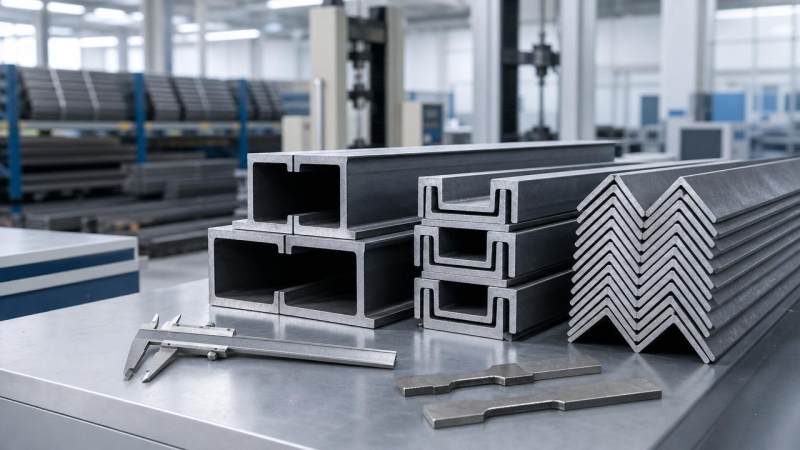
ASTM steel profile high strength specifications define measurable performance requirements for structural shapes used in buildings, platforms, equipment frames, bridges, and industrial supports. These requirements help engineers compare steel from different mills using a common technical language.
For common structural profiles, QC teams usually review at least 4 technical layers: grade designation, chemical composition, mechanical properties, and dimensional tolerance. Missing one layer may create approval delays or hidden site risks.
What “High Strength” Means in Procurement Documents
High strength does not mean a single universal value. Under ASTM standards, it normally refers to a specified minimum yield strength, tensile strength range, elongation requirement, and sometimes impact performance depending on project conditions.
For example, a purchase order may require a minimum yield strength of 345 MPa, 450 MPa, or another grade-specific threshold. The actual requirement depends on the ASTM grade, section type, loading condition, and design code used by the engineer.
Core Mechanical Properties to Confirm
- Yield strength: confirms the stress level where permanent deformation begins.
- Tensile strength: verifies the maximum stress capacity before fracture.
- Elongation: indicates ductility and deformation capacity under load.
- Charpy impact value: important for low-temperature or dynamic-load applications.
- Hardness or bend performance: used for specific forming or fabrication requirements.
The following table summarizes the main strength-related checks that buyers should align before production, especially when profiles are supplied for welded structures or safety-critical assemblies.
The key conclusion is simple: ASTM steel profile high strength specifications must be checked as a complete technical package. Strength values alone are not enough if size accuracy, chemistry, and traceability are weak.
Key Strength Checks Before Fabrication or Site Installation
Before steel profiles move to cutting, drilling, welding, or installation, safety teams should use a repeatable inspection process. A practical workflow often includes 6 checkpoints from document review to final release.
1. Match the ASTM Grade With the Engineering Drawing
The first step is confirming that the ordered grade matches the drawing, bill of materials, and structural calculation. A profile with similar dimensions may still be unacceptable if the grade does not meet specified strength levels.
QC staff should compare the purchase order, packing list, MTC, and product markings. Heat number traceability is especially important when a project uses more than 2 grades in the same fabrication batch.
2. Review Chemical Composition for Weldability
Chemical composition affects weldability, toughness, and long-term performance. Carbon, manganese, phosphorus, sulfur, silicon, and alloying elements should remain within the ASTM grade limits and customer technical requirements.
For welded structural profiles, carbon equivalent may be reviewed when required by the project specification. This helps reduce risks such as cold cracking, excessive hardness in the heat-affected zone, or unstable weld quality.
3. Verify Mechanical Test Results by Heat Number
Mechanical properties should be linked to the correct heat number, not only to a general product batch. This is a critical control point for ASTM steel profile high strength specifications in export projects.
A reliable MTC normally includes product description, standard, grade, heat number, size, quantity, chemical analysis, mechanical test data, and inspection signature. Buyers may request third-party inspection for large or safety-critical orders.
4. Check Dimensions, Straightness, and Surface Condition
Strength compliance can still fail in practice if dimensional accuracy is poor. Common inspection points include thickness, flange width, web height, camber, twist, cut length, end squareness, and surface defects.
Typical project tolerances may require checks within mill standard limits or stricter customer limits, such as ±1 mm for selected cut lengths or tighter controls for prefabricated assemblies.
Applying ASTM Specifications Across Steel Products and Systems
Although the focus is steel profiles, many projects combine beams, channels, angles, cold formed sections, plates, and pipe materials. QC teams should manage them under one coordinated specification control system.
For industrial piping and structural integration, buyers may also need products such as Carbon Seamless Pipe, especially where petroleum, chemical, mechanical, or construction applications require stable pressure-bearing performance.
Available models may include ASTM A106 Gr.B, ASTM A53 Gr.B, API A106 GR.B, ASTM A179/A192/A213/A210, DIN2448, and JISG3452-54. Typical outer diameter ranges from 17 mm to 914 mm, with lengths from 5 m to 14 m or project-specific requirements.
Why Integrated Material Control Matters
A structure may pass profile inspection but still face risk if connected pipe supports, brackets, or customized components follow inconsistent standards. This is why ASTM, EN, JIS, and GB references should be clearly separated in the material list.
The table below shows how quality teams can compare profile requirements with related structural and industrial steel items before releasing materials to fabrication.
The practical takeaway is that material control should follow the full assembly, not only the main profile. Mixed-product projects need a unified inspection checklist and consistent document review rules.
Inspection Workflow for QC and Safety Managers
A disciplined inspection workflow reduces disputes and prevents unsuitable steel from reaching the production line. For export orders, the process should begin before mass production, not after cargo arrival.
Recommended 5-Step Control Process
- Technical clarification: confirm ASTM standard, grade, size, tolerance, coating, packing, and delivery terms.
- Pre-production review: approve drawings, special tolerances, welding requirements, and inspection frequency.
- In-process inspection: monitor rolling, forming, cutting, marking, and surface condition by batch.
- Final verification: review MTC, dimensions, quantity, bundle tags, and visual appearance before shipment.
- Shipment documentation: prepare packing list, commercial documents, photos, and traceability records.
For many structural steel orders, inspection sampling may be arranged per heat, per size, or per production lot. The method should be agreed in writing to avoid different acceptance interpretations.
Documents That Should Be Checked
- Mill test certificate with chemical and mechanical results.
- Inspection report covering size, surface, length, and quantity.
- Packing list showing bundle number, weight, and piece count.
- Drawing approval record for customized structural steel components.
- Coating or surface treatment confirmation when painting, galvanizing, or anti-corrosion protection is required.
This workflow supports ASTM steel profile high strength specifications by connecting test data with real materials. It also gives safety managers a clear basis for acceptance, quarantine, or corrective action.
Common Procurement Risks and How to Reduce Them
International buyers often face risks linked to unclear specifications, inconsistent documentation, and late-stage inspection. These risks can affect project schedules by 1 to 4 weeks if rework or replacement is required.
Risk 1: Confusing Similar Standards
ASTM, EN, JIS, and GB standards may contain comparable grades, but they are not automatically interchangeable. Strength values, chemical limits, impact requirements, and tolerance rules can differ significantly.
When substitutions are proposed, QC teams should request a grade comparison table and engineering approval. A purchasing shortcut without technical confirmation may create compliance issues during final inspection.
Risk 2: Accepting Documents Without Traceability
A certificate without heat number linkage has limited value. Each bundle, tag, or marking should connect back to the MTC, especially for high-strength structural steel profiles used in load-bearing locations.
Risk 3: Overlooking Packaging and Surface Protection
Steel may meet ASTM steel profile high strength specifications but arrive with corrosion, bent ends, or damaged markings if packaging is weak. Export packing should consider sea freight, storage time, and unloading conditions.
For long-distance shipping, buyers often request waterproof wrapping, steel strip bundling, end protection, or clear label tags. For coated items, handling protection should be agreed before loading.
Choosing a Reliable Structural Steel Supplier
For QC and safety managers, supplier selection is a risk-control decision. A reliable manufacturer should provide consistent production capacity, standard-compliant materials, inspection support, and responsive technical communication.
Hongteng Fengda manufactures and exports structural steel from China, supplying angle steel, channel steel, steel beams, cold formed steel profiles, and customized components for global construction and industrial projects.
The company supports ASTM, EN, JIS, and GB requirements and helps buyers control sourcing risk through documented quality checks, stable lead times, and practical OEM solutions for project-specific steel components.
Supplier Evaluation Checklist
- Can the supplier confirm the exact ASTM grade and tolerance before production?
- Are MTCs, heat numbers, and bundle markings provided for traceability?
- Can the factory handle standard sizes and customized profiles in one order?
- Is inspection available at 2 or more stages, such as in-process and pre-shipment?
- Does the supplier understand export packing, coating, and documentation requirements?
When these questions are answered clearly, procurement teams gain more than a price quotation. They gain a practical basis for comparing quality, delivery certainty, and long-term supply reliability.
Final Guidance for Safer ASTM Steel Profile Sourcing
ASTM steel profile high strength specifications should be managed through grade confirmation, mechanical testing, chemical review, dimensional inspection, surface checks, and document traceability. Each step reduces avoidable structural and procurement risk.
For quality control and safety teams, the best sourcing result comes from early technical alignment. Confirm the standard, agree on inspection points, and require complete documentation before shipment is released.
If your project requires ASTM-compliant profiles, beams, channels, angles, cold formed sections, or customized structural steel components, Hongteng Fengda can support specification review and supply planning. Contact us to discuss product details, request a quotation, or get a customized steel sourcing solution.
Please give us a message


Please enter what you want to find