When comparing ASTM stainless pipe with ASTM steel pipe, the differences go far beyond material name alone. For technical evaluators, understanding changes in corrosion resistance, strength, fabrication, cost, and application suitability is essential for accurate selection. This article outlines the key distinctions and helps buyers identify which ASTM pipe specification better fits structural, industrial, and project-specific performance requirements.
Why ASTM Stainless Pipe Is Being Evaluated Differently Today
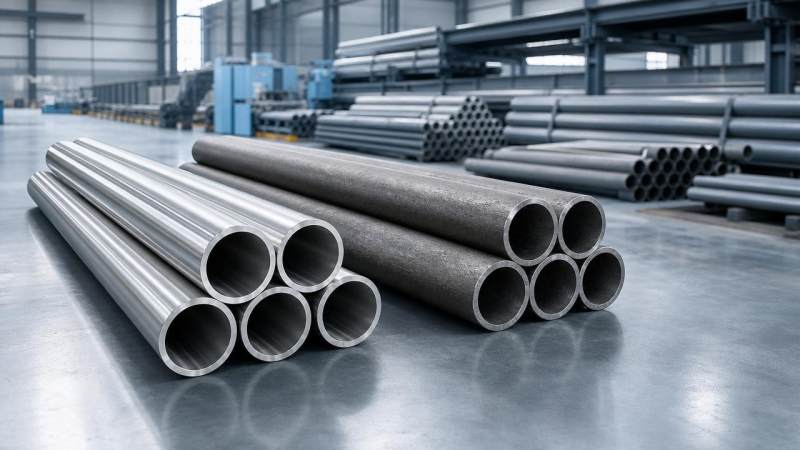
The discussion around ASTM stainless pipe has shifted in recent years. Selection is no longer based only on pressure rating or nominal size.
Project teams now compare lifecycle cost, exposure severity, maintenance intervals, and installation reliability before choosing between stainless and carbon steel pipe.
This change matters across steel-related industries. It affects structural design, industrial processing, water systems, energy projects, and fabricated assemblies.
ASTM stainless pipe is often preferred where corrosion risk is high. ASTM steel pipe remains common where strength and budget control dominate.
The real decision is not stainless versus steel in general. It is which ASTM pipe grade better matches operating conditions and long-term value.
The Main Changes Between ASTM Stainless Pipe and ASTM Steel Pipe
At the material level, ASTM stainless pipe contains chromium and often nickel or molybdenum. These alloying elements create corrosion resistance.
ASTM steel pipe usually refers to carbon steel or low-alloy steel pipe. It offers strong mechanical performance but needs coating or protection.
Core differences that change selection outcomes
These differences explain why ASTM stainless pipe is increasingly chosen for demanding service conditions, even when upfront budgets appear tighter.
What Is Driving the Shift in ASTM Pipe Selection
Several market and engineering signals are reshaping how ASTM stainless pipe and ASTM steel pipe are compared.
- Higher durability expectations in infrastructure and industrial systems.
- Greater focus on total ownership cost instead of purchase price alone.
- Stricter quality control for water, food, chemical, and clean-process environments.
- More severe outdoor exposure in coastal, humid, and polluted regions.
- Longer service life targets with reduced shutdown and replacement cycles.
In practical terms, ASTM stainless pipe gains value when corrosion failure would interrupt operations or create expensive repair work.
ASTM steel pipe still performs well in many structures, supports, utility lines, and general service systems with proper protection.
How Material Performance Changes in Real Working Conditions
Material performance should be judged in service, not only in catalogs. ASTM stainless pipe and ASTM steel pipe behave differently after installation.
Corrosion and service life
ASTM stainless pipe forms a passive oxide layer. This helps resist rust, staining, and chemical attack in many environments.
ASTM steel pipe can corrode quickly if coating damage occurs. Moisture, salts, and chemicals accelerate deterioration.
Strength and fabrication
Carbon steel pipe often offers simpler welding familiarity and broad structural use. Stainless needs grade-aware welding and heat control.
However, ASTM stainless pipe can deliver excellent toughness, clean finish quality, and dependable performance in specialized systems.
Appearance and hygiene
For visible installations, ASTM stainless pipe provides a neat surface and modern appearance. This matters in public, food, and architectural spaces.
In broader steel construction, surface protection also matters. Roofing and cladding selections follow the same lifecycle logic.
For example, Color Coated Galvanized Roof Sheet PPGI is widely used where corrosion resistance, strong adhesion, easy formability, and long service life are required.
Available in PPGI and PPGL, it supports construction, transportation, furniture, appliances, and public building applications with durable coated steel performance.
Where ASTM Stainless Pipe Changes the Best-Fit Application
ASTM stainless pipe does not replace every ASTM steel pipe application. It changes the decision in environments where failure modes are different.
The best specification depends on fluid type, external environment, cleaning cycle, pressure demand, and expected service duration.
What the Shift Means for Supply, Fabrication, and Project Risk
Material choice influences more than pipe performance. It also changes sourcing risk, fabrication planning, inspection standards, and maintenance budgets.
ASTM stainless pipe often requires stricter grade verification, surface handling, and welding procedure control. This improves reliability but affects planning.
ASTM steel pipe may simplify procurement and stock availability. Yet added coatings, repainting, and corrosion repairs can extend lifecycle cost.
For structural steel projects, integrated sourcing can improve consistency across pipes, profiles, beams, and formed sections.
Hongteng Fengda, a structural steel manufacturer and exporter from China, supports global projects with ASTM, EN, JIS, and GB compliant steel solutions.
Its product range includes angle steel, channel steel, steel beams, cold formed profiles, and customized structural steel components for diverse project requirements.
Key Points Worth Watching Before Final Specification
- Check whether corrosion risk is continuous, intermittent, or accidental.
- Compare installed cost with expected maintenance over the full service life.
- Verify ASTM grade, wall thickness, finish, and welding compatibility.
- Review whether appearance, hygiene, or cleaning standards are critical.
- Consider local environment, including chloride exposure and industrial pollution.
- Assess whether protective coatings on steel pipe can be maintained effectively.
A Practical Way to Judge ASTM Stainless Pipe vs ASTM Steel Pipe
A balanced decision should combine technical and commercial review. The most useful approach is a staged comparison.
- Define environment, temperature, media, and cleaning conditions.
- Match service conditions to the relevant ASTM stainless pipe or steel pipe grade.
- Estimate coating, fabrication, inspection, and replacement costs.
- Compare expected service life and downtime impact.
- Confirm supplier quality control and standard compliance.
This method reduces over-specification and under-specification. Both errors can create cost and performance problems later.
Final Observation: The Change Is About Performance Fit, Not Material Labels
ASTM stainless pipe and ASTM steel pipe serve different priorities. The important change is that selection now focuses more on long-term operating value.
If corrosion resistance, hygiene, appearance, and reduced maintenance matter, ASTM stainless pipe usually delivers stronger results.
If the environment is controlled and cost efficiency is the main driver, ASTM steel pipe remains a practical and proven option.
For the next step, compare actual service conditions against ASTM grades, fabrication methods, and lifecycle targets before confirming the final specification.
Please give us a message


Please enter what you want to find