Choosing the right ASTM C-beam is not just a specification issue—it directly affects project risk, cost control, and structural reliability. For project managers and engineering leaders, understanding key ASTM C-beam specs helps prevent sourcing mistakes, quality disputes, and installation delays. This article outlines the critical factors that influence performance and procurement decisions in global steel projects.
For most buyers, the real search intent behind ASTM C-beam is not simply to learn what a channel section is. It is to understand which specifications actually matter in procurement, how those specs affect structural performance and compliance, and how to reduce commercial and execution risk when sourcing from international suppliers. For project leaders, the key question is practical: which ASTM C-beam requirements must be checked before purchase so the project does not face rework, delay, or cost overruns later?
Why ASTM C-beam Specifications Matter More Than Many Project Teams Expect
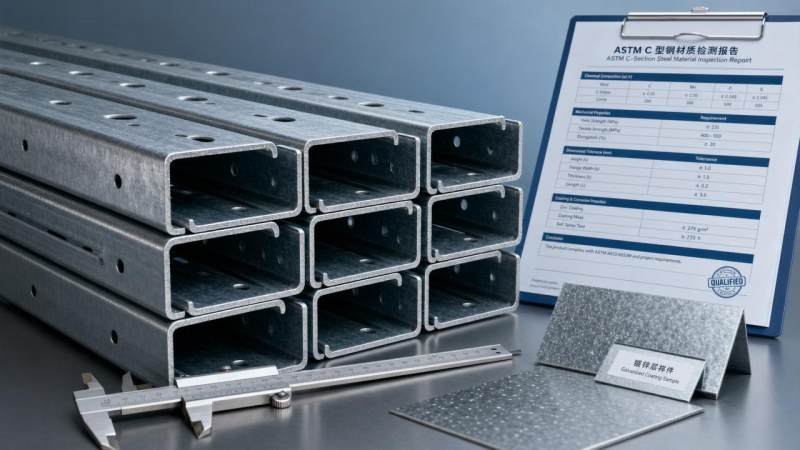
An ASTM C-beam may look like a standard commodity product, but in real projects, small specification differences can create major downstream problems. A mismatch in steel grade, dimensional tolerance, straightness, coating requirement, or documentation can turn into fabrication issues, failed inspections, welding complications, or site installation delays.
For project managers, that means ASTM C-beam selection is not just a technical decision left to engineering. It is also a risk management decision. The right specification framework helps control procurement quality, reduce disputes with suppliers, and make sure the delivered section matches the design assumptions, local codes, and construction schedule.
This is especially important in global sourcing. When C-beams are purchased across borders, the risk of misunderstanding standard references, substitution of equivalent grades, or incomplete quality paperwork increases. A project team that only checks size and price is usually exposed to the highest hidden risk.
What Project Managers Are Really Trying to Avoid
When searching for ASTM C-beam information, project managers and engineering leads are usually trying to avoid five common problems. First, they want to avoid buying a section that does not match the required standard or mechanical properties. Second, they want to prevent fabrication and fit-up issues caused by dimensional variation.
Third, they want to avoid delays caused by missing mill test certificates, traceability gaps, or non-compliant inspection records. Fourth, they need to control total installed cost, not just purchase price. A cheaper beam can become more expensive if it leads to extra cutting, shimming, welding, or corrective work on site. Fifth, they want confidence that the supplier can deliver consistent quality across multiple lots.
These concerns shape how a useful ASTM C-beam article should be read. The most valuable information is not a broad textbook explanation, but a decision-oriented review of the specs that directly affect risk, performance, and procurement success.
The ASTM Standards and Material Grades You Need to Verify First
The first thing to confirm is which ASTM standard applies to the C-beam being quoted. In many projects, buyers informally say “ASTM C-beam” when they really mean a structural channel section manufactured to a certain dimensional standard and produced from a specific steel grade. The dimensional profile and the material specification are both important, and they should never be assumed to be the same thing.
For example, the shape may follow a recognized structural section standard, while the steel itself may be supplied under grades such as ASTM A36, ASTM A572, or ASTM A992 depending on project requirements. Each grade has different yield strength, tensile strength, and suitability for structural use. If the supplier only confirms the profile size but not the exact steel grade, the project may face compliance risk later.
Project teams should request clear confirmation of the following points in every quotation and purchase order: applicable ASTM material standard, exact grade designation, minimum yield and tensile values, intended application, and whether any substitute or equivalent grade is being proposed. If equivalents are allowed, they should be approved by the engineer of record before production begins.
This single step can eliminate a large percentage of sourcing disputes. Many problems start when the buyer assumes “standard structural steel” is enough, but the inspection authority or client later requires proof of a specific ASTM grade.
Section Dimensions, Tolerances, and Why They Affect Installation Risk
One of the most underestimated ASTM C-beam issues is dimensional tolerance. A channel section can meet the nominal size on paper but still create site problems if flange width, web thickness, length tolerance, camber, twist, or straightness are outside acceptable limits for the actual application.
For project managers, dimensional control matters because fabrication shops and installation crews work within limited tolerance windows. If beam dimensions vary too much, bolt hole alignment can shift, welded assemblies may require adjustment, and prefabricated modules may not fit as planned. The result is not only rework but also schedule compression and labor inefficiency.
Important checks include depth, flange dimensions, web thickness, mass per meter or foot, cut length tolerance, straightness, and end squareness. If the C-beam will be used in repetitive assemblies or exported for modular construction, the tolerance requirement should be stated more explicitly than in basic commodity orders.
Ask the supplier how dimensional consistency is controlled across production batches. It is also wise to define whether third-party inspection or pre-shipment verification is required. For larger projects, first-article inspection can be a practical way to validate tolerances before full-volume production.
Mechanical Properties That Influence Real Structural Reliability
From a risk perspective, the most critical mechanical properties are yield strength, tensile strength, elongation, and in some cases impact toughness if the project operates in low-temperature conditions. These values influence load-bearing reliability, design compliance, and the safety margin available in service.
Project leaders should pay attention to whether the supplied ASTM C-beam is intended for primary structural use, secondary framing, equipment support, or fabricated assemblies. The more critical the application, the less acceptable it is to rely on generic statements such as “meets standard quality.” Mechanical properties must be verified through mill certificates and, where necessary, independent testing.
Chemical composition can also matter if the C-beam will be welded, galvanized, or further processed. Carbon content and alloy balance influence weldability and downstream manufacturing behavior. If the project includes heavy fabrication, the procurement team should coordinate material requirements with the fabricator, not treat steel purchase as a separate isolated step.
Surface Condition, Corrosion Protection, and Lifecycle Cost
Another specification area that directly affects project risk is surface treatment. Not every ASTM C-beam is supplied with the same corrosion protection strategy, and this choice affects both service life and maintenance cost. Bare black steel may be adequate for indoor dry environments, but exterior, marine, industrial, and infrastructure applications usually require stronger corrosion control.
Buyers should clearly define whether they need mill finish, primer coating, hot-dip galvanizing, or a project-specific coating system. The wrong assumption here can create major cost and schedule issues. For example, if galvanizing is expected but not specified early, post-fabrication treatment may extend lead time and require process adjustments.
Corrosion protection should be evaluated based on environment, project life, maintenance accessibility, and total installed cost. A lower initial material price may not represent the best procurement decision if the beam requires additional field coating or frequent maintenance. For project managers, lifecycle thinking is often more valuable than unit-price comparison.
In many industrial supply chains, teams that source structural sections also purchase related lifting, handling, or support materials for harsh environments. In such cases, it is useful to apply the same corrosion-risk logic consistently. For example, products such as Galvanized Steel Wire Rope 1470Mpa to 1960Mpa are selected by coating class and service conditions because zinc thickness directly affects durability. The same practical mindset should guide ASTM C-beam surface protection decisions.
Documentation and Traceability Are Often the Difference Between Smooth Delivery and Costly Disputes
Even when the physical beam is acceptable, poor documentation can still create project risk. For international construction and industrial projects, documentation is often what determines whether materials are approved, released, and accepted into the workfront on time.
At minimum, project teams should define requirements for mill test certificates, heat number traceability, dimensional inspection records, coating reports where applicable, and packing lists linked to actual shipment contents. If third-party inspection is needed, it should be planned before production completion, not after the cargo is already staged for dispatch.
Traceability is particularly important when multiple sizes or grades are ordered together. If the supplier cannot link delivered ASTM C-beam pieces to corresponding material records, the project may face internal approval delays or client rejection. This is not a minor administrative issue. It can directly stop fabrication or installation.
Experienced buyers also verify whether marking methods remain legible after blasting, coating, bundling, or long-distance shipment. A technically compliant product with poor traceability can still become a practical problem on site.
How Supplier Capability Affects ASTM C-beam Project Risk
Specifications alone do not control risk unless the supplier has the capability to produce and manage them consistently. For project managers, supplier evaluation should include more than price, catalog range, and nominal lead time. The key question is whether the manufacturer can repeatedly deliver the same ASTM C-beam quality across batches while supporting documentation, inspection, packaging, and logistics requirements.
Useful evaluation points include manufacturing capacity, quality control process, export experience, familiarity with ASTM requirements, tolerance control, testing ability, customization support, and responsiveness in technical clarification. A strong supplier should be able to answer practical questions quickly, not only send a standard brochure.
It is also worth asking how non-conformance is handled. If any dimensional, material, or coating issue appears, does the supplier have a documented corrective process? Can they segregate affected material, reissue records, or accelerate replacement production? These response capabilities are part of risk control, especially for time-sensitive projects.
For global buyers, a supplier with experience serving North America, Europe, the Middle East, and Southeast Asia often understands the importance of standard compliance, stable production, and dependable communication. That experience reduces the chance of avoidable misunderstandings during sourcing.
A Practical ASTM C-beam Checklist Before You Place the Order
Before releasing a purchase order, project teams should confirm a short but disciplined checklist. Verify the exact section size and applicable standard. Confirm the steel grade and required mechanical properties. Define dimensional tolerances if the project has tight fabrication or modular requirements. Specify surface condition and corrosion protection clearly. Require mill certificates and traceability documents. Align inspection requirements, shipment markings, and packaging details.
Also confirm whether the quoted beam is fully compliant with the project specification or includes any proposed equivalent. If an equivalent is offered, request written technical comparison and obtain engineering approval. Never leave substitution open to interpretation.
From a project control perspective, it is smart to review not only material compliance but also delivery sequence. If C-beams are needed in multiple construction phases, staged delivery may reduce site congestion and handling risk. Procurement planning should support installation logic, not simply maximize shipment volume.
Final Takeaway for Project Managers and Engineering Leaders
The ASTM C-beam specifications that affect project risk most are not difficult to understand, but they do require disciplined attention. Grade, dimensions, tolerances, mechanical properties, surface protection, documentation, and supplier capability all influence whether the beam performs as intended and arrives without causing commercial or technical problems.
For project managers, the best approach is to treat ASTM C-beam procurement as part of overall project risk management, not as a routine commodity purchase. A lower quoted price means little if the product creates fabrication issues, fails compliance checks, or delays installation. The better decision is the one that balances structural reliability, documentation integrity, supply consistency, and total project cost.
In short, when evaluating ASTM C-beam offers, ask a simple question: will this specification package reduce uncertainty from purchase order to final installation? If the answer is yes, the project is far more likely to stay on schedule, within budget, and aligned with its design requirements.
Please give us a message


Please enter what you want to find