Understanding ASTM A6 tolerances for cold formed steel is essential when evaluating dimensional accuracy, fit-up performance, and procurement risk for structural projects.
While ASTM A6 mainly covers rolled structural shapes, its tolerance logic is often referenced during cold formed profile evaluation.
This guide explains key limits, inspection points, and supplier controls for practical steel sourcing decisions.
What do ASTM A6 tolerances for cold formed steel really mean?
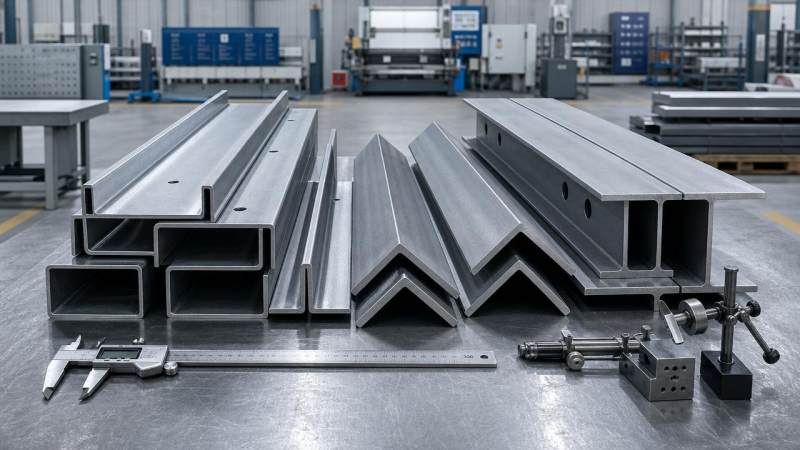
ASTM A6 tolerances for cold formed steel are commonly discussed as a reference framework, not always as a direct product standard.
ASTM A6 applies to general requirements for rolled structural steel plates, shapes, sheet piling, and bars.
Cold formed steel profiles may instead follow ASTM A1003, ASTM A500, EN, JIS, GB, or project-specific drawings.
Still, ASTM A6 tolerances for cold formed steel help frame expectations for straightness, length, camber, sweep, and dimensional variation.
The key is understanding which tolerance table is contractually binding before production starts.
If a drawing states ASTM A6, the supplier should confirm whether it applies fully or only by reference.
For formed channels, angles, purlins, and custom sections, bending process limits must also be considered.
Cold forming changes flat steel through roll forming, press braking, or other deformation methods.
This creates springback, edge wave, twist, and local dimensional effects different from hot rolled shapes.
Which dimensions are most important during inspection?
When reviewing ASTM A6 tolerances for cold formed steel, dimensional inspection should focus on project-critical fit-up areas.
The most important values usually include section size, flange angle, web depth, length, flatness, twist, and hole position.
For bolted assemblies, hole spacing and end squareness may matter more than nominal profile depth.
For cladding support or secondary framing, straightness and line alignment can affect installation speed.
- Length tolerance affects site trimming, splice location, and erection sequencing.
- Camber and sweep affect alignment over long spans.
- Twist affects connection contact and load transfer.
- Thickness tolerance affects strength calculation and coating coverage.
- Bend radius affects cracking risk and design assumptions.
ASTM A6 tolerances for cold formed steel should never be checked through one random measurement only.
Reliable inspection requires repeated readings along the length and across several samples.
Measurement tools should match the tolerance level, including calibrated calipers, gauges, straightedges, and coordinate checks.
For long profiles, inspection on a stable surface is essential to avoid false camber or twist readings.
How are ASTM A6 tolerances different from cold formed profile requirements?
ASTM A6 tolerances for cold formed steel can create confusion because rolled and formed products behave differently.
Rolled structural shapes are formed at high temperature and follow standardized shape families.
Cold formed sections are made from sheet, strip, plate, or coil at room temperature.
The forming method, tooling condition, steel grade, and thickness influence final geometry.
Therefore, a strict ASTM A6 value may not always fit a custom cold formed component.
A better approach is combining applicable standards with drawing-based tolerances and inspection acceptance rules.
This difference matters when ASTM A6 tolerances for cold formed steel appear in mixed structural specifications.
The safest solution is to state the governing standard, inspection method, sampling rate, and rejection criteria clearly.
When should tolerance requirements be customized?
ASTM A6 tolerances for cold formed steel are useful, but some projects need tighter or more specific limits.
Customization is recommended when components must connect directly with machined parts, façade systems, or modular assemblies.
It is also important when the steel profile supports automated installation or robotic welding.
Tighter tolerances may increase tooling work, inspection time, sorting, and production cost.
However, they can reduce field correction, welding gaps, rejected assemblies, and schedule delays.
In broader steel projects, connected materials also require consistent specification control.
For example, Carbon Seamless Pipe may be specified with ASTM A106 Gr.B, ASTM A53 Gr.B, or API-related grades.
Its outer diameter range can cover 17-914mm, with SCH10 through XXS wall thickness options.
Such pipe is used in petroleum, chemical, mechanical, and construction systems.
Coating choices include bare, black paint, galvanized finish, varnish, 3PE, FBE, and epoxy coating.
This shows why profile tolerances, pipe dimensions, coating requirements, and delivery conditions should be reviewed together.
- Use standard tolerances for general framing and non-critical secondary supports.
- Use tighter tolerances for visible structures and modular construction.
- Use drawing-specific limits for OEM structural components.
- Use trial production when geometry is complex or repeat orders are expected.
What risks appear when tolerances are not clearly defined?
Unclear ASTM A6 tolerances for cold formed steel can cause disputes after production is already complete.
A drawing may show a nominal dimension, but not the acceptable deviation.
One side may judge the product by ASTM A6, while another expects drawing-level precision.
This creates avoidable disagreement over acceptance, rework, and delivery responsibility.
The largest risks usually appear during installation, not during factory inspection.
Slight sweep, twist, or hole offset may slow alignment across multiple connected members.
If the project includes galvanized steel, coating thickness may further influence bolt fit-up.
ASTM A6 tolerances for cold formed steel should be treated as part of a complete quality plan.
That plan should include material certificates, inspection reports, packaging requirements, and shipment documentation.
How should a reliable supplier control tolerance quality?
Supplier control is critical when ASTM A6 tolerances for cold formed steel are referenced in project documents.
Quality starts with material selection, because yield strength and thickness consistency influence forming behavior.
Tooling setup must be checked before batch production, especially for asymmetric profiles.
During production, first-piece inspection helps confirm whether bend angle, length, and straightness are stable.
For export orders, dimensional records should be matched with heat numbers and packing lists.
This traceability helps verify compliance if questions appear after arrival.
- Confirm applicable standards, including ASTM, EN, JIS, or GB requirements.
- Review drawings for critical dimensions and missing tolerance notes.
- Produce samples when the shape is new or highly customized.
- Inspect first pieces before full production release.
- Protect profiles during packaging to prevent transport deformation.
Hongteng Fengda manufactures and exports structural steel from China for construction, industrial, and manufacturing projects.
Its product scope includes angle steel, channel steel, steel beams, cold formed profiles, and customized structural components.
Production is supported by modern facilities, quality control, and compliance with ASTM, EN, JIS, and GB standards.
This capability is important when ASTM A6 tolerances for cold formed steel must be aligned with international project documents.
What should be confirmed before placing an order?
Before ordering, ASTM A6 tolerances for cold formed steel should be converted into clear purchasing language.
The specification should identify product standard, grade, surface condition, length tolerance, section tolerance, and packaging method.
It should also define whether inspection happens before coating, after coating, or at both stages.
If holes, slots, welding, or end cuts are included, their tolerances should be listed separately.
ASTM A6 tolerances for cold formed steel are most effective when used with precise drawings and realistic process knowledge.
They help reduce rework, improve connection accuracy, and support predictable project delivery.
For complex structural steel sourcing, share drawings, tolerance expectations, material grades, and delivery schedules early.
Hongteng Fengda can review specifications and support customized structural steel solutions for global projects.
Clear requirements make ASTM A6 tolerances for cold formed steel a practical tool, not a source of uncertainty.
Please give us a message


Please enter what you want to find