When comparing ASTM A106 pipe with other carbon steel pipes for high-heat service, buyers and engineers must balance temperature performance, pressure resistance, cost, and compliance. This guide explains where ASTM A106 pipe stands against options such as API 5L Steel Pipe and other high-temperature steel materials, helping procurement teams, project managers, and technical evaluators make safer, more cost-effective decisions.
In steel procurement, the wrong pipe grade can create more than a pricing issue. It can affect shutdown frequency, weld performance, inspection workload, and long-term operating safety. For boilers, refineries, power generation lines, hot fluid transfer systems, and process plants running at elevated temperatures, understanding the difference between ASTM A106 pipe and general carbon steel pipe is a practical decision with budget and risk implications.
For technical teams, the focus is usually on temperature range, pressure capability, and code compliance. For procurement and commercial decision-makers, the key questions often include lead time, interchangeability, inspection scope, and total installed cost over 5 to 15 years of service. A useful comparison must address both engineering performance and supply-chain reality.
What ASTM A106 Pipe Is Designed For in High-Heat Applications
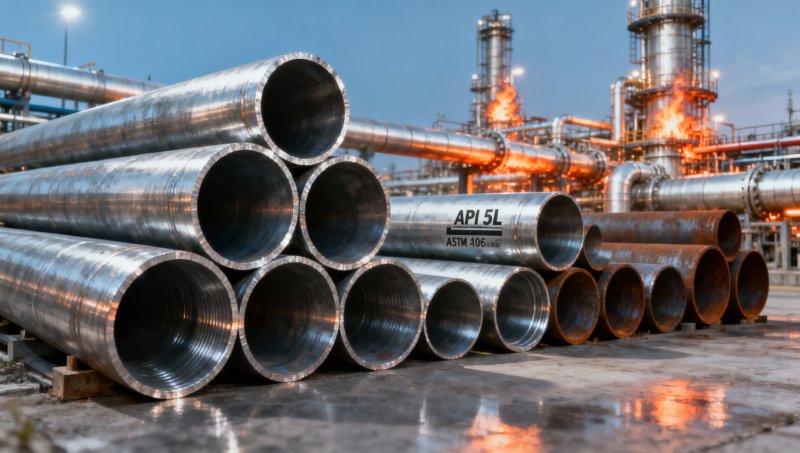
ASTM A106 pipe is a seamless carbon steel pipe specification widely used for high-temperature service. In practical terms, it is often selected for systems carrying steam, hot oil, process fluids, and gas under elevated temperature and pressure. Compared with many standard carbon steel pipes intended for lower-temperature or structural duty, ASTM A106 is chosen when service conditions are more demanding and code compliance matters.
The seamless manufacturing route is one of its key advantages. Because there is no welded seam, the pipe is often preferred in pressure systems where thermal cycling, high internal pressure, or critical process conditions increase the consequences of a weak point. Common grades include Grade A, Grade B, and Grade C, with Grade B being one of the most frequently specified options in industrial projects.
In many project specifications, ASTM A106 pipe appears alongside ASTM A53 and API 5L. However, these standards are not interchangeable in every case. ASTM A53 can be used in mechanical and pressure applications, but it is not always the first choice for sustained high-heat operation. API 5L is designed primarily for line pipe service in the oil and gas sector, especially pipeline transmission, and its service intent is different even when some chemical composition values may seem close.
Typical service conditions where A106 is evaluated
- Steam and condensate lines operating above 400°F and often extending into much higher ranges depending on design code.
- Refinery and petrochemical process piping exposed to thermal fluctuation, pressure loading, and shutdown cycles.
- Power plant systems where material traceability, wall thickness tolerance, and pressure integrity are closely controlled.
- Industrial heating units and heat transfer systems where long service life is more important than the lowest initial material cost.
For buyers comparing materials across regions, it is also important to look at documentation. Mill test reports, dimensional inspection, hydrostatic testing, chemistry control, and heat number traceability often influence acceptance. In high-heat service, a lower-priced pipe that lacks the right documentation package can create delays of 7 to 21 days during inspection and approval.
ASTM A106 Pipe vs API 5L and Other Carbon Steel Pipes
A side-by-side comparison helps clarify why ASTM A106 pipe is often preferred for elevated-temperature systems, while API 5L or other carbon steel pipes may be suitable in pipeline, structural, or general service environments. The selection should not be based on name recognition alone. It should reflect design temperature, pressure class, fabrication method, and applicable project standard.
The table shows that the main difference is not simply material category but service intent. ASTM A106 is specified around elevated-temperature pressure piping. API 5L is associated with transmission line service. ASTM A53 remains versatile, but in severe heat conditions many engineers still move toward A106 because of the stronger fit between standard and application.
Where confusion often happens
One common purchasing mistake is to compare only yield strength or base chemistry without checking the governing code and operating temperature. A pipe that works well at ambient temperature or intermittent service may not be the right option at 425°C, 450°C, or under repeated startup and shutdown conditions. Another issue is assuming that seamless and welded pipe are functionally identical in all thermal cycles. In many critical systems, they are not treated the same.
Quick decision rule
- Check design temperature and pressure first.
- Confirm whether the project specification names ASTM A106, ASTM A53, or API 5L.
- Review whether seamless construction is required.
- Match inspection documents and test requirements before price comparison.
This 4-step rule can eliminate many substitution risks early, especially in EPC projects where approval delays affect schedules by 2 to 4 weeks.
Performance, Cost, and Compliance Factors That Influence Selection
Material selection in high-heat service is rarely based on one variable. Engineering teams focus on temperature endurance, pressure integrity, weldability, and inspection acceptance. Procurement teams add commercial factors such as unit price, available stock size, shipment time, and substitute approval risk. The correct decision usually balances at least 5 dimensions rather than pursuing only the lowest ex-works price.
For example, ASTM A106 seamless pipe may carry a higher initial cost than some welded carbon steel alternatives, but the difference should be evaluated against installation environment and lifecycle impact. If a plant shutdown costs far more than the material delta, choosing a pipe aligned with high-temperature duty can be financially rational. In many industrial settings, avoiding one unplanned outage during a 12-month period already changes the total-cost calculation.
Key selection factors
- Design temperature range and whether exposure is continuous or intermittent.
- Pressure class, wall thickness schedule, and expected thermal expansion stress.
- Required manufacturing route: seamless, ERW, or other approved process.
- Inspection scope including hydro test, NDT, chemistry verification, and traceability.
- Lead time, especially for non-standard wall thicknesses or mixed-size orders.
At the sourcing stage, buyers often also compare adjacent steel products for project bundling. For construction and industrial projects, mixed procurement can include structural sections, pipe, and reinforcement materials. In some supply packages, products such as Wire rod are purchased together with structural steel for civil engineering construction, foundations, beams, columns, walls, and slabs. Typical specifications may include 6mm to 50mm sizes, lengths such as 5.8m, 6m, or 12m, and grades like HRB335, HRB400, and HRB500, depending on project design and regional standards.
This kind of combined sourcing can improve freight efficiency and supplier coordination, but it also means each material category must be checked against its own standard. Pipe for high-temperature service should not be evaluated using the same criteria as reinforcement or structural profiles. A qualified supplier should separate documentation, inspections, and application guidance for each product line rather than treating all steel items as interchangeable commodities.
The most important conclusion is that cost must be measured in context. A lower pipe price can lose its advantage if it leads to extra review cycles, rejected substitutions, or tighter maintenance intervals. For many buyers, the better question is not “Which pipe is cheapest today?” but “Which option is acceptable, available, and safer over the service life?”
How Buyers and Engineers Should Evaluate Pipe for High-Temperature Projects
A practical evaluation process helps align engineering, quality control, and purchasing. In multi-party projects, decisions often fail when each team reviews only its own checklist. Engineers may focus on code fit, while purchasing emphasizes delivery date and finance teams examine budget limits. The strongest procurement outcome comes from a shared review framework covering technical, commercial, and operational factors in 1 coordinated process.
A 5-step evaluation workflow
- Define service conditions, including design temperature, operating pressure, fluid type, and shutdown frequency.
- Match the applicable standard and confirm whether ASTM A106 is required or whether another standard is acceptable.
- Review size range, wall schedule, end preparation, and weld procedure compatibility.
- Verify documentation requirements such as MTC, dimensional checks, hydro tests, and any third-party inspection needs.
- Compare commercial terms including MOQ, lead time, packaging, shipment method, and claim handling process.
This structured method is useful for distributors, EPC contractors, plant operators, and end users. It is especially relevant when projects involve multiple destinations such as North America, Europe, the Middle East, and Southeast Asia, where acceptance standards and documentation expectations may vary. Even a 1% dimensional tolerance or a small discrepancy in marking can become a customs or inspection issue if project documents are strict.
Common risk signals during sourcing
- Supplier quotes a substitute grade without confirming code acceptance.
- Test reports are promised after shipment instead of before approval.
- Wall thickness, schedule, or heat treatment details are missing from the quotation.
- Lead time appears unusually short for non-standard sizes without production clarification.
In high-heat service, these warning signs matter because replacement cost is rarely limited to the pipe itself. Rework may involve welding, insulation removal, scaffolding, testing, and plant downtime. That is why experienced project managers often treat pre-shipment verification as a cost-saving tool rather than an administrative burden.
A capable structural steel manufacturer and exporter can support this process by offering clear production scope, consistent quality control, and multi-standard familiarity. For buyers working with Chinese suppliers, the strongest partnerships usually come from manufacturers that can provide ASTM, EN, JIS, and GB aligned products, stable output capacity, and realistic delivery windows instead of aggressive but unreliable promises.
Procurement Advice, FAQ, and Supplier Support Considerations
For procurement teams, selecting ASTM A106 pipe versus other carbon steel pipes should end with a documented commercial and technical decision. The goal is not only to buy acceptable material, but to reduce sourcing risk, maintain predictable project timing, and support long-term operating safety. A disciplined review process can shorten approval cycles and reduce disputes after delivery.
Procurement checklist before placing the order
- Confirm exact standard, grade, dimensions, schedule, and end condition on the PO.
- State required inspection documents before production begins, not after packing.
- Align incoterms, payment terms, and shipment batch plan with project schedule.
- Request packing details and marking format for faster site receiving and traceability.
For many industrial buyers, realistic delivery planning matters as much as specification alignment. Standard sizes may move faster, while special wall thicknesses or mixed bundles can extend the schedule by 2 to 6 weeks depending on rolling and inspection arrangements. If the material is tied to a shutdown window, procurement should build review time into the sourcing plan instead of assuming immediate release.
FAQ
Is ASTM A106 always better than API 5L?
Not always. ASTM A106 is typically better aligned with elevated-temperature pressure piping, while API 5L is often more suitable for transmission line projects. The right choice depends on service condition, code requirement, and owner specification. “Better” should be defined by application, not by general preference.
Can ASTM A53 replace ASTM A106 in high-heat service?
Sometimes, but only if the design code and project specification allow it. For demanding heat and pressure service, many engineers still prefer ASTM A106 because it is specifically associated with high-temperature use. Substitution should be reviewed case by case, especially above moderate operating temperatures or in critical process lines.
What documents should buyers request?
At minimum, buyers often request mill test certificates, dimensional inspection records, marking details, and test information required by contract. For stricter projects, third-party inspection, PMI, or additional NDT may also be requested. The exact package depends on industry, destination market, and owner approval rules.
How can a supplier reduce sourcing risk?
A reliable supplier reduces risk through clear standard matching, strict quality control, stable production planning, and consistent lead-time communication. For international buyers, it also helps when the supplier can support multiple product categories, international standards, and customized solutions without sacrificing traceability or documentation accuracy.
ASTM A106 pipe remains a strong choice where high temperature, pressure service, and compliance reliability are central to the project. Other carbon steel pipes such as API 5L or ASTM A53 may still be suitable in the right scenarios, but they should be selected based on actual service duty rather than assumed equivalence. If you are evaluating pipe supply together with structural steel, customized fabrication, or broader industrial steel sourcing, Hongteng Fengda can support global buyers with stable production, consistent quality, and practical export coordination. Contact us to discuss your specification, request a tailored quotation, or get a more efficient steel sourcing solution for your next project.
Please give us a message


Please enter what you want to find