ASTM A106 Gr B pipe remains a widely specified choice for pressure and high-temperature service, but selecting it correctly requires more than checking the ASTM A106 Gr.B specification. Buyers and engineers must also review ASTM A106 Gr B mechanical properties, ASTM A106 Gr B chemical composition, ASTM A106 Gr.B equivalent grades, and common application limits to avoid costly mistakes in project performance, compliance, and procurement.
What Buyers and Engineers Usually Want to Know First
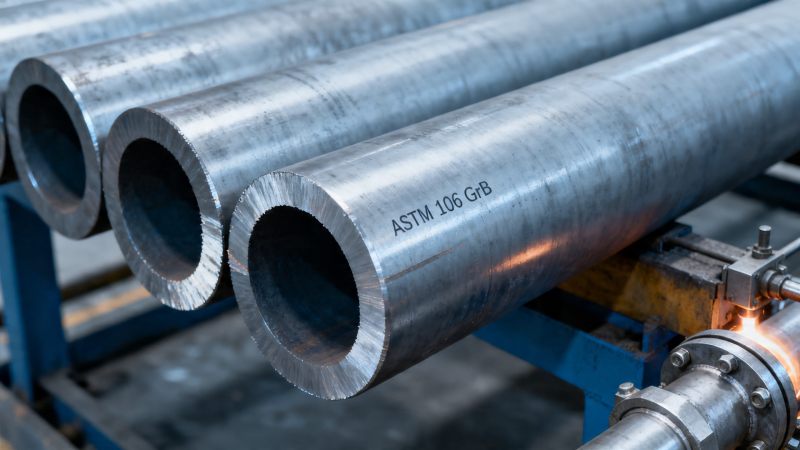
The core search intent behind this topic is practical decision-making: when ASTM A106 Grade B pipe is the right choice, where its limits begin, and what specification mistakes can create technical, commercial, or compliance risk. Most readers are not looking for a textbook definition. They want a clear answer to questions such as:
- Is ASTM A106 Gr B suitable for my pressure or temperature condition?
- How is it different from ASTM A53 or other carbon steel pipe grades?
- What mechanical and chemical requirements matter in real projects?
- What are the most common selection errors in purchasing and engineering review?
- How can I reduce sourcing risk, rework, and approval delays?
In short, ASTM A106 Gr B pipe is a strong and widely accepted option for seamless carbon steel pipe service under pressure and elevated temperature, especially in power, oil and gas, petrochemical, and industrial process systems. However, it is not a universal answer for every piping job. Correct selection depends on service temperature, pressure, fabrication method, code requirements, corrosion conditions, and whether seamless construction is truly necessary.
Where ASTM A106 Gr B Pipe Is Commonly Used
ASTM A106 Gr B is primarily used for seamless carbon steel pipe in high-temperature and pressure applications. It is commonly specified for:
- Steam lines
- Boiler and superheater piping
- Refinery process piping
- Power plant piping systems
- Oil and gas transportation within process facilities
- Compressed air and industrial fluid systems where elevated temperature is involved
The reason it is often chosen is straightforward: ASTM A106 Grade B offers a good balance of strength, manufacturability, availability, and cost for carbon steel seamless pipe service. In many industrial projects, it becomes the default material when the design requires carbon steel pipe under moderate to high temperature and pressure conditions.
That said, “commonly used” does not mean “always correct.” Some buyers specify ASTM A106 Gr B simply because it is familiar, not because it is the best technical fit. This is where selection errors begin.
ASTM A106 Gr B Mechanical Properties and Chemical Composition: What Actually Matters
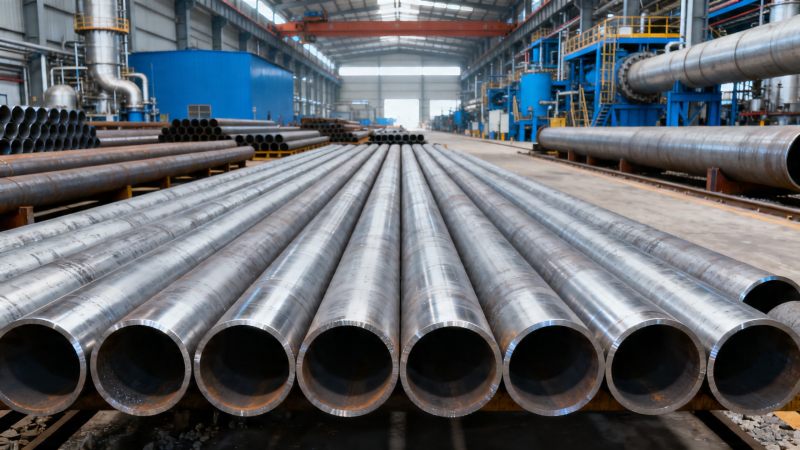
When reviewing ASTM A106 Gr B mechanical properties, most engineers focus on tensile strength and yield strength first. Typical values are:
- Minimum tensile strength: 60,000 psi (415 MPa)
- Minimum yield strength: 35,000 psi (240 MPa)
These properties make the grade suitable for many structural and process conditions, but they should never be reviewed in isolation. The full material decision should also consider wall thickness, pipe size, temperature derating, weld procedure compatibility, and project code requirements.
ASTM A106 Gr B chemical composition also matters because it influences weldability, toughness, and elevated-temperature behavior. While exact heat analysis values can vary within specification limits, the grade is fundamentally a carbon steel material with controlled levels of carbon, manganese, phosphorus, sulfur, silicon, and sometimes copper, chromium, molybdenum, nickel, vanadium, and other residual elements within allowable limits.
For practical selection, the most important points are:
- Higher carbon content can affect weldability and heat-affected zone behavior.
- Residual alloying elements should be checked if downstream fabrication or code compliance is critical.
- Chemical compliance on paper is not enough; buyers should confirm mill test certificates and inspection consistency.
For procurement teams and quality managers, this means the ASTM A106 Gr.B specification should be reviewed together with MTC documentation, NDT requirements, dimensional tolerances, and any supplementary testing required by the project.
Its Real Limits: When ASTM A106 Gr B Is Not the Best Choice
One of the biggest misunderstandings in the market is assuming ASTM A106 Gr B covers every carbon steel pipe need. It does not. Its limits usually appear in the following situations:
- Corrosive service: ASTM A106 Gr B is not inherently corrosion-resistant. If the medium is highly corrosive, a coated, lined, alloy, or stainless material may be more appropriate.
- Low-temperature service: For applications requiring strong notch toughness at low temperature, other materials with specific low-temperature performance may be necessary.
- Very high design temperature: Although ASTM A106 Gr B is used in elevated-temperature service, there are temperature limits under design codes. Beyond certain ranges, alloy steel grades may be required.
- Non-seamless design allowance: If the design does not require seamless pipe, alternative specifications may offer lower cost with acceptable performance.
- Structural applications: It is a pressure pipe specification, not a direct substitute for every structural steel requirement.
This last point is especially important. In industrial procurement, teams sometimes mix pipe materials and structural materials in the same sourcing discussion. For example, a construction project may need both pressure piping and reinforcement or general steel supply. In such cases, material categories should be separated clearly. For reinforcement and construction support in civil engineering works such as bridges, roads, tunnels, foundations, beams, columns, walls, and slabs, a product such as Wire rod may be relevant instead, depending on the design function. This distinction helps avoid one of the most common sourcing mistakes: selecting by familiar grade name rather than by actual engineering purpose.
ASTM A106 Gr.B Equivalent Grades: Useful Reference, but Not Automatic Substitution
Many users search ASTM A106 Gr.B equivalent grades because they want local sourcing flexibility or lower cost alternatives. This is reasonable, but “equivalent” should be treated carefully.
In global projects, buyers may compare ASTM A106 Grade B with materials under EN, JIS, DIN, or GB systems. However, equivalent does not always mean identical in:
- Manufacturing route
- Chemical composition limits
- Mechanical property requirements
- Testing and inspection rules
- Heat treatment requirements
- Code acceptance in the destination market
A substitute grade may look close on a datasheet but still fail owner approval, EPC review, or third-party inspection. This is why technical evaluation personnel and procurement managers should request a side-by-side compliance review instead of accepting an “equivalent” claim from a quotation alone.
The safest process is:
- Confirm end-use code and client specification.
- Compare base standard requirements line by line.
- Review chemical and mechanical data from the actual mill.
- Check dimensional, testing, and marking compliance.
- Get written approval before substitution.
Common Selection Errors That Cause Costly Problems
The most common ASTM A106 Gr B pipe selection errors are not complicated. They usually come from incomplete review, rushed sourcing, or confusion between similar standards.
- Choosing by grade name only: Teams specify “A106 Gr B” without checking temperature, code, wall thickness, or fabrication requirements.
- Confusing ASTM A106 with ASTM A53: These standards overlap in some practical uses, but they are not interchangeable in every design or approval environment.
- Ignoring seamless vs welded implications: Some projects truly require seamless pipe; others do not. Using the wrong assumption can raise cost or create compliance issues.
- Overlooking corrosion allowance: Even if the base material meets ASTM A106 Gr.B specification, corrosion conditions may require added thickness, coating, or a different material.
- Not verifying mill documents: Material traceability, heat number control, and test certificates are essential for quality assurance.
- Assuming all supply is equal: Manufacturing quality, dimensional control, and inspection discipline vary by supplier.
For project leaders and commercial decision-makers, these errors usually show up later as change orders, delayed approvals, failed inspections, fabrication rework, or higher lifecycle cost.
How to Evaluate ASTM A106 Gr B Pipe More Reliably Before Purchase
A practical review process can prevent most mistakes. Before purchase, buyers and technical teams should confirm:
- Service condition: medium, pressure, temperature, and corrosion environment
- Applicable code: ASTM only, or also ASME, client standard, or local regulatory requirements
- Dimensional needs: NPS, schedule, length, end type, tolerance
- Manufacturing requirement: seamless only, heat treatment, testing scope
- Documentation package: MTC, inspection report, NDT, hydrotest, marking, traceability
- Supplier capability: production stability, export experience, quality control, delivery reliability
This is also where working with an experienced steel manufacturer and exporter becomes valuable. For international buyers, the risk is often not just the steel itself, but inconsistency in production, documentation gaps, or shipment delays. A supplier with strong quality control, international standard familiarity, and stable delivery performance can reduce both technical and commercial uncertainty.
Final Takeaway
ASTM A106 Gr B pipe is a proven and practical material for many pressure and high-temperature applications, but it should not be selected on habit alone. The right decision depends on a full review of ASTM A106 Gr B mechanical properties, ASTM A106 Gr B chemical composition, service limits, project code requirements, and whether any ASTM A106 Gr.B equivalent grades are truly acceptable for substitution.
If you are evaluating this material for a project, the best approach is simple: start from service conditions, verify compliance requirements, review documentation quality, and avoid assuming that “commonly used” means “universally suitable.” That approach leads to safer design, smoother approval, and better procurement results.
Please give us a message


Please enter what you want to find