ASTM A106 Gr.B equivalent is a frequent source of confusion for buyers, engineers, and project teams comparing standards, ASTM A106 Gr.B specification, ASTM A106 Gr B chemical composition, and ASTM A106 Gr B mechanical properties. This guide explains where grade matching goes wrong, how ASTM A106 Gr B pipe is evaluated in real projects, and what to verify before sourcing steel products across global markets.
If you need the short answer first: there is no perfect one-to-one “equivalent grade” for ASTM A106 Gr.B in every standard system. Many materials may look similar on paper, but similarity in chemistry or strength does not automatically mean interchangeability in design, pressure service, fabrication, code approval, or procurement. Most confusion happens when teams compare only yield strength or only a rough grade name, while ignoring product form, manufacturing route, testing scope, temperature service, and code/project requirements.
What buyers and engineers usually mean when they ask for an ASTM A106 Gr.B equivalent
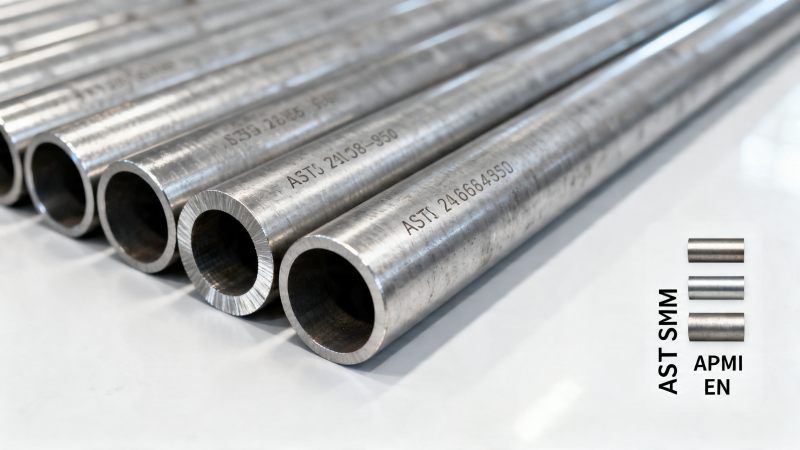
In real sourcing and technical discussions, people asking for an ASTM A106 Gr.B equivalent usually mean one of four things:
- A chemistry equivalent: a steel with similar carbon, manganese, phosphorus, sulfur, and silicon limits.
- A mechanical equivalent: a grade with similar tensile strength and yield strength.
- A functional equivalent: a steel that can perform similarly in a comparable pressure and temperature application.
- A procurement equivalent: a grade available in the local market that might replace A106 Gr.B with client or engineer approval.
These are not the same. A material can be close in chemical composition yet fail project approval. Another can match strength but still be unsuitable because it belongs to a different product standard. This is the first place confusion begins.
ASTM A106 Gr.B is specifically known as a seamless carbon steel pipe standard for high-temperature service. That definition matters. If someone compares it directly with a plate grade, structural steel grade, line pipe grade, or general-purpose carbon steel bar, they may create a false equivalency.
Where confusion happens most: standard, grade, and product form are often mixed together
The biggest mistakes usually come from mixing three separate dimensions:
- Standard — ASTM, EN, JIS, GB, DIN, and others define different requirements.
- Grade — Gr.B, S235, 20#, ST52, and similar names may indicate strength or composition ranges, but they do not mean the same thing.
- Product form — pipe, tube, bar, plate, beam, and profile are tested and used differently.
For example, ASTM A106 Gr.B is a pipe grade. ASTM A53 Gr.B is also often mentioned in comparison, but it is not automatically identical in every project condition. API 5L Gr.B may also appear in discussions, especially in energy or pipeline purchasing, yet it serves a different standard framework. EN or GB grades may appear close in chemistry, but code acceptance, inspection requirements, and intended service can still differ.
This is also why procurement teams should be careful when a supplier offers a “similar” material without documenting the exact standard, heat treatment condition, testing, and dimensional compliance. A rough cross-reference chart is only a starting point, not final approval evidence.
ASTM A106 Gr B specification: what actually defines the grade
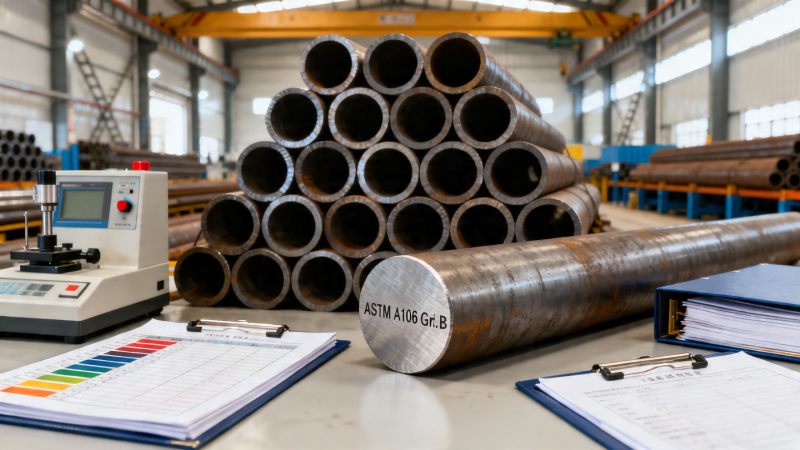
To judge equivalency correctly, readers need to focus on what the ASTM A106 Gr B specification actually covers. The grade is not defined by strength alone. Key elements include:
- It is a seamless carbon steel pipe.
- It is intended for high-temperature service.
- It includes specific requirements for chemical composition, mechanical properties, manufacturing, dimensions, and testing.
- Acceptance may involve hydrostatic testing, nondestructive examination, flattening or bending requirements depending on size and purchase terms.
That means a candidate replacement should be evaluated against the full package of requirements, not just one material line in a chart.
Typical market confusion often comes from these comparisons:
- A106 Gr.B vs A53 Gr.B — often treated as interchangeable, but they are not universally interchangeable for all temperature and service requirements.
- A106 Gr.B vs API 5L Gr.B — common in oil, gas, and industrial procurement, but the governing service and documentation requirements differ.
- A106 Gr.B vs GB 20# or similar carbon steels — chemistry may appear close, but product standard and qualification route may not match.
For companies sourcing multiple steel forms, this distinction is especially important. A project may use pressure pipe under ASTM requirements and also use structural sections or bars elsewhere in the same package. In that context, teams should not transfer pipe-grade assumptions to other products. For example, for general fabrication or non-pressure applications, a separately specified product such as Hot rolled Carbon Steel Round Bar may be appropriate when ordered to the correct standard, size, finish, and certification, but it is not a substitute for ASTM A106 Gr.B pipe unless the engineering requirement specifically allows it.
ASTM A106 Gr B chemical composition and mechanical properties: why “close” is not always enough
Many searchers want to compare ASTM A106 Gr B chemical composition and ASTM A106 Gr B mechanical properties against other grades. This is useful, but only if done carefully.
In practice, comparison should include:
- Chemical limits — especially carbon, manganese, phosphorus, sulfur, silicon, and any residuals or alloying effects.
- Mechanical values — tensile strength, yield strength, elongation, and whether the values are minimums or test outcomes.
- Manufacturing route — seamless versus welded.
- Service context — pressure, temperature, fluid, code environment, corrosion allowance, and welding requirements.
Why does this matter? Because two grades can have similar minimum tensile strength, but different quality consistency, weldability behavior, impact expectations, or code recognition. For technical evaluators and QA teams, the real question is not “Does this look similar?” but “Can this material be approved, fabricated, tested, and safely used under the project specification?”
For procurement and finance teams, that difference directly affects cost risk. A cheaper “equivalent” may lead to NCRs, re-approval delays, replacement orders, or site rejection. The lowest material price is not the lowest total project cost if the equivalency is weak.
How to evaluate a proposed equivalent grade in a real project
If a supplier proposes an alternative to ASTM A106 Gr.B, use a practical review process rather than relying on a single statement such as “equal to” or “similar to.”
1. Confirm the application first
Ask where the material will be used: pressure piping, high-temperature service, general utility, structural support, or fabrication component. The required standard depends on use.
2. Check product form and manufacturing type
A seamless pipe standard should be compared with seamless pipe candidates first. Do not jump from pipe to bar or structural steel just because strength values look close.
3. Review full specification compliance
Look beyond chemistry and tensile data. Review dimensions, tolerances, test certificates, NDT, hydro test, heat treatment condition, marking, and traceability.
4. Verify code and client acceptance
Even if the steel is technically close, EPC, end user, inspector, or local regulation may not accept substitution without formal approval.
5. Ask for mill documentation
Request MTCs, standard designation, heat number traceability, test reports, and any third-party inspection records. If the project is sensitive, sample review before bulk supply is wise.
6. Separate commercial substitution from engineering substitution
A purchasing equivalent is not automatically an engineering equivalent. Final use controls the decision.
What each target reader should pay attention to
For engineers and technical evaluators:
Focus on service condition, standard scope, code compliance, and test requirements. Do not approve based only on a grade comparison chart.
For procurement teams:
Confirm whether the quoted grade is an exact standard match or an alternative requiring approval. Put this in writing before order confirmation.
For project managers:
Watch schedule risk. Material substitution questions can delay approval, fabrication, and site progress if not resolved early.
For QA/QC and safety personnel:
Verify material traceability, inspection records, marking, and actual standard compliance. Field problems often begin with incomplete documentation.
For business decision-makers and finance approvers:
Assess total landed risk, not unit price alone. A compliant source with stable quality and reliable documentation often saves more than a cheaper but uncertain offer.
Practical sourcing advice to avoid costly mistakes
When global buyers source steel products across markets, confusion increases because local naming habits and stock availability differ. The safest approach is to make every quotation and PO technically specific. Include:
- Exact standard and grade
- Product form
- Manufacturing method
- Size and tolerance
- Required testing and inspection
- Certification and document package
- Application or service condition if critical
For a manufacturer and exporter, consistent communication here is as important as production capability. A reliable supplier should help clarify whether a requested grade is a true match, an industry-accepted alternative, or a grade that only appears similar at first glance.
Companies working with multiple international standards also benefit from sourcing partners who understand ASTM, EN, JIS, and GB differences in practical terms. That reduces the chance of mixing structural steel, pressure pipe, and general carbon steel products under one misleading “equivalent” label.
Conclusion: the right question is not “What is the equivalent?” but “Equivalent in what sense?”
ASTM A106 Gr.B equivalent grades cause confusion because people often search for a simple one-line answer to a decision that is actually multidimensional. The correct evaluation must consider standard scope, product form, manufacturing route, ASTM A106 Gr B chemical composition, ASTM A106 Gr B mechanical properties, testing, code acceptance, and real service conditions.
If you remember one point, let it be this: similar is not the same as approved. For technical safety, procurement efficiency, and project cost control, treat any proposed ASTM A106 Gr.B equivalent as a formal verification task rather than a naming exercise. That approach leads to better sourcing decisions, fewer approval issues, and more reliable project execution.
Please give us a message


Please enter what you want to find