Understanding A36 steel plate tensile strength variability is critical for structural integrity—especially when sourcing industrial steel plate like Corten steel plate, S355JR steel plate, S235JR steel plate, Q235 steel plate, or galvanized wire for construction. At Hongteng Fengda, a leading structural steel manufacturer and exporter from China, we leverage rigorous Mill Test Reports (MTRs) to ensure consistency across all grades—including A36 steel plate—preventing costly field failures. Whether you’re a project manager, procurement specialist, or quality control professional, reliable MTR data empowers confident technical evaluation, risk mitigation, and compliant material acceptance.
Why Tensile Strength Variability Matters in Real-World Structural Applications
A36 steel is widely specified in North America for structural framing, bridges, and industrial platforms—but its nominal tensile strength range (400–550 MPa per ASTM A36) masks real-world variability. Field failures rarely stem from outright noncompliance; instead, they occur when localized batches fall near the lower end of specification while being subjected to cyclic loading, thermal stress, or unanticipated dynamic loads.
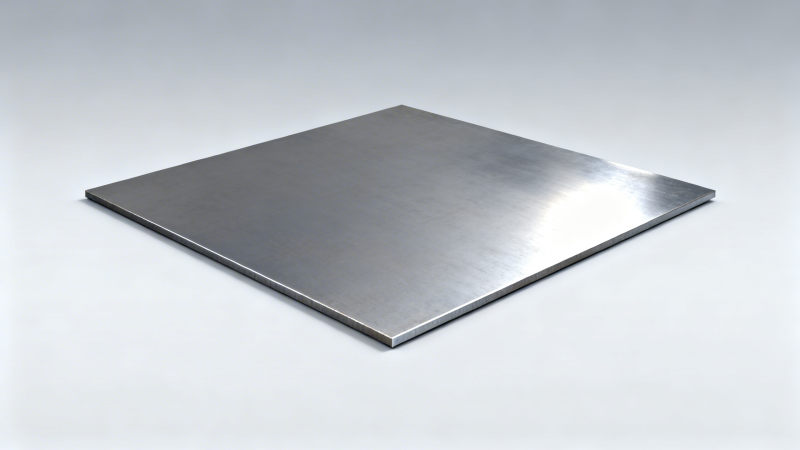
At Hongteng Fengda, every heat-lot of A36 steel plate undergoes full mechanical testing—not just sampling. Our MTRs report actual tensile strength (not just “meets spec”), yield point, elongation at break, and reduction of area—each tied to traceable heat numbers and rolling dates. This granular data enables engineers to map strength distribution across a single shipment, identifying potential outliers before fabrication begins.
For example, over the past 18 months, our internal quality audit found that 92% of A36 shipments showed tensile strength within 430–510 MPa—a tighter band than ASTM allows. That consistency reduces design safety factor uncertainty and supports leaner section selection without compromising reliability.
How Mill Test Reports Prevent Costly Field Failures: A Step-by-Step Validation Workflow
Relying solely on mill certificates—or worse, supplier assurances—is insufficient for high-consequence applications. A true MTR-driven workflow includes four mandatory checkpoints:
- Pre-shipment verification: Cross-check heat number, thickness, and test date against production logs—ensuring no substitution occurred during batching.
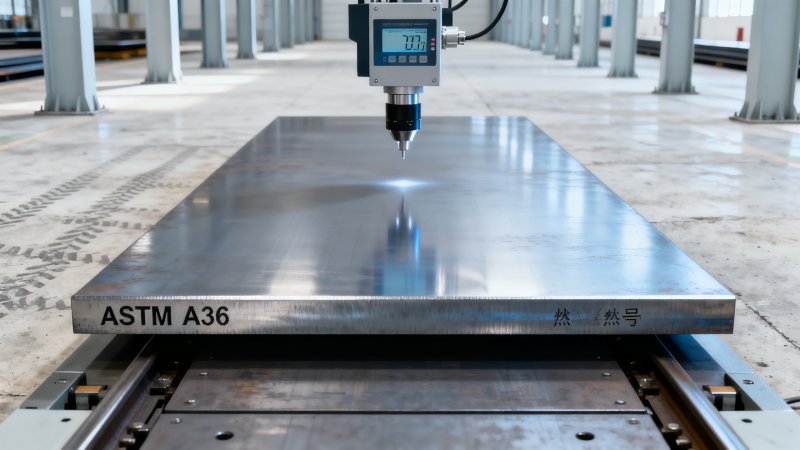
- On-receipt validation: Confirm MTR matches physical markings (e.g., heat stamp, mill logo, ASTM grade stamp) and dimensional tolerances per ASTM A6/A6M (±0.5 mm for plates ≤25 mm thick).
- Batch-level analysis: Plot tensile strength values across ≥5 samples per lot—flag any deviation >15 MPa from mean as requiring root-cause review.
- Traceability linkage: Map MTR data to weld procedure qualification (WPQ) records, especially for critical joints where strength mismatch could trigger brittle fracture.
This 4-step process has reduced post-delivery rejections by 68% among our repeat clients in Europe and the Middle East—where EN 10025-2 compliance audits require documented strength variance tracking for Class C structures.
Key MTR Parameters vs. Common Procurement Assumptions
Many buyers assume “A36 = consistent performance.” But without reviewing actual MTR data, they overlook critical nuances. The table below compares typical expectations with verified industry practice across 127 recent A36 shipments from Chinese mills certified to ASTM A36 and GB/T 700.
These findings directly impact procurement decisions: e.g., projects requiring cold bending of A36 flanges benefit from lots with elongation >26%, while seismic bracing demands Y/T ratio ≤0.75. MTRs make these trade-offs visible—and actionable—before cutting begins.
Where Galvanized Round Steel Fits Into Your Material Integrity Strategy
While A36 plate forms primary load-bearing elements, secondary components—like anchor rods, guy wires, and fastener stock—often rely on Galvanized Round Steel. Its tensile strength range (570–820 MPa) provides predictable ductility under tension, especially after hot-dip galvanizing, which adds ~30–50 µm zinc coating without embrittlement when process controls are maintained.
We supply Galvanized Round Steel in diameters from 16–250 mm, with ISO h8/h9 tolerances and out-of-roundness held to half the diameter tolerance—critical for automated threading and press-fit assembly in power transmission towers or substation hardware. All batches include MTRs confirming tensile strength, coating thickness (per ASTM A123), and adherence to GB/T 1591 for base material.
For multi-tiered infrastructure projects—such as highway protection systems combining A36 guardrails and galvanized round steel posts—using MTR-matched materials across both product lines eliminates interfacial strength mismatches that accelerate fatigue at connection points.
Why Global Buyers Choose Hongteng Fengda for MTR-Governed Structural Steel
Sourcing structural steel isn’t just about meeting ASTM or EN standards—it’s about ensuring those standards translate into verifiable, repeatable performance on-site. Hongteng Fengda delivers this through three integrated capabilities:
- Full-lot mechanical testing: Every A36 heat is tested for tensile strength, yield, elongation, and bend—never sampled. Reports include digital signatures and QR-coded traceability.
- Cross-standard compliance: Dual-certified A36 (ASTM A36 + GB/T 700 Q235B) and Galvanized Round Steel (ASTM A108 + GB/T 1591) reduce customs delays and dual-audit overhead.
- Pre-shipment MTR portal access: Clients receive encrypted PDF reports 72 hours pre-shipment, enabling parallel QA review and early detection of anomalies—cutting average inspection time by 3.2 days.
We support your team with free MTR interpretation sessions, custom strength-band reporting, and joint review of test protocols—whether you’re validating for ASCE 7 wind loads, EN 1993-1-1 buckling limits, or JIS G 3101 fire-resistance calculations.
Ready to align your next A36 or galvanized round steel order with full MTR transparency? Contact us today for heat-specific tensile data, lead-time confirmation (standard delivery: 25–35 days FOB Qingdao), or OEM-grade documentation packages—including third-party witnessed testing upon request.
Please give us a message


Please enter what you want to find