Choosing the right a36 steel i beam starts with size, strength, and intended use. Beam depth alone does not define suitability.
Design loads, span length, connection details, and code requirements all affect final selection. A practical review helps avoid overspecification and unnecessary cost.
This guide explains common a36 steel i beam sizes, typical building uses, and key buying factors for structural reliability, budget control, and standards compliance.
Understanding A36 steel I beam basics
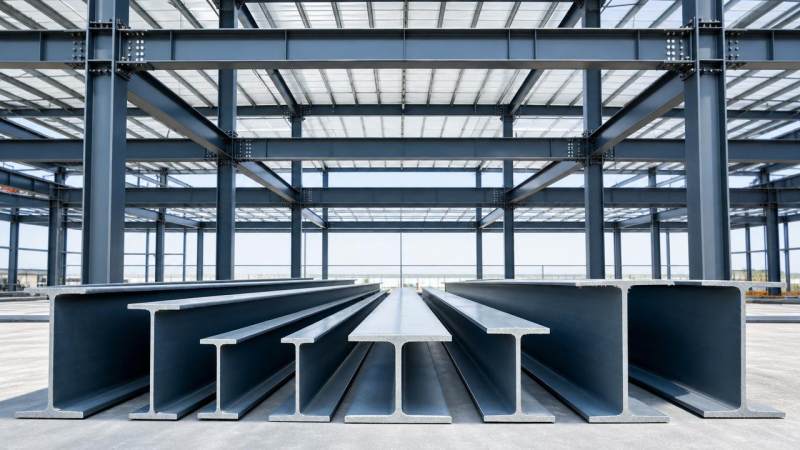
An a36 steel i beam is a hot-rolled structural section made from ASTM A36 carbon steel. It is widely used in frames, supports, and load-bearing assemblies.
ASTM A36 is known for good weldability, machinability, and balanced strength. It suits many general construction projects where special alloy performance is unnecessary.
In everyday discussion, people often use I beam and wide flange beam interchangeably. However, actual profiles may differ in flange width, web thickness, and weight.
For most building applications, the selected section must match engineering calculations. Material grade alone cannot guarantee adequate bending resistance or deflection control.
Key material characteristics
- Typical minimum yield strength: 36 ksi
- Reliable performance for welded and bolted connections
- Suitable for fabrication, drilling, and cutting
- Commonly available in many standard beam sizes
- Compatible with ASTM-based structural design practices
Common A36 steel I beam sizes in construction
The most common a36 steel i beam sizes are described by nominal depth and weight per foot. Larger sections usually provide greater load capacity and stiffness.
Actual selection depends on span, tributary load, support condition, vibration limits, and local code rules. The table below shows representative size ranges.
Buyers often compare depth first, but beam weight matters equally. Heavier sections usually have thicker webs and flanges, improving moment and shear resistance.
Current industry focus when selecting structural steel beams
Today, beam choice is shaped by more than strength. Projects must balance supply consistency, fabrication efficiency, international standards, and corrosion protection strategy.
A practical sourcing review often includes these decision signals:
- Availability of standard and custom lengths
- Material certificates and traceability records
- Tolerance control for fit-up accuracy
- Surface condition before welding or coating
- Export packing and lead-time stability
- Compliance with ASTM, EN, JIS, or GB requirements
In many projects, beams are paired with secondary support members. For example, purlins, wall beams, and brackets may use Channel In Steel.
Such channel sections are available in grades including Q195, Q235, Q345B, and stainless options. They support construction, lightweight roofs, wall beams, and mechanical framing.
Building uses of A36 steel I beam in real projects
The value of an a36 steel i beam comes from predictable structural performance in common building systems. It is especially useful where fabrication flexibility is important.
Primary frame support
Beams carry floor or roof loads between columns and walls. In low-rise and mid-rise buildings, medium-depth sections are often selected for regular spans.
Mezzanine and platform structures
A36 beams are frequently used for storage platforms, service decks, and interior mezzanines. Their weldability supports simple fabrication and field modification.
Industrial workshops and warehouses
Warehouse frames often need durable steel members with repeatable dimensions. A properly sized a36 steel i beam can support roof systems, cranes, or equipment zones.
Bridges inside buildings and transfer areas
Heavier sections are used where openings interrupt column lines. Transfer beams help redistribute loads around entrances, machinery pits, or utility corridors.
How beam size affects cost and structural performance
Selecting a larger a36 steel i beam may improve stiffness, but it can also increase material cost, fabrication time, transport weight, and erection complexity.
Selecting a beam that is too light creates different risks. Excess deflection, connection stress, and future retrofit work may raise the total project cost.
The best result usually comes from matching section properties to the real loading case, not simply choosing the largest available beam.
Cost factors to review
- Weight per foot or per meter
- Cutting, drilling, and welding requirements
- Coating or galvanizing needs
- Shipment length and container planning
- Availability from current mill production
Practical selection points for international projects
For export and cross-border construction, specification clarity is essential. The term a36 steel i beam should be supported by dimensional standards and inspection requirements.
Useful checks before ordering include grade confirmation, section designation, mill test reports, and tolerance expectations. Surface preparation and marking should also be defined.
If the project includes secondary framing, items like Channel In Steel may also be specified for wall beams or lightweight roof members.
- Confirm the exact beam series and weight.
- Check whether the design follows ASTM or mixed standards.
- Review weldability, coating, and corrosion environment.
- Ask for test certificates and dimensional inspection records.
- Plan packaging, loading method, and delivery schedule.
Working with a qualified structural steel supplier
Reliable supply matters as much as engineering accuracy. Consistent material quality reduces fit-up issues, field delays, and compliance risks during installation.
Hongteng Fengda is a professional structural steel manufacturer and exporter from China. The company supplies steel beams, channels, angle steel, cold formed profiles, and custom components.
Its products comply with major international standards, including ASTM, EN, JIS, and GB. Modern production and quality control support stable supply and dependable lead times.
For projects using a36 steel i beam, this type of support helps reduce sourcing risk, improve consistency, and align delivered steel with project documents.
Next-step considerations for beam specification
A successful beam order starts with complete technical information. Provide span, load assumptions, section preferences, corrosion conditions, and required standards before quotation.
When comparing options, focus on structural suitability first. Then review fabrication scope, logistics, and documentation to achieve a better total project outcome.
With the right size, proper verification, and dependable supply, an a36 steel i beam remains a practical solution for many building and industrial applications.
Please give us a message


Please enter what you want to find