A36 Carbon Steel Round Bar is widely used in structural and fabrication projects, but its weldability has clear practical limits that buyers and engineers should understand. For those asking is cheap steel from China reliable, this guide examines welding performance, material consistency, quality control, and sourcing factors that affect safety, cost, and long-term project results.
What are the real weldability limits of A36 carbon steel round bar?
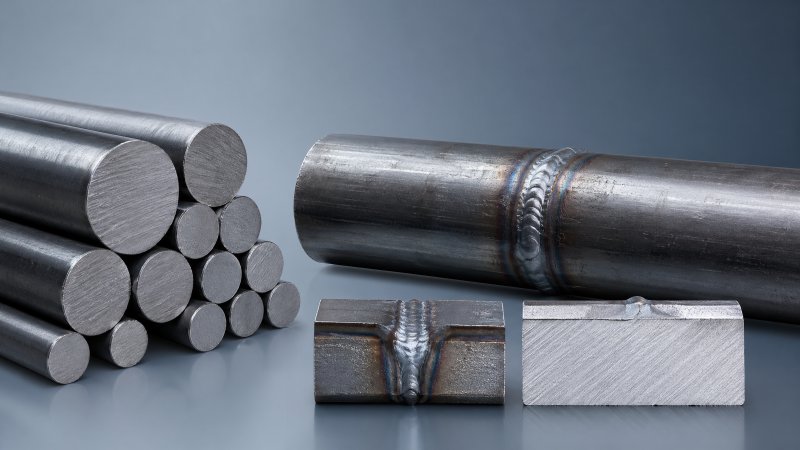
A36 Carbon Steel Round Bar is often chosen because it is widely available, cost-effective, and suitable for general structural use. In many workshops, operators assume that “easy to weld” means “no special control needed.” That assumption creates risk. A36 usually offers good weldability compared with higher-carbon or alloy steels, but weldability is never unlimited. Bar diameter, heat input, joint design, storage condition, and mill consistency all affect the final result.
For fabricators, the main question is not whether A36 can be welded, but under what conditions it can be welded safely and repeatably. Thin sections may tolerate a wider process window. Larger round bars, multi-pass welding, restrained joints, or cold-site installation can increase the risk of cracking, distortion, or poor fusion. In practical procurement and project planning, these limits matter as much as the nominal grade.
In most general fabrication environments, buyers should evaluate at least 4 core variables before approving A36 round bar for welding: carbon content range, bar size, welding method, and service condition after fabrication. A bar used for a bracket in dry indoor construction is very different from a round bar used in outdoor infrastructure with cyclic loading and repeated temperature changes.
For import buyers comparing global sources, another limit appears at the supply level: not every shipment labeled A36 offers the same consistency. Reliable sourcing depends on process control, traceable heat numbers, dimensional tolerance, and routine inspection. That is why quality-focused exporters matter, especially when the steel will be cut, drilled, bent, and welded in the same production cycle.
Why “weldable” does not mean “problem-free” in every job
A36 is commonly described as a low-carbon structural steel, and that description is broadly useful. However, weldability in field conditions depends on more than a grade name. Joint restraint, ambient temperature, fit-up gap, filler compatibility, and welder practice can all change outcomes. A project manager working with 2–4 welding teams on a tight schedule may see wider result variation than a controlled factory cell using a fixed welding procedure.
The limits become more visible as section size increases. Round bars in the 8–20 mm range are generally easier to process than heavier diameters such as 50–100 mm, where heat dissipation and penetration control become more demanding. For this reason, technical assessment should never stop at price per ton. It should include whether the material will behave predictably across the actual thickness and welding sequence.
If the project requires a high-temperature fluid system or corrosion-focused service, carbon steel may not be the right material family at all. In those cases, buyers sometimes evaluate alternatives such as 321 Stainless Steel Pipe, which is titanium-stabilized and used in boilers, heat exchangers, aerospace piping, petroleum and chemical industries, and machinery applications. Its typical forms include cold drawn, hot drawn, cold rolled, and hot rolled, with thickness from 0.3–30 mm and outer diameter from 8–219 mm.
That comparison matters because material selection should reflect service reality. A36 Carbon Steel Round Bar remains a practical option for many welded structural components, but when high-temperature strength, oxidation resistance, or intergranular corrosion control becomes a primary requirement, a stainless solution may offer a better lifecycle result despite a different initial cost structure.
Which technical factors most affect welding performance?
For technical evaluators and quality managers, the best way to judge A36 Carbon Steel Round Bar is to break weldability into measurable shop-floor factors. These include chemistry consistency, diameter, surface condition, edge preparation, preheat need, filler matching, and inspection criteria. Even when the grade is correct on paper, poor handling between receiving and welding can reduce performance in the final assembly.
A useful way to think about the issue is to separate material-related limits from process-related limits. Material-related limits come from composition and section size. Process-related limits come from travel speed, amperage, interpass control, and the actual skill level of the welding team. When a project faces compressed lead times of 7–15 days, process-related errors often become more common than chemistry-related ones.
The table below highlights common factors that influence whether A36 round bar performs well in welded fabrication. It can help procurement teams, QC staff, and project engineers align before placing orders or approving substitute supply.
The key takeaway is that A36 Carbon Steel Round Bar performs best when material quality and fabrication control are managed together. A supplier can provide compliant steel, but if receiving inspection, storage, fit-up, and welding sequence are weak, downstream problems still occur. In real projects, weldability is a system issue, not only a material issue.
A practical checklist for welding evaluation
Before approving production, engineering and QC teams should review a short but disciplined checklist. This is especially useful for buyers managing multiple subcontractors or mixed batches from different origins.
- Confirm mill documentation and heat traceability before cutting the bars into production lengths.
- Check whether the bar diameter and joint design require preheat or multi-pass sequencing.
- Inspect surface condition within the first receiving stage, not after the welding line is already scheduled.
- Define 3 inspection points: pre-weld fit-up, in-process observation, and post-weld visual or dimensional verification.
For many international buyers, these 3 inspection points reduce hidden cost better than negotiating a small unit-price difference. Rework, delayed assembly, and field repairs usually cost more than disciplined front-end verification.
How should buyers compare A36 round bar with other sourcing and material options?
Buyers rarely evaluate A36 Carbon Steel Round Bar in isolation. They compare local stock versus import supply, standard material versus customized processing, and carbon steel versus higher-grade alternatives. The right answer depends on application, compliance level, expected fabrication steps, and budget pressure. For many B2B projects, the most expensive mistake is not choosing a higher-price product. It is choosing a low-control supply route that causes schedule loss later.
When people ask whether cheap steel from China is reliable, the better question is this: what controls are in place from rolling to export packing? Price alone says very little. Reliable Chinese structural steel supply is usually linked to stable production capacity, standard compliance such as ASTM, EN, JIS, and GB, clear dimensional inspection, and communication that supports technical clarification before shipment.
The comparison table below is designed for procurement teams, finance approvers, and project leaders who need a balanced sourcing view rather than a simple low-price decision.
This comparison shows why experienced buyers focus on total delivered value. In steel procurement, the unit price is only one line of the cost equation. Fabrication efficiency, consistency between batches, and delivery reliability can influence project margin over a period of 2–8 weeks much more than a narrow ex-works difference.
Where a professional Chinese structural steel exporter adds value
Hongteng Fengda works as a structural steel manufacturer and exporter from China, supporting global construction, industrial, and manufacturing projects with standard and customized structural steel solutions. For buyers of round bar and related structural products, the value is not limited to manufacturing. It includes communication on standards, quality control before shipment, and practical support for reducing sourcing risk.
This matters for distributors, contractors, and OEM buyers who may need angle steel, channel steel, steel beams, cold formed steel profiles, or customized structural steel components in parallel orders. Combining these categories under one disciplined supply process can simplify vendor management and improve schedule control across 3–5 procurement stages.
For buyers working across North America, Europe, the Middle East, and Southeast Asia, alignment with major standards and dependable lead times can reduce uncertainty during approval, import coordination, and project execution. That is especially important when procurement decisions involve not only engineers but also finance teams, project managers, and end users.
What should procurement, QC, and project teams check before ordering?
A36 Carbon Steel Round Bar often looks simple to buy, but incomplete specification is a common cause of later disputes. A solid purchase process should cover at least 5 key checks: grade confirmation, size tolerance, surface condition, documentation, and delivery condition. If the bars will be welded after machining or bending, buyers should also state the intended downstream process at the quotation stage.
Procurement teams should involve technical and quality staff early, especially for medium or large quantity orders. A finance approver may focus on total budget, while an operator may focus on cutting and welding convenience. Both views are valid, but they need to be combined. The cheapest source may not remain the lowest-cost option after scrap, extra labor, and project delay are included.
The most effective procurement process usually follows 4 steps. First, confirm standards and application. Second, review sizes, tolerances, and quantity split. Third, check certificates, packing, and inspection expectations. Fourth, lock the production and shipping schedule. In many export transactions, this sequence improves decision speed within 3–7 working days.
A buyer-side ordering checklist
- Specify whether the A36 round bar is for structural support, fabricated assemblies, anchors, brackets, shafts, or general workshop use.
- State diameter range, length requirement, and whether cut-to-length service is needed to reduce site labor.
- Request certificate format and traceability needs before order confirmation, not after shipment is ready.
- Clarify if the material will be welded in shop conditions or field conditions, because this affects quality planning.
- Agree on packing and corrosion protection if transit or storage may last several weeks.
This checklist helps users from different roles speak the same language. Engineers get technical clarity, purchasers get quotation comparability, and project managers get better control over lead time and installation readiness.
Common mistakes that increase welding and sourcing risk
One common mistake is assuming all bars of the same grade behave identically. Another is ignoring storage exposure before fabrication. Moisture, rust, and handling damage may not stop production immediately, but they can increase cleaning time and defect risk later. A third mistake is approving substitute supply without reviewing actual application conditions.
For project teams under deadline pressure, it is tempting to treat steel as a commodity only. In routine jobs that may work. In welded structural fabrication, it often does not. A short front-end review can prevent multi-day downstream disruption, especially when several subcontractors share one material batch.
FAQ and next-step guidance for buyers evaluating A36 round bar
The final decision on A36 Carbon Steel Round Bar should connect welding practicality, quality consistency, delivery control, and total cost. The questions below address common concerns from information researchers, operators, technical reviewers, and business decision-makers.
Is A36 Carbon Steel Round Bar always easy to weld?
No. It is generally considered weldable, but ease of welding depends on section size, joint restraint, cleanliness, and process control. A small batch of light bars in a controlled shop is very different from heavier bars welded outdoors during a compressed installation window. Buyers should assess at least 3 variables before assuming low fabrication risk: diameter, environment, and weld sequence.
Is cheap steel from China reliable for welded structural use?
It can be reliable if the supplier maintains stable production, quality control, documentation discipline, and export coordination. The real issue is not country of origin alone. It is supply-chain control. Buyers should verify standards compliance, inspection routines, traceability, and communication speed before comparing only the ex-works price.
When should buyers consider a different material instead of A36?
If the application includes elevated temperature service, aggressive corrosion exposure, or stricter sanitary or chemical process requirements, another material family may be more suitable. In those cases, stainless options may deserve review based on operating conditions, not just initial cost. The decision should be tied to service life, maintenance load, and fabrication method.
What is the most practical way to reduce sourcing risk?
Use a 4-part control approach: define the actual application, confirm technical specification, verify documentation and inspection expectations, and align delivery schedule before production begins. This approach is useful for both single orders and repeat supply programs. It is especially effective when multiple departments must approve the order.
Why work with us for structural steel sourcing and project support?
Hongteng Fengda supports global buyers with structural steel manufacturing and export service built around consistency, quality control, and practical communication. We supply structural steel products for construction, industrial, and manufacturing projects, including standard specifications and OEM-oriented solutions. For teams comparing sources, our role is to reduce uncertainty before the steel reaches your workshop or jobsite.
If you are evaluating A36 round bar or related structural steel products, you can consult us on 6 practical topics: grade and standard confirmation, size and tolerance review, weldability-related application discussion, delivery schedule planning, documentation and certification expectations, and packaging or export requirements. This helps purchasers, engineers, and managers align faster on the same order.
We can also support broader structural steel sourcing needs such as angle steel, channel steel, steel beams, cold formed steel profiles, and customized components. If your project includes mixed product categories, we can help organize specifications, reduce communication gaps, and support smoother procurement across 2–4 project phases.
Contact us to discuss product selection, sample support, quotation details, lead time expectations, OEM customization, or standard compliance requirements. A clear inquiry with application, size range, quantity, and delivery destination allows faster technical review and a more useful quotation response.
Please give us a message


Please enter what you want to find