When choosing the right material for construction or manufacturing, understanding the differences between carbon steel and stainless steel bar is essential. Each type offers unique strength, corrosion resistance, and cost advantages that impact project performance and long-term value. Whether you’re selecting a steel profile, steel rebar, or stainless steel square bar, knowing the key distinctions—such as the 201 vs 304 stainless steel cost—helps engineers, purchasers, and project managers make informed decisions for reliable steel structures and components. In the global steel industry, decisions around material type influence not only design flexibility but also lifecycle performance, maintenance budgeting, and compliance with international standards such as ASTM, EN, and JIS. This article will explore five major differences between carbon steel and stainless steel bar, providing insights for professionals across construction, manufacturing, and engineering sectors who aim to optimize cost, durability, and long-term reliability in their projects.
Composition and Alloying Elements
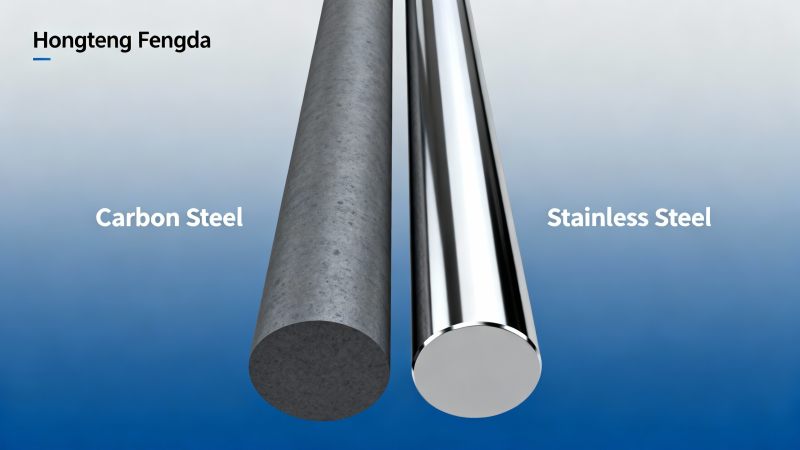
The chemical composition of carbon steel and stainless steel bar determines their performance characteristics, machinability, and corrosion resistance. Carbon steel primarily contains iron and carbon, with a carbon content usually between 0.05% and 2.1%. Depending on this concentration, it can be classified as low, medium, or high carbon steel. The simplicity of its composition makes carbon steel cost-effective and easily available, ideal for applications such as steel rebar, steel pile, and structural frames where tensile strength and rigidity matter more than resistance to moisture or oxidation.
In contrast, stainless steel bar is an alloy enriched with chromium (at least 10.5%), often combined with nickel, molybdenum, and manganese. This combination forms a passive oxide layer, preventing corrosion and maintaining surface integrity even in aggressive environments. Stainless steels such as 201 and 304 are widely used in industries demanding aesthetic appeal and hygiene standards, including architecture, food processing, and chemical handling. The cost difference between 201 vs 304 stainless steel cost depends largely on the nickel content—201 being more affordable but less corrosion-resistant, while 304 remains the industry standard for durability and environmental stability.
Manufacturers like Hongteng Fengda, a reputable structural steel exporter from China, work under stringent chemical composition standards to ensure consistent material quality. Their compliance with ASTM and EN benchmarks reflects how alloying precision contributes to predictable mechanical performance in both carbon and stainless steel products. For construction components such as Z-beam, which uses materials ranging from Q235B to S355 grade steel, alloy uniformity ensures compatibility with high-load applications while minimizing material fatigue and structural distortion.
Strength, Hardness, and Mechanical Properties
Understanding mechanical properties is crucial when selecting between carbon steel and stainless steel bar for projects involving complex load distributions. Carbon steel generally exhibits higher yield strength and hardness due to its carbon concentration, which makes it suitable for heavy-duty structures, industrial frameworks, or equipment bases that demand exceptional tensile performance. Rebar and steel sheet manufactured from high-carbon grades, such as Q460C or SS540, deliver unmatched rigidity and shock resistance under compression and torsion forces.
However, stainless steel bar introduces superior flexibility, tensile ductility, and endurance. Stainless alloys can maintain structural integrity even at elevated temperatures or under cyclic stress conditions—making them ideal for pipelines, marine infrastructure, and components exposed to frequent vibration. In terms of elongation and impact strength, stainless steel outperforms carbon-based steel profiles, which can become brittle after heat treatment or when exposed to cryogenic conditions. Therefore, applications involving dynamic loads or variable temperature fluctuations—such as industrial beams, wall bracing systems, or roof frameworks—often favor stainless steel despite higher material costs.
A technical example is the use of Z-shaped steel profiles in modern architecture. The Z-beam provides versatile load-bearing capabilities and customizable length ranging from 2 to 12 meters. Produced using grades like Q345B or A572, this galvanized coated component supports wall beams and lightweight roofs, maintaining structural balance while keeping installation weight minimal. With certifications such as CE, SGS, and ISO, manufacturers like Hongteng Fengda ensure each beam meets precise tolerances of ±1%, demonstrating how controlled mechanical properties contribute directly to project reliability and safety compliance.
Corrosion Resistance and Environmental Durability
One of the most distinguishing features between carbon steel and stainless steel bar lies in their resistance to environmental degradation. Carbon steel, while strong, is more susceptible to oxidation and rust when exposed to moisture, salt, or industrial chemicals. Even protective coatings or galvanization offer limited protection over time, especially in harsh climates. Therefore, it is commonly used in enclosed or controlled environments where corrosion risks are minimized, such as industrial plant supports or steel piles embedded in dry substrates.
Stainless steel, thanks to its chromium content, forms a transparent oxide layer over its surface that regenerates automatically if scratched, preventing corrosive substances from penetrating the core material. This self-healing mechanism makes stainless steel square bar and other profiles highly resistant to corrosion in both marine and industrial settings. Grades like 304 and 316 can effectively withstand chlorine exposure, acidic vapors, and frequent washdowns—critical for food manufacturing plants, bridges, or coastal infrastructure. However, as the 201 vs 304 stainless steel cost comparison shows, higher resistance levels require proportionally higher alloying expenses, which must be weighed against lifecycle savings and maintenance intervals.
For large-scale projects involving steel sheet façades or long-span frameworks, understanding these corrosion factors is essential. Many structural engineers specify stainless steels in combination with coated steel profiles to optimize cost and durability. Hongteng Fengda’s diversified material catalog, which includes galvanized steel channel sections and cold-formed profiles, allows project managers to balance corrosion control with weight and structural requirements effectively.
Manufacturing, Machinability, and Forming Flexibility
The manufacturing process influences how effectively both carbon and stainless steels can be shaped into bars, sheets, and beams. Carbon steel is easier to cut, weld, and machine, making it highly preferred for customized structural components like steel rebar and steel pile reinforcements. Its lower melting point allows manufacturers to achieve cleaner cuts and smoother welds while using standard fabrication tools. This versatility translates into faster lead times, reduced tooling costs, and simplified assembly procedures on construction sites.
On the other hand, stainless steel is tougher and often requires specialized tools and techniques for machining and bending due to its hardness and work-hardening properties. Yet the results can be superior in precision components, decorative finishes, or applications requiring hygiene, such as food plants and pharmaceutical installations. Advanced forming technologies like laser cutting, plasma arc welding, and CNC bending have minimized these difficulties, allowing stainless steel profiles to achieve unparalleled consistency in modern design frameworks.
In today’s structural steel industry, leading exporters utilize process innovations to enhance both materials. Hongteng Fengda’s integration of automated shaping lines ensures accurate geometry for customized profiles, including Z-shaped beams and perforated sections. Their dedication to dimensional precision and edge quality—such as Mill Edge or Slit Edge finishing—guarantees optimal fit during assembly, reflecting the company’s emphasis on quality assurance across both carbon steel and stainless steel product ranges.
Cost and Application Scenarios
Pricing remains one of the most critical factors in selecting between carbon steel and stainless steel bar. Carbon steel is generally more economical, making it a popular choice for mass-scale construction, bridges, and industrial frameworks. Its lower alloy content translates directly into reduced raw material expenses, supporting cost control in projects where a balance between strength and affordability is required. This is particularly beneficial for temporary structures, reinforcement frames, and purlins in buildings using standard-grade steel profiles.
Stainless steel’s cost structure, however, derives from its alloying additions, particularly nickel and molybdenum. While initial procurement costs can be 2–3 times higher than carbon steel, the extended lifespan, minimal maintenance, and corrosion resistance substantially lower total ownership cost in demanding environments. For instance, the difference between 201 vs 304 stainless steel cost demonstrates how optimization is achieved by selecting grade 201 in non-corrosive indoor frameworks, while 304 or 316 suits marine or exterior applications.
In project management, engineers evaluate total cost of ownership over 10–20 years rather than initial material expenditure. By incorporating standardized products like Steel Channel, customized steel profile, or perforated Z-beams, teams can align budget expectations with safety and longevity goals. As a trusted structural steel manufacturer and exporter, Hongteng Fengda offers tailored OEM and ODM solutions for international clients, helping them mitigate sourcing risks, streamline logistics, and maintain compliance with ISO and BV certifications.
Global Trends and Sustainable Perspectives
The global steel industry is evolving toward sustainable supply chains and environmentally conscious material choices. Carbon steel, being widely recyclable, already supports circular economy goals; however, its corrosion vulnerability may result in replacement cycles that increase overall carbon footprint. Stainless steel, with its durability and reusability, aligns better with long-term sustainability targets in modern architecture and infrastructure. Manufacturers now invest in cleaner refining processes, renewable energy sources, and precision-controlled smelting to reduce emissions associated with both steel bar and steel sheet production.
In addition, technological advancements in microalloyed carbon steels and duplex stainless steel Grades have blurred the line between strength and corrosion performance. These innovations provide flexibility for engineers designing hybrid structures that combine both material families, optimizing performance under budget constraints. Whether it’s a lightweight roofing system or mechanical column assembly, integrating such advanced steels ensures an efficient balance of safety, economy, and sustainability—key parameters for next-generation infrastructure.
Conclusion and Next Steps
In summary, the five key differences between carbon steel and stainless steel bar—composition, mechanical strength, corrosion resistance, machinability, and cost—fundamentally shape how structural engineers and procurement professionals choose materials for construction and manufacturing projects. Carbon steel leads in affordability and load-bearing efficiency, while stainless steel excels in corrosion resistance, durability, and aesthetic quality. Understanding these contrasts allows decision-makers to customize solutions across applications ranging from steel rebar foundations to stainless steel square bar assemblies in marine or industrial contexts.
As a professional structural steel manufacturer and exporter from China, Hongteng Fengda continues to supply global markets—including North America, Europe, and Southeast Asia—with reliable products like steel channel, steel pile, and custom steel profile systems that meet stringent international standards. Through modern equipment, advanced inspection, and responsive customer service, the company helps partners accomplish structural reliability, timely project delivery, and cost optimization. For expert consultation or to request product specifications, design support, or quotations on high-quality steel beams and related materials, contact Hongteng Fengda today to explore durable and efficient steel solutions for your next project.
Please give us a message


Please enter what you want to find