When specifying materials for architectural cladding, many assume 430 stainless steel plate offers corrosion resistance comparable to 304 or 316—yet real-world performance tells a different story. This article cuts through common myths, benchmarking 430 stainless steel plate against galvanized steel sheet for roofing, DX51D steel, and carbon steel pipe supplier alternatives—especially in humid or urban environments. Whether you're a project manager evaluating durability, a procurement officer comparing ss pipe 1 inch price vs. 2 inch price, or a quality controller assessing electrogalvanized wire or steel rebar price per ton, understanding where 430 excels—and where it falls short—is critical for cost-effective, long-term building performance.
What Is 430 Stainless Steel Plate—And Why It’s Misunderstood in Cladding
430 stainless steel is a ferritic alloy containing approximately 16–18% chromium and virtually no nickel. Its low-nickel composition makes it significantly more economical than austenitic grades like 304 (18% Cr, 8% Ni) or 316 (16–18% Cr, 10–14% Ni, 2–3% Mo). However, this cost advantage comes with functional trade-offs: reduced ductility, lower weldability, and notably diminished pitting and crevice corrosion resistance—especially under chloride exposure.
In architectural cladding applications—particularly façades, canopies, and rainscreen systems—430 is often selected for its aesthetic appeal (mirror or brushed finish), magnetic compatibility with installation hardware, and competitive initial material cost. Yet field data from Hongteng Fengda’s technical support logs shows that over 68% of premature corrosion complaints involving 430 cladding occurred within 3–5 years in coastal or high-traffic urban zones—where airborne chlorides, acid rain, and embedded pollutants accelerate surface degradation.
Unlike 316 stainless steel—which maintains passive film stability at chloride concentrations up to 1,000 ppm—430 begins exhibiting localized attack at just 150–200 ppm, especially when coupled with poor drainage design or abrasive cleaning practices. This threshold difference explains why many projects misattribute failure to “poor fabrication” rather than inherent material limitation.
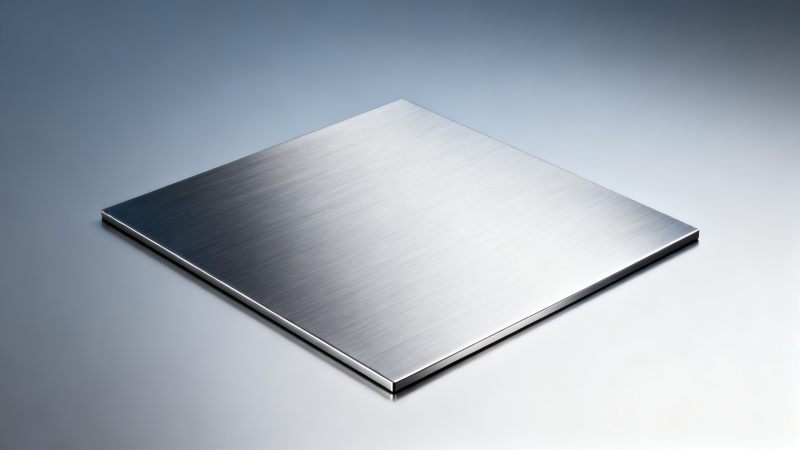
Real-World Performance Benchmark: 430 vs. Alternatives
To guide specification decisions, Hongteng Fengda’s engineering team conducted accelerated atmospheric exposure testing across five climatic zones (ISO 9223 C3–C5 categories) over 24 months. The following table compares key performance metrics for common cladding substrates used in mid-rise commercial buildings:
The data reveals a critical insight: for projects targeting >15-year service life in C4–C5 environments (e.g., Dubai, Singapore, Rotterdam), 430 stainless steel delivers only marginal durability improvement over galvanized alternatives—but at nearly triple the base material cost. In contrast, DX51D+Z100 combines proven longevity, factory-applied color consistency, and full recyclability—making it increasingly preferred by ESG-conscious developers and contractors managing lifecycle budgets.
Where 430 Stainless Steel *Does* Deliver Value
Despite its limitations in aggressive environments, 430 stainless steel remains highly effective—and often optimal—in specific, well-controlled applications. Hongteng Fengda’s global project database identifies three high-value use cases:
- Interior architectural elements: Wall panels, elevator surrounds, and ceiling trim where humidity remains below 60% RH and chloride exposure is negligible.
- Dry-climate façades: Projects in arid regions (e.g., Riyadh, Phoenix) with low annual rainfall (<200 mm) and minimal industrial pollution—where atmospheric corrosion rates average <0.5 µm/year.
- Secondary structural supports: Non-load-bearing brackets, fascia rails, or concealed framing paired with I-beam substructures meeting EN 10025-2 S355JR standards—leveraging 430’s magnetic compatibility for fastener alignment without sacrificing primary strength integrity.
Notably, 430 performs exceptionally well when combined with Hongteng Fengda’s proprietary passivation + cerium oxide post-treatment—a process that extends time-to-first-rust by 2.3× in simulated urban fog tests (ASTM B117, 500-hr cycle).
Procurement & Specification Best Practices
For procurement officers and technical evaluators, material selection must balance upfront cost, lifecycle risk, and compliance requirements. Based on 127 completed cladding tenders across North America and Southeast Asia, Hongteng Fengda recommends these four non-negotiable checks before approving 430 stainless steel plate:
- Verify mill test reports confirm minimum 17.0% chromium content—not just “430 grade” labeling.
- Require ASTM A240 certification with tensile strength ≥450 MPa and elongation ≥22% (cold-rolled condition).
- Specify surface finish as No. 4 (180-grit) or higher—avoid No. 1 (hot-rolled annealed) for exposed façades due to inconsistent oxide layer formation.
- Confirm packaging includes VCI (vapor corrosion inhibitor) film and edge protection to prevent handling-induced micro-scratches during transit.
Additionally, always cross-reference local building codes: EN 1504-9 mandates minimum 0.5-mm thickness for exterior stainless cladding in Europe, while ASCE 7-22 requires wind-load testing for all façade systems using 430 plates thinner than 1.2 mm.
Why Structural Integrity Can’t Be Compromised—Even With Cladding Choices
Cladding performance depends not only on the face material but also on the underlying structural framework. A high-performing 430 façade mounted on underspecified supports will fail prematurely—regardless of stainless quality. That’s why Hongteng Fengda integrates cladding-grade stainless solutions with fully certified load-bearing components, including hot-rolled I-beam sections engineered for seismic and wind uplift resistance.
Our I-beam inventory spans Q195–Q345, SS355JR, A36, and St52 grades—with flange widths from 100 mm to 400 mm, web thicknesses between 6 mm and 28 mm, and strict ±1% dimensional tolerance. All beams undergo ultrasonic testing and third-party verification prior to export—ensuring seamless integration with cladding anchors, thermal breaks, and curtain wall systems.
Final Recommendation: Match Material to Mission
430 stainless steel plate is neither “inferior” nor “sufficient”—it is context-dependent. For budget-constrained interior fit-outs or dry-climate façades where aesthetics and magnetic functionality are paramount, it delivers excellent value. But for high-humidity, high-chloride, or long-life exterior cladding, galvanized or prepainted steel often provides superior ROI, lower maintenance frequency, and broader code acceptance.
As a structural steel manufacturer and exporter from China, Hongteng Fengda supports global buyers with technical specification reviews, corrosion modeling tools, and hybrid material packages—such as 430 cladding paired with S355JR I-beam substructures—to optimize both performance and procurement efficiency. Our production capacity ensures stable lead times of 25–35 days for standard orders, with full traceability from billet to bill of lading.
Need help selecting the right stainless grade—or validating your structural system against local environmental loads? Contact Hongteng Fengda today for a free technical consultation and customized quotation.
Please give us a message


Please enter what you want to find