Distributors handling steel metal angle inventory must monitor the right metrics to protect margins and meet project timelines. This guide outlines six essential KPIs—covering stock turns, order fill rate, aging, defect rates and lead-time variability—tailored for products like 90 angle steel, angle bars and cold formed angle sections. Whether you're a dealer, project manager, quality or operations specialist, these practical indicators help you optimize steel angle bending workflows, reduce carrying costs and improve customer fulfillment for sheet metal angle and structural angle iron supply chains. In practice, effective inventory optimization is not just an accounting exercise: it combines precise measurement, supplier collaboration, and shop-floor practices that ensure right angle steel plate and sheet steel angle are available when and where they're needed. For distributors and agents focused on angle bars and 90 angle metal, this means turning raw stock visibility into predictable service levels without overinvesting in slow-moving profiles or risking stockouts on high-demand cold formed angle and steel metal angle sections. The rest of this article breaks down definitions, the market context for steel angles, the six KPIs you should track, procurement and technical guidance, and real-world case insights to help you act decisively and gain margin resilience.
Definition and Market Overview
Definition: In distribution terms, "steel metal angle" and related names—sheet metal angle, structural angle iron, angle bars, and 90 angle steel—refer to L-shaped sections produced by hot rolling or cold forming. These profiles serve bracing, framing, and connection roles across construction, industrial fabrication, racks and shelving, and equipment manufacturing. Cold formed angle differs from hot rolled profiles in tolerances and surface finish, while right angle steel plate and sheet steel angle are often chosen for welding and bolting interfaces. Market Overview: Global demand for angle sections is driven by infrastructure, industrial maintenance, and modular construction trends. Regions such as North America, Europe, Southeast Asia and the Middle East repeatedly show steady consumption of standard sections, while emerging markets in Africa and South America present growth for customized angles and specialty alloys. For distributors, seasonality and project-led procurement create spikes in requirements for specific sizes and finishes. Supply chain reliability matters: producers such as Shandong Hongteng Fengda Metal Materials Co.. Ltd. have end-to-end capabilities—from steelmaking and rolling to processing and logistics—enabling faster turnaround for common and special specifications. Their global sales network and integrated processing systems support distributors who need consistent quality across batches, whether specified by ASTM, EN, JIS or other recognized standards. Understanding this landscape helps distributors prioritize inventory investment: which cold formed angle sizes to stock, when to favor stocked angle bars over just-in-time orders, and how to price to reflect handling complexity for bent or pre-drilled right angle steel plate components.
Six KPIs Distributors Should Track
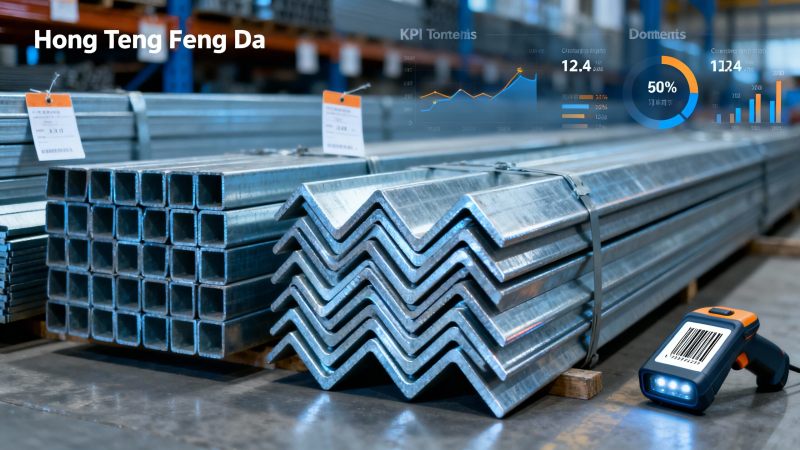
Tracking the right KPIs turns conjecture into action. Below are six essential metrics with practical measurement tips and what each reveals about stock and service for steel metal angle products. 1) Stock Turns: Measure how many times inventory cycles annually for each angle size. High turns on popular sheet metal angle reduce carrying cost per unit; low turns on specialty 90 angle metal indicate overstock. Calculate separately for hot-rolled structural angle iron and cold formed angle to avoid cross-subsidizing costs. 2) Order Fill Rate (On-time, In-Full): This KPI should be segmented by customer type—project accounts vs. small trades—to reveal fulfillment gaps. A low fill rate on urgent 90 angle steel leads to expedited shipments and margin erosion. 3) Days of Inventory (DOI) by SKU and family: Track DOI for angle bars and right angle steel plate grades; include lead-time buffers. For long lead-time alloys, buffer stock may pay off more than repeated rush shipments. 4) Aging and Obsolescence Percentage: Identify slow-moving sheet steel angle SKUs older than agreed thresholds. Aging inventory ties capital and may require discount strategies, reprocessing (cut-to-length), or converting to common bundles for resale. 5) Defect and Return Rate: Monitor fabricational rejects from steel angle bending, surface defects, and incorrect tolerances. High defect rates often trace back to supplier batch issues or incorrect storage causing corrosion—proactive quality checks at receipt reduce downstream returns. 6) Lead-Time Variability and Supplier On-Time Delivery: Measure supplier consistency by standard deviation of lead times. Suppliers with tight, predictable lead times enable leaner stocking strategies, especially for commonly used angle bars. Practical measurement tips: combine ERP data with simple warehouse audits; use ABC or XYZ segmentation (value versus variability) to set different service and stocking rules; and review KPIs weekly for fast-moving SKUs while conducting monthly strategic reviews for slow-moving families. By connecting these KPIs, distributors can optimize stock levels for both common sheet metal angle and specialized 90 angle steel, reducing waste and improving margins.
Procurement, Technical Performance and Handling Guidance
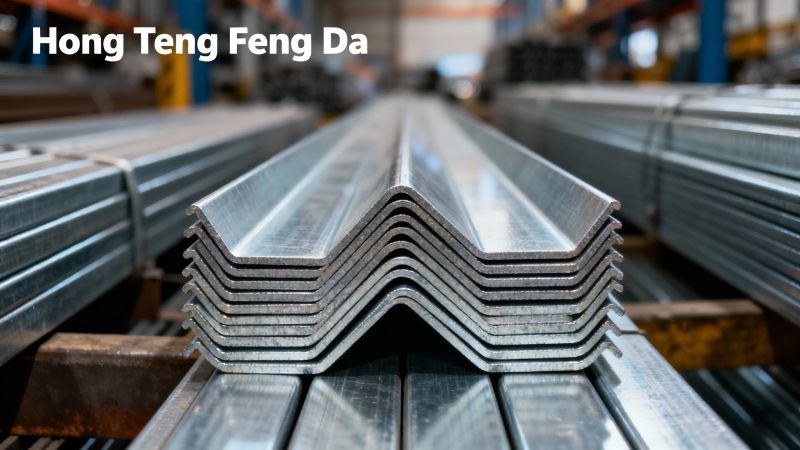
Procurement Guide: Effective procurement blends long-term agreements for staple sizes and flexible contracts for specialty profiles. Use the KPI outputs above to negotiate safety stock, volume discounts and lead-time guarantees with mills or processors. For example, if your data shows consistent high turns on a particular cold formed angle, lock in price and volume with a preferred supplier to stabilize margins. Consider quality clauses tied to standards such as ASTM A36 for carbon structural steel or EN 10025 for structural sections, and explicitly define allowable tolerances for bent components used in steel angle bending operations. Technical Performance: Pay attention to dimensional tolerances, straightness, surface finish and mechanical properties. Cold formed angle offers better dimensional control for tight-fit assemblies, while hot-rolled angle bars may be preferred where thermal cutting or heavy welding is required. Store profiles under covered conditions and implement FIFO for coated or galvanized sheet metal angle to prevent premature corrosion. Handling and Value-Added Services: Offer cutting-to-length, pre-punching or bending services to reduce customer on-site labor and accelerate project timelines; these services are compelling for project managers and end customers who prioritize rapid installation. For distributors seeking a versatile rod or bar complement, consider cross-selling products such as 304 Stainless Square steel rod where corrosion resistance and stainless characteristics are required. Logistics: optimize palletization and labeling to minimize picking errors; integrate barcode scanning to tie physical counts to ERP records and improve KPI accuracy. By aligning procurement with technical requirements and handling best practices, distributors can reduce defects, shorten lead times and improve customer satisfaction across markets where structural angle iron and sheet steel angle are critical.
Case Studies, FAQs and Why Choose Us
Case Studies and Success Practices: One regional distributor reduced aging inventory on non-standard angle bars by 38% within six months after implementing SKU-level stock turns monitoring and renegotiating lot sizes with a trusted mill partner. Another dealer improved order fill rate for 90 angle steel by introducing a two-tier fulfillment policy: maintain three-day coverage for top customers and use expedited supplier replenishment for ad-hoc orders. Common FAQ & Misconceptions: Q: "Is higher stock always better for service?" A: No. Excessive stock raises carrying costs and hides supplier performance issues. Use KPI segmentation to balance service and capital efficiency. Q: "Does cold formed angle always outperform hot rolled?" A: Not always. Cold formed is precise but may have limits in section thickness and weldability; match the process to application. Q: "How do I prioritize which angle sizes to keep?" A: Use Pareto analysis combined with lead-time variability—stock sizes that cover the majority of demand and are slowest to replenish. Why Choose Us: Shandong Hongteng Fengda Metal Materials Co.. Ltd. brings a complete production chain—from coking and sintering to steelmaking, rolling and downstream processing—supported by modern Kaiping equipment and a robust logistics distribution system. That vertical integration delivers consistent quality, complete specifications, competitive pricing and rapid delivery to markets across North America, Europe, the Middle East, Southeast Asia, South America, Africa and Australia. For distributors and project teams seeking reliable supply of steel metal angle, angle bars or structural angle iron, partnering with a supplier who can combine technical support, inventory solutions and value-added services is a decisive advantage. Contact us to discuss customized stocking programs, processing options and KPI-driven inventory strategies that improve fulfillment while protecting margins.
Please give us a message


Please enter what you want to find