When wire products lead time keeps slipping, many distributors focus on shipping, raw materials, or factory workload—but often miss one critical cause hidden earlier in the supply chain. For steel buyers and channel partners, understanding this overlooked factor can reduce delays, improve order planning, and protect customer commitments. Here is why lead times go off track and how reliable structural steel suppliers help prevent it.
The overlooked reason wire products lead time often slips
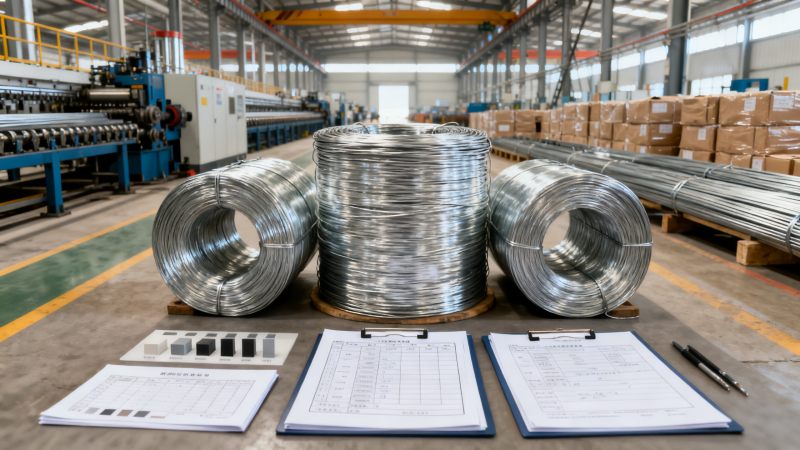
For most distributors, the real reason wire products lead time slips is not simply freight congestion or mill overload. In many cases, the delay starts much earlier: unclear or incomplete technical confirmation before production is locked in.
This issue sounds minor, but it has major consequences. If material grade, coating requirement, tolerance, surface finish, packaging method, testing standard, or end-use expectation is not confirmed in full at the quotation or order stage, the supplier may need to stop, reconfirm, remake, or reschedule the order later.
That is where lead time quietly breaks down. The problem is not always visible on the production floor. It often begins in communication gaps between buyer, trader, distributor, and manufacturer. By the time the issue appears, the original schedule is already unrealistic.
For channel partners, this matters because your customer usually does not care why a steel order is late. They only see missed installation dates, planning failures, and higher project risk. That makes early specification control one of the most practical ways to improve delivery performance.
Why this problem is so common in steel and wire-related sourcing
Steel distribution often involves multiple decision points. A buyer may send a broad inquiry, the sales side may quote based on a standard assumption, and only later does the end customer clarify the actual requirement. At that moment, what looked like a routine order becomes a custom order.
In wire products and related steel items, small technical differences can significantly change production planning. Diameter range, tensile requirements, zinc coating level, ductility, coil weight, slit width, edge condition, and inspection standards all affect whether the product can be produced immediately or must wait for a revised setup.
Many delays happen because orders are treated as interchangeable when they are not. A distributor may assume a factory can quickly move from one specification to another. In reality, switching material, tooling, or quality inspection procedures can add days or weeks.
This is especially true when products serve different markets. Export orders often need compliance with ASTM, EN, JIS, or GB standards, and documentation must match the commercial and technical file. If that alignment is incomplete, the schedule may slip even before production starts.
What distributors and agents care about most when lead times become unstable
Distributors, agents, and stockists usually care less about theoretical production explanations and more about practical risk. Their biggest concern is reliability. They need to know whether a lead time can be trusted, not just whether a supplier can offer an attractive price.
When wire products lead time becomes unstable, channel partners face several direct problems. First, they lose confidence in replenishment planning. Second, they risk disappointing downstream customers. Third, they may need to hold more safety stock, which ties up cash and warehouse space.
There is also a margin issue. A late order can trigger urgent replacement buying, expedited shipping, or price concessions to preserve customer relationships. In some cases, one delayed shipment can erase the profit from multiple smooth transactions.
That is why the best buyers ask a different question. Instead of only asking, “What is your lead time?” they ask, “What usually causes your lead time to change after order confirmation?” The second question reveals far more about actual supplier control.
How incomplete technical confirmation creates hidden delays
The process usually breaks down in predictable ways. A supplier quotes based on a common grade, but the buyer later requests a different coating weight. Or the order starts as a standard size, then changes to customized width or packaging. Or the customer asks for additional mill test data after production planning has already been arranged.
Each of these changes may appear manageable. But in manufacturing, every change affects queue position, raw material allocation, machine setup, and quality inspection. Even if production itself is fast, the order may lose its original slot and move to a later batch.
This is why experienced manufacturers push for full technical review before final confirmation. They know that the most expensive delay is not always a machine failure or a logistics issue. Often, it is a preventable clarification gap.
For buyers, this means the quotation stage is more important than it looks. The more precisely the requirements are defined before order release, the more realistic and dependable the lead time becomes.
What to confirm before placing an order to protect delivery commitments
If you want to reduce wire products lead time risk, start with a structured pre-order checklist. Confirm the exact grade, standard, dimensions, tolerance, coating or surface treatment, mechanical properties, packaging format, documentation requirement, and destination market standard before the purchase order is issued.
Do not rely on general wording such as “standard export quality” or “same as previous order” unless both sides have documented references. Vague language creates room for assumptions, and assumptions are one of the main causes of schedule slippage.
It also helps to confirm whether the order is truly standard or semi-custom. Many buyers believe they are ordering regular material, but details such as zinc thickness, slit width, private labeling, or special bundle weight can shift the order into a more complex production path.
For example, if corrosion resistance is critical for the end-use application, buyers may need a galvanized steel solution with a specified zinc coating range and recognized standards compliance. In that context, products such as Steel Coil Galvanized can support longer service life and better environmental protection performance, but only when the required grade, thickness, width, coating type, and certification expectations are clearly defined in advance.
Typical options in this category may include grades such as DX51D+Z, DX52D+Z, SGCC, S250GD+Z, or S350GD+Z, with thickness from 0.12mm to 3.5mm, width from 600mm to 1500mm, and zinc coating ranges such as 60-275g/m² for hot galvanizing. These details are not just technical data. They directly influence production scheduling and realistic delivery windows.
How reliable steel suppliers keep lead times from slipping
A dependable supplier does more than provide a date. They build a process that protects the date. This usually starts with early drawing and specification review, clear order confirmation, transparent discussion of custom requirements, and realistic scheduling based on current capacity.
Strong suppliers also separate standard products from special production. Instead of treating every inquiry the same, they identify what can move quickly and what requires extra confirmation. That prevents buyers from receiving optimistic timelines that later need correction.
Another key factor is standards familiarity. Suppliers serving North America, Europe, the Middle East, and Southeast Asia must understand how export documentation, testing, and compliance affect execution. Manufacturers with experience across ASTM, EN, JIS, and GB systems are often better equipped to identify hidden risks early.
Quality control matters too. Some factories create delay by discovering issues only at the end of production. Better manufacturers reduce this by checking raw material matching, process parameters, coating consistency, and inspection requirements during the workflow rather than after it.
For distributors, this means a reliable partner is not simply the lowest-cost source. It is the supplier that can convert commercial requirements into a controlled manufacturing plan with fewer late-stage surprises.
Questions distributors should ask suppliers before trusting the quoted lead time
If you want to judge whether a supplier’s timeline is credible, ask practical questions. Has the quoted lead time been based on confirmed specifications or assumptions? Are raw materials already available for that grade and size? Is the order standard, custom, or OEM? What part of the timeline is production, and what part is testing, packing, and export preparation?
You should also ask how often lead times change after order confirmation and why. A serious manufacturer should be able to explain the most common causes clearly. If the answer is vague, that is often a warning sign.
It is useful to ask who approves technical details before production starts. If sales, production, and quality teams are not aligned, delays are more likely. Good internal coordination is one of the strongest indicators of stable execution.
Finally, ask what information would help the supplier reduce risk on future orders. The best supply relationships improve over time because both sides learn how to prevent repeated bottlenecks.
How better planning helps channel partners win more business
Stable delivery is not only an operations issue. It is a commercial advantage. When distributors can give customers realistic dates and keep them, they become more valuable than competitors who only promise fast turnaround without control behind it.
Customers in construction, industrial manufacturing, and project supply increasingly value predictability. A supplier that prevents wire products lead time slippage helps distributors plan inventory better, reduce emergency purchases, and support project schedules with more confidence.
This also improves long-term account retention. In many steel markets, customers will tolerate price fluctuations more easily than repeated uncertainty. Reliability creates trust, and trust turns transactional buying into repeat business.
That is why channel partners should not treat lead time as a simple number on a quote sheet. It should be treated as a capability built from specification accuracy, production discipline, standards knowledge, and communication quality.
Final takeaway for buyers managing wire products lead time
If wire products lead time often slips, the most overlooked reason is usually not the final shipment stage. It is incomplete technical confirmation earlier in the order process. That hidden gap causes rechecking, re-planning, and production disruption later, even when the factory itself is capable.
For distributors, agents, and resellers, the practical solution is clear. Confirm more before ordering, challenge vague assumptions, and work with manufacturers that review specifications thoroughly instead of rushing to offer unrealistic promises.
Reliable steel sourcing depends on more than capacity. It depends on whether the supplier can translate exact requirements into stable execution. When that happens, lead times become more dependable, customer commitments become easier to protect, and your business becomes more resilient.
In short, the best way to reduce delay is to fix the hidden issue before production begins. That is where smarter buyers gain control, reduce sourcing risk, and build stronger supply performance over time.
Please give us a message


Please enter what you want to find