In 2026, wire products prices are likely to stay volatile rather than move in a straight line. For most buyers, the biggest takeaway is simple: price changes will not be driven by one factor alone. Steelmaking raw materials, zinc and alloy costs, electricity and fuel, freight rates, exchange rates, regional demand, and trade policy will all continue to affect quotations. That means buyers comparing rebar, H-beam, Z-beam, stainless steel welded mesh, profile steel, and coated coils need more than a spot price—they need a way to judge timing, supplier reliability, and total landed cost.
For procurement teams, project managers, distributors, and technical evaluators, the real question is not only “Will prices go up or down?” but “How do we buy safely when the market is moving?” This article looks at the main drivers behind wire products price swings in 2026, what different stakeholders should watch, and how to evaluate whether low-cost sourcing from China is actually reliable.
What will really drive wire products prices in 2026?
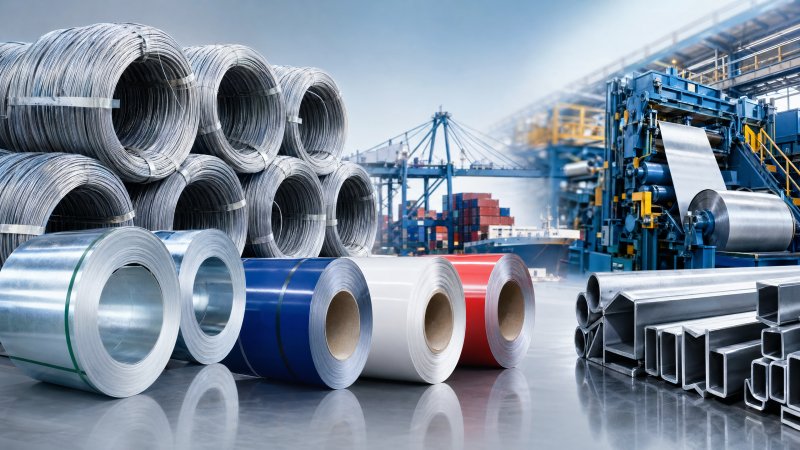
The core search intent behind this topic is practical market judgment. Readers want to understand why prices move, whether they should buy now or wait, and how to reduce cost risk without creating quality or delivery problems. In 2026, several forces are expected to shape wire products and related steel product pricing at the same time.
1. Raw material costs will remain the biggest base driver
Most steel price swings still start upstream. Iron ore, scrap, coking coal, zinc, and alloy inputs directly affect production costs. For wire products and other processed steel materials, even a modest rise in feedstock can quickly change mill offers. Galvanized or coated products can be even more sensitive because zinc, aluminum-zinc coating, and paint system costs also matter.
2. Energy prices will continue to affect mill quotations
Steel production is energy-intensive. Electricity, natural gas, and fuel costs influence rolling, coating, welding, heat treatment, and logistics. If energy rates remain unstable in major manufacturing regions, producers may revise prices more often, especially on products with tighter margins.
3. Freight and logistics will still change the real delivered price
Many buyers focus on ex-works or FOB price, but in volatile conditions the landed cost is what matters. Ocean freight, port congestion, inland trucking, customs clearance efficiency, and container availability can all shift final procurement cost. A low factory quote can lose its advantage quickly if shipping becomes unstable.
4. Construction and industrial demand will remain uneven by region
Global steel demand is unlikely to move uniformly. Infrastructure, commercial construction, manufacturing recovery, appliance output, and regional inventory cycles will all influence buying activity. A slowdown in one region may soften some prices, while supply tightness in another can keep export offers firm.
5. Trade policy and currency movements can reshape competitiveness
Tariffs, anti-dumping rules, import restrictions, certification requirements, and exchange-rate changes can all affect sourcing decisions. For international buyers, a favorable product price does not automatically mean the best deal if currency risk or compliance cost is high.
Which concerns matter most to buyers, engineers, and decision-makers?
Different readers approach the same market from different angles, but their concerns usually converge around five practical questions.
Can we control budget risk?
Procurement teams and financial approvers need to know whether current pricing is temporary or trend-based. They care about locking in contracts, avoiding peak-price buying, and reducing surprise cost escalation on long-cycle projects.
Will lower price create quality risk?
Technical evaluators, quality control teams, and safety managers want to know whether lower-cost supply can still meet ASTM, EN, JIS, or GB standards consistently. For them, chemical composition, dimensional tolerance, coating quality, weldability, corrosion resistance, and batch consistency matter more than headline price.
Can the supplier deliver on time?
Project managers and distributors often feel price pressure, but delivery reliability can be even more important. A delayed shipment can stop fabrication, installation, or resale plans, creating losses much larger than a small price difference.
Is the product suitable for the actual application?
Users and technical teams need fit-for-purpose materials. For example, products used in roofing, wall panels, industrial structures, transport, or equipment enclosures may need different coating systems, thickness ranges, and weather resistance performance.
What is the total cost over the project lifecycle?
Business decision-makers increasingly look beyond purchase price. Corrosion resistance, maintenance needs, rework risk, waste rate, and processing efficiency all affect total value. A material that is slightly more expensive upfront may be cheaper over the life of the project.
How should buyers interpret “cheap steel from China” in 2026?
This is one of the most common sourcing questions, and the answer is nuanced. Cheap steel from China can be reliable, but only when the low price comes from scale, process efficiency, stable supply chains, and the right product specification—not from cutting corners on quality, coating, raw material grade, or inspection.
China remains highly competitive in structural steel and processed steel because of manufacturing scale, mature supply networks, flexible customization, and export experience. However, international buyers should not treat all suppliers as equal. The right question is not whether Chinese steel is cheap, but why a quotation is lower and whether that price difference is sustainable.
A reliable supplier should be able to provide:
- Clear specification matching and standard compliance
- Stable production capacity and realistic lead times
- Documented quality control procedures
- Inspection support and traceable batch management
- Transparent communication on coating, thickness tolerance, and packaging
- Experience serving export markets with different technical requirements
For example, in applications where appearance, corrosion resistance, and forming performance all matter, coated steel selection becomes especially important. Products such as Color Coated Galvalume Steel Coil PPGL are widely used in construction, transportation, home appliances, furniture, and other industries. With thickness options from 0.13mm to 0.8mm, widths from 600mm to 1250mm, customizable lengths, and paint systems such as PE, SMP, HDP, and PVDF, this type of material offers practical advantages like heat resistance, corrosion resistance, weather resistance, and good processing performance. For buyers comparing offers, those technical details are often more meaningful than a low quoted number alone.
What should you watch when comparing quotes across steel categories?
Wire products pricing does not exist in isolation. Many buyers compare multiple steel categories at once because they support the same project or procurement program. That is why cross-category comparison matters.
Rebar and structural sections
For rebar, H-beam, Z-beam, angle steel, channel steel, and other profile steel products, price is strongly influenced by base steel cost, regional construction demand, and rolling mill operating rates. Buyers should compare not just ton price, but grade, tolerance, bundle weight, and delivery schedule.
Welded mesh and fabricated steel items
For stainless steel welded mesh or custom fabricated components, labor input, processing complexity, and finishing requirements add another layer to pricing. Quality consistency and welding integrity become central to value assessment.
Coated coils and corrosion-sensitive materials
For galvanized, galvalume, and prepainted products, buyers should pay close attention to coating mass, paint system, primer type, topcoat thickness, back coat thickness, and intended service environment. A lower quote may reflect a lighter coating or reduced paint build, which can change service life significantly.
How can buyers reduce risk when prices keep moving?
The most helpful response to market volatility is not guessing perfectly, but building a better buying process. That is where procurement, technical, quality, and commercial teams need to work together.
Use should-cost thinking, not quote-only comparison
Break the quote into base material, coating or alloy cost, processing, packaging, freight, duties, and risk premium. This helps identify whether a price is truly competitive or just temporarily low.
Define technical specs before asking for final pricing
Unclear thickness tolerance, coating class, paint system, or inspection standard often leads to misleading comparisons. A cheaper offer may simply be based on a weaker specification.
Qualify suppliers on stability, not only cost
Check production capability, export track record, quality systems, responsiveness, and lead time performance. For recurring orders, supplier stability usually matters more than chasing the lowest one-time price.
Consider phased buying for volatile periods
If timing is uncertain, splitting orders into phases can reduce exposure to a single price point. This is especially useful for large projects with staggered consumption schedules.
Match product choice to operating environment
In outdoor, humid, or corrosive applications, durability can outweigh initial savings. Selecting the right coated or corrosion-resistant steel can reduce replacement and maintenance costs later.
Why supplier capability matters more in 2026
In a calmer market, weak suppliers can sometimes hide behind low prices. In a volatile market, their weaknesses become visible fast: unstable lead times, inconsistent quality, poor packaging, weak communication, and inability to handle specification changes. That is why many global buyers increasingly prefer manufacturers and exporters with both production strength and international delivery experience.
For structural steel and related processed steel sourcing, suppliers with modern manufacturing facilities, strict quality control, and familiarity with ASTM, EN, JIS, and GB standards can help reduce sourcing risk. This is particularly important for buyers serving North America, Europe, the Middle East, and Southeast Asia, where compliance expectations and project timelines can differ significantly.
Final takeaway: what should buyers expect from wire products pricing in 2026?
Wire products price swings in 2026 are likely to remain driven by a mix of raw materials, energy, logistics, demand shifts, and policy factors. For buyers, the key is not to rely on market headlines alone. The best purchasing decisions will come from understanding total landed cost, validating technical specifications, and selecting suppliers that can balance price, quality, and delivery reliability.
If you are evaluating steel supply options in 2026, especially from China, avoid treating low price as either automatically good or automatically risky. The real indicator of value is whether the supplier can consistently deliver the right specification, stable quality, and dependable lead times at a competitive cost. That is how buyers turn price volatility into a manageable sourcing decision instead of a project risk.
Please give us a message


Please enter what you want to find