Even as zinc markets cool, galvanized steel price remains stubbornly high due to processing costs, energy, compliance, and supply chain pressure. For buyers comparing carbon steel price, steel rebar cost, or sourcing from an h beam manufacturer, understanding these price drivers is essential to control budgets, reduce procurement risk, and choose reliable steel products for construction and industrial projects.
This pricing pattern matters to a wide range of steel buyers, from procurement teams and project managers to technical evaluators, distributors, and end users. In many cases, zinc is only one part of the final cost of galvanized steel. The full price also reflects base steel, galvanizing line utilization, coating specifications, energy consumption, inspection requirements, inland transport, port handling, and exporter reliability.
For construction and industrial projects with delivery windows of 2–8 weeks, even a small shift in coating cost, freight, or lead time can materially affect total project spending. Buyers who focus only on zinc market headlines may underestimate the real cost structure of galvanized products and make sourcing decisions that increase risk rather than reduce it.
Why Lower Zinc Prices Do Not Automatically Reduce Galvanized Steel Prices
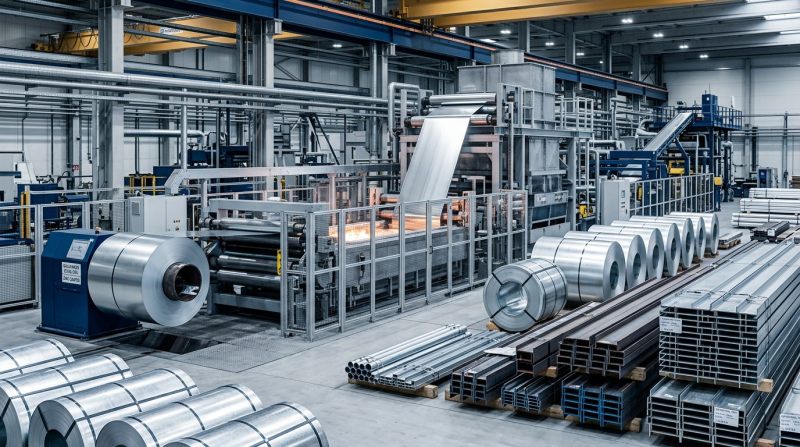
Many buyers assume that when zinc prices soften, galvanized steel prices should follow immediately. In practice, the zinc layer is only one component in the finished product cost. For hot-dip galvanized steel, the final selling price can be influenced by 5 major elements: base steel substrate, zinc coating weight, conversion processing, energy and labor, and logistics. A decline in one input does not guarantee a proportional reduction in the final offer.
The steel substrate often represents the largest share of total cost. If hot rolled coil or cold rolled coil remains firm, galvanized steel price can stay elevated even when zinc retreats. This is especially true when mills face tight rolling margins, restricted line capacity, or high maintenance costs. In export trade, producers also price in currency movement, payment risk, and booking uncertainty, which can persist for 30–90 days after raw material changes.
Another key factor is coating specification. A product with 60 g/m² zinc coating does not cost the same as one with 275 g/m². Buyers comparing quotations without checking coating weight, thickness tolerance, and surface finish may think prices are inconsistent, when in fact the products are not equivalent. Technical details often explain more than headline zinc market movement.
Processing economics also create delay. Galvanizing lines do not reprice every day in the same way metal exchanges do. Mills typically manage production in weekly or monthly planning cycles, with inventory already committed at previous raw material levels. As a result, downstream prices may remain high for 2–6 weeks even after zinc cools.
Main cost layers behind galvanized steel pricing
The table below shows why buyers should evaluate galvanized steel as a processed steel product rather than a simple zinc-linked commodity.
The key takeaway is that zinc is necessary, but it is not the whole story. Buyers evaluating steel rebar cost, structural sections, or galvanized coil should compare total processed value, specification matching, and delivery reliability rather than expecting a one-to-one relationship with zinc market direction.
Processing, Energy, and Compliance Costs Are Reshaping Steel Purchasing
Galvanized steel production is energy intensive. Surface preparation, heating, coating, cooling, tension leveling, and inspection all add cost beyond raw materials. In periods of volatile utility markets, natural gas and electricity can move sharply within a single quarter. For producers serving export markets, these increases are often reflected in quotations faster than buyers expect, particularly for orders with delivery commitments inside 15–45 days.
Compliance is another persistent cost driver. International buyers increasingly request ASTM, EN, JIS, or GB aligned production, plus test documentation on thickness, coating mass, mechanical properties, and surface condition. These requirements improve quality control, but they also add inspection labor, document handling, and traceability processes. For large projects, a missing mill test certificate can delay acceptance more than a price difference of a few dollars per ton.
Environmental operating standards also matter. Galvanizing lines must manage emissions, wastewater, dross, and chemical treatment responsibly. Even when not visible in a price sheet, these costs are part of sustainable production and stable export supply. Buyers seeking dependable long-term partners generally benefit from suppliers that can maintain process discipline rather than chasing the lowest short-term offer.
For project teams, this means price evaluation should be linked to total supply security. A low offer with weak coating control, loose thickness tolerance, or unstable lead time may create rework, delays, or higher maintenance costs after installation. In structural and industrial use, the cost of one procurement mistake can exceed the apparent savings from a cheaper quote.
How non-zinc costs affect real buying decisions
- Energy cost spikes can hold galvanized steel prices firm for 30–60 days even when zinc softens.
- Stricter export documentation may add 3–7 days to shipment preparation but reduces customs and acceptance risk.
- Coating and thickness consistency can directly affect service life, especially in humid, coastal, or industrial atmospheres.
- Reliable manufacturers with stable line scheduling often reduce the hidden cost of resupply, claims handling, and project delay.
A practical procurement view
For procurement managers, the goal is not simply to find a lower unit price. The goal is to secure the right steel product, with the right coating level, documentation package, and delivery schedule, at a workable total landed cost. This is particularly important for distributors, OEM users, and project contractors who need repeatable supply rather than occasional spot opportunities.
What Buyers Should Compare When Sourcing Galvanized Steel Products
When comparing offers, buyers should separate commodity assumptions from specification-based evaluation. The same product category can show meaningful price differences because of thickness, width, coating mass, yield performance, packaging, and destination terms. A clear side-by-side review prevents false comparisons and helps technical teams align with purchasing and project departments.
In the middle of these sourcing decisions, coil products are often the base material for fabrication, roll forming, ducting, roofing, light structural parts, and OEM manufacturing. For buyers needing corrosion resistance and flexible processing, Gi Coil can be evaluated by thickness from 0.12mm to 3.5mm, width from 600mm to 1500mm, and coating options such as hot galvanizing 60–275g/m² or pre-galvanized 80–275g/m².
Available grades such as DX51D+Z, DX52D+Z, SGCC, S250GD+Z, and S350GD+Z serve different forming and strength needs. International alignment with AISI, ASTM, DIN, JIS, GB, SUS, and EN can help simplify technical review for buyers operating across multiple markets. This matters when procurement teams need one supply partner that can support both standard specifications and customized processing requirements.
For many industrial and construction buyers, the real value lies in moderate corrosion protection, moisture isolation, and extended service life of the steel substrate. However, these benefits only translate into cost efficiency when the specification actually matches the environment, forming process, and service life target of the project.
Specification checklist before accepting a quotation
The table below can be used by sourcing teams, quality personnel, and engineers to review offers on a comparable basis.
This type of comparison often reveals that the “cheaper” offer is thinner, lighter coated, or less documented. For serious project procurement, technical equivalence should be confirmed before commercial negotiation begins.
Four sourcing mistakes to avoid
- Comparing zinc headlines to finished steel offers without checking substrate cost.
- Ignoring coating mass and assuming all galvanized products provide the same life cycle value.
- Choosing only by spot price while underestimating lead time risk of 2–6 weeks.
- Approving supply before verifying standards, certificates, and packaging for export transit.
How Structural Steel Buyers Can Reduce Budget Risk in a High-Price Environment
For contractors, distributors, and manufacturers, the best response to stubbornly high galvanized steel prices is not passive waiting. It is disciplined procurement planning. Buyers should define application conditions early, classify products by criticality, and separate must-have specifications from negotiable items such as packaging details, shipment split, or delivery sequence. This prevents last-minute overbuying and avoids premium pricing caused by urgency.
A useful approach is to group purchasing into 3 layers: strategic structural materials, production support materials, and flexible spot items. Strategic materials include steel beams, channels, angle steel, and customized structural components with direct project schedule impact. These usually require stronger supplier coordination, stable quality control, and dependable lead times. Spot buying may be acceptable for low-risk items, but not for project-critical steel.
Supplier capability matters as much as quotation level. A structural steel manufacturer and exporter with modern facilities, process control, and experience serving North America, Europe, the Middle East, and Southeast Asia can often help buyers reduce sourcing risk through clearer specification alignment and more predictable production windows. In a market where delays of 7–14 days can affect crane scheduling, installation sequence, or customer delivery, reliability has measurable value.
For companies sourcing from China, it is also practical to evaluate whether the supplier can support both standard sections and OEM solutions. Consolidating multiple steel categories with one dependable partner may reduce inspection duplication, communication friction, and partial shipment problems. This can improve project control even if the nominal unit price is not the lowest in the market.
Procurement control points for high-price cycles
The following matrix helps buyers turn market uncertainty into an actionable sourcing framework.
The broader lesson is that cost control in steel purchasing depends on process quality as much as market timing. Better RFQs, clearer specifications, and more reliable exporters can protect budgets more effectively than waiting for zinc alone to solve price pressure.
FAQ for Procurement, Technical Review, and Project Teams
How quickly should galvanized steel prices react when zinc falls?
In many export transactions, a full price adjustment may take 2–6 weeks rather than happening immediately. Mills often work through existing substrate inventory, scheduled line production, and prior freight commitments. If base steel and energy remain firm, the finished galvanized steel price may only soften partially.
What matters more: lower zinc price or lower coating weight?
For a buyer, coating weight often matters more because it directly changes both performance and price. A lower zinc market does not help if the project requires 200–275g/m² coating for corrosive conditions. Reducing coating to save cost may shorten service life if the environment is coastal, wet, or industrial.
How should buyers compare galvanized steel with carbon steel or rebar pricing?
They should not compare by ton price alone. Carbon steel price, steel rebar cost, and galvanized coil pricing reflect different manufacturing routes, standards, and end-use requirements. Galvanized steel includes corrosion protection value, while rebar and structural sections are evaluated more heavily on strength, rolling specification, and project code compliance.
What should a project team request from a supplier before ordering?
At minimum, request product grade, size range, coating specification, applicable standards, packing method, estimated lead time, and inspection documents. For larger projects, it is wise to confirm mechanical property ranges, tolerance expectations, and whether customization or OEM processing is supported. This reduces ambiguity before production starts.
When is it worth paying more for a stronger supplier?
It is usually worth it when the order is tied to fixed installation dates, export compliance, multi-country standards, or downstream fabrication schedules. A supplier with stable production capacity, consistent quality control, and dependable lead times can save far more than the difference in unit price by reducing rejection, delay, and replacement risk.
Galvanized steel prices often remain high after zinc markets cool because the final cost is shaped by far more than zinc alone. Base steel, coating specification, energy, processing, compliance, freight, and lead time all influence the real procurement outcome. For buyers in construction, industrial manufacturing, and distribution, smarter sourcing starts with specification clarity and supplier reliability, not headline metal prices.
Hongteng Fengda supports global buyers with structural steel products, customized solutions, and export-oriented quality control across international standards such as ASTM, EN, JIS, and GB. If you need support comparing galvanized materials, structural sections, or OEM steel components for your next project, contact us now to get a tailored solution, discuss product details, and reduce sourcing risk with a dependable steel supply partner.
Please give us a message


Please enter what you want to find