Many quality and safety teams assume corrosion-resistant pipes will deliver long service life, yet premature failure still happens in demanding industrial environments. From material mismatch and poor fabrication to coating defects, installation errors, and overlooked inspection gaps, the causes are often more complex than they appear. Understanding why corrosion-resistant pipes fail too early is essential for reducing risk, protecting assets, and improving long-term reliability.
Why “Corrosion-Resistant” Does Not Mean “Failure-Proof”
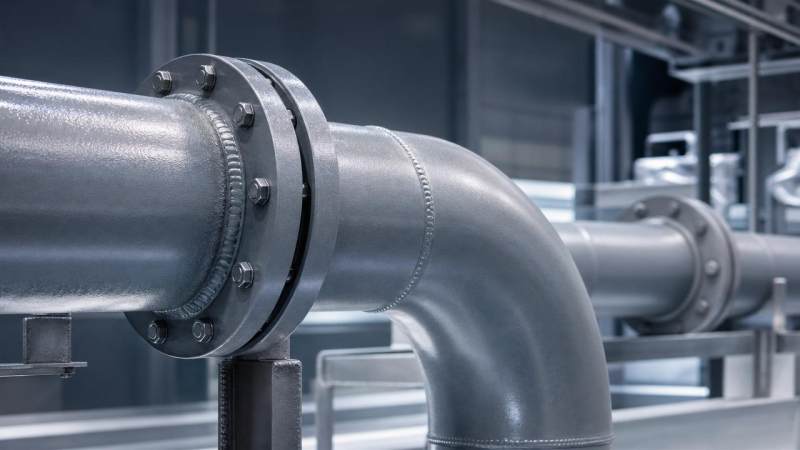
The core search intent behind this topic is practical risk reduction. Readers want to know why corrosion-resistant pipes still fail, what warning signs are commonly missed, and how to prevent early replacement.
For quality control and safety managers, the main concern is not theory. It is how to avoid leaks, shutdowns, safety incidents, warranty claims, and unexpected maintenance costs in real operating conditions.
The most useful answer is a clear breakdown of failure mechanisms across material selection, fabrication, transport, installation, operation, and inspection. Premature pipe failure is usually a system problem, not a single-product problem.
That is why corrosion-resistant pipes can still fail too early. The pipe may be suitable on paper, yet become vulnerable because the chemistry, temperature, flow conditions, welding quality, or protective system were not fully aligned.
In other words, corrosion resistance is always conditional. It depends on exposure environment, process stability, design details, and execution quality throughout the asset lifecycle.
Material Selection Errors Are One of the Biggest Hidden Causes
Many early failures start before procurement is completed. A pipe material may meet a general corrosion requirement, but still perform poorly against localized corrosion, erosion-corrosion, stress corrosion cracking, or under-deposit attack.
Quality teams often see specifications that use broad labels such as stainless, lined, galvanized, or coated. Those terms are not enough to predict service life without detailed process data.
For example, chloride content, oxygen level, pH fluctuation, moisture cycling, and temperature spikes can quickly change corrosion behavior. A material that performs well in one plant can fail much sooner in another.
This is especially critical where buyers focus heavily on initial purchase price. Lower-cost options can look acceptable until unexpected degradation creates much larger replacement, downtime, and safety costs later.
A better approach is to match the pipe not only to the normal process range, but also to upset conditions, cleaning chemicals, startup and shutdown cycles, and contamination risks.
When reviewers ask why corrosion-resistant pipes failed early, the first question should be whether the selected material was resistant to the real environment, not the assumed one.
Fabrication and Welding Problems Can Destroy Corrosion Performance
Even when the base material is correct, poor fabrication can undermine corrosion resistance. Welding is a common weak point because heat input, filler selection, surface contamination, and post-weld cleaning all affect performance.
Improper weld procedures can create sensitized zones, residual stress, oxide scale, lack of fusion, crevices, and rough internal profiles. These become preferred sites for corrosion initiation and crack growth.
For safety managers, this matters because leaks often begin at welds, joints, and transitions rather than in the middle of a straight pipe run. Local defects drive disproportionate risk.
Surface condition also matters more than many teams expect. Embedded iron particles, shop dirt, chlorides, and damaged passivation layers can trigger corrosion on materials that should have been durable.
Supporting materials should be reviewed as well. In some manufacturing chains, upstream steel quality affects downstream forming and welding consistency. For example, well-controlled carbon steel feedstock such as Rolled Coil can support stable fabrication where excellent weldability and good cold working properties are required.
That does not mean one coil grade solves corrosion risk by itself. It means consistency in chemistry, dimensional tolerance, and forming behavior reduces variation that later appears as fit-up defects or weld quality issues.
Coating Systems Often Fail Because of Application and Handling, Not Just Product Quality
When corrosion-resistant pipes rely on coatings, linings, or external barriers, the protective system is only as strong as surface preparation and application control. Many failures come from preventable execution errors.
Common issues include inadequate blast profile, incorrect dry film thickness, poor curing, holiday defects, pinholes, edge thinning, and contamination trapped beneath the coating.
Transport and site handling also create damage long before commissioning. Forklift contact, chain abrasion, stacking pressure, moisture exposure, and rough unloading can compromise protection in localized areas.
These damaged points then become initiation sites for underfilm corrosion or rapid external attack. Because the rest of the pipe still looks good, teams may overestimate remaining life and delay intervention.
Inspection should therefore include more than visual checks. Holiday testing, adhesion testing, thickness measurement, and documented repair procedures are essential where coating integrity is part of the design basis.
If the pipe was marketed as corrosion-resistant, but the coating was applied or handled poorly, the asset will not deliver the expected service life no matter how strong the underlying specification appears.
Installation Conditions Frequently Create Corrosion Risks That Were Not Present in the Factory
Many corrosion-resistant pipes leave the manufacturer in acceptable condition and become compromised during installation. Misalignment, forced fit-up, poor support spacing, and contact with incompatible metals are common examples.
Crevice formation at clamps, flanges, gaskets, and supports can accelerate local attack. Water traps and low points can retain aggressive media, while dead legs promote stagnant conditions and deposit buildup.
External conditions matter too. Buried lines, splash zones, insulation interfaces, and marine atmospheres create very different exposure profiles from dry indoor storage or factory acceptance conditions.
Corrosion under insulation is a well-known example. A pipe may be inherently corrosion-resistant, but trapped moisture, chloride ingress, and thermal cycling can still produce severe hidden damage.
Installation teams also sometimes grind, cut, or modify pipe surfaces without restoring protection correctly. This can remove coatings or passive layers and leave small but highly vulnerable areas behind.
For quality and safety personnel, the lesson is simple: acceptance at delivery does not guarantee readiness for service. Installation quality must be treated as part of corrosion control, not a separate issue.
Operating Conditions Change Faster Than Specifications
Another major reason corrosion-resistant pipes fail too early is that operating reality drifts away from design assumptions. Process intensification, fluid changes, temperature excursions, or maintenance chemistry can alter corrosion behavior quickly.
Flow velocity is often underestimated. High velocity, turbulence, solids carryover, and cavitation can strip protective films and turn a corrosion-resistant material into an erosion-corrosion problem.
Intermittent service can be just as damaging as continuous service. Wet-dry cycling, oxygen ingress during shutdown, and deposits formed during low-flow periods all increase localized attack risk.
Chemical cleaning is another hidden issue. Acids, alkalis, and disinfectants used during maintenance can be more aggressive than the normal process fluid if concentration, temperature, or exposure time is not controlled.
This is why failure reviews should compare actual operating logs with original material assumptions. If the process changed, the pipe may not have failed unexpectedly at all. It may have been operating outside its corrosion envelope.
The keyword here is verification. Corrosion-resistant pipes need periodic reassessment when process conditions, duty cycles, or cleaning routines change over time.
Inspection Gaps Allow Small Defects to Become Safety Events
In many plants, the failure itself is not the first problem. The first problem is that degradation progressed unnoticed. Early damage was either not inspected for, not interpreted correctly, or not escalated in time.
General visual inspections are useful, but they rarely detect all high-risk mechanisms. Pitting, crevice corrosion, cracking under insulation, and internal wall loss may remain hidden until leakage occurs.
Risk-based inspection programs work better when they focus on known corrosion drivers, susceptible locations, and credible failure modes. The goal is not more inspection everywhere, but smarter inspection where it matters most.
Useful tools may include ultrasonic thickness monitoring, profile radiography, guided wave testing, boroscopy, coating holiday detection, and targeted weld examination based on service conditions.
Quality teams should also track leading indicators, not only failures. Recurrent coating repairs, unusual deposit patterns, repeated support-area damage, and chemistry excursions often signal a life-shortening trend.
When inspection data is disconnected from process history and maintenance records, organizations lose the chance to intervene early. Integrated review is usually where the biggest reliability gains are found.
How Quality and Safety Teams Can Reduce Early Failure Risk
The best prevention strategy starts with asking more precise questions at the specification stage. What exact media will the pipe see? At what temperature range? With what contaminants, cleaning chemicals, and upset scenarios?
Procurement documents should define not only material grade, but also fabrication controls, welding procedures, coating requirements, testing scope, traceability, and acceptance criteria for critical services.
Supplier qualification matters as much as nominal compliance. Manufacturers with stable process control, international standard alignment, and consistent quality systems help reduce variation that later becomes field risk.
For global buyers, this includes checking whether production follows recognized standards such as ASTM, EN, JIS, or GB, and whether the supplier can support consistent dimensions, documentation, and delivery performance.
In related steel supply chains, product consistency is equally important. For example, where fabricated components require coated carbon steel input for forming or hot working, a controlled option like Rolled Coil with good weldability and broad standard compliance can help support downstream manufacturing reliability.
After delivery, inspection should verify actual condition, not only paperwork. Teams should review welds, surfaces, coating integrity, storage condition, and any transport damage before installation begins.
Finally, build a feedback loop. Every leak, repair, or corrosion hotspot should inform future material selection, design details, supplier evaluation, and maintenance planning.
What a Better Failure Review Looks Like
If corrosion-resistant pipes fail prematurely, the review should not stop at “material defect” or “harsh environment.” Those conclusions are too broad to prevent recurrence.
A strong investigation traces the full chain: specification basis, supplier records, material certificates, fabrication history, weld procedures, coating reports, handling conditions, installation details, operating logs, and inspection findings.
This broader view usually reveals combined causes. A pipe might fail because of moderate material mismatch, plus a coating holiday, plus stagnant service, plus delayed inspection. Real failures are often cumulative.
That is why corrective action should also be layered. Change the material where needed, improve fabrication controls, strengthen installation standards, monitor process excursions, and inspect the most vulnerable locations more intelligently.
For quality and safety managers, that is the real value of understanding premature corrosion failure. It supports better purchasing decisions, more accurate risk assessment, and more reliable asset life planning.
Conclusion
Corrosion-resistant pipes still fail too early because corrosion resistance is never automatic. It depends on correct material matching, controlled fabrication, sound coating practice, careful installation, stable operation, and focused inspection.
For quality control and safety teams, the key takeaway is clear: do not judge pipe reliability by product label alone. Judge it by how well the full system matches the actual service environment.
When those factors are reviewed together, premature failures become far more predictable and preventable. That is how organizations reduce safety exposure, protect assets, and get the service life they expected in the first place.
Please give us a message


Please enter what you want to find