Carbon steel prices often move in weeks or even days, while project budgets are usually approved months in advance. That timing mismatch is why buyers suddenly face higher steel rebar cost, why contractors reconsider steel plate for construction quantities, and why sourcing teams may need to re-quote from a different h beam manufacturer mid-project. The key issue is not simply that steel is “volatile,” but that steel pricing responds immediately to raw materials, energy, policy, freight, and mill capacity, while budgets change slowly through internal approvals. For procurement teams, engineers, and project managers, understanding these drivers is the most practical way to reduce sourcing risk and avoid budget overruns.
Why do carbon steel prices move faster than project budgets?
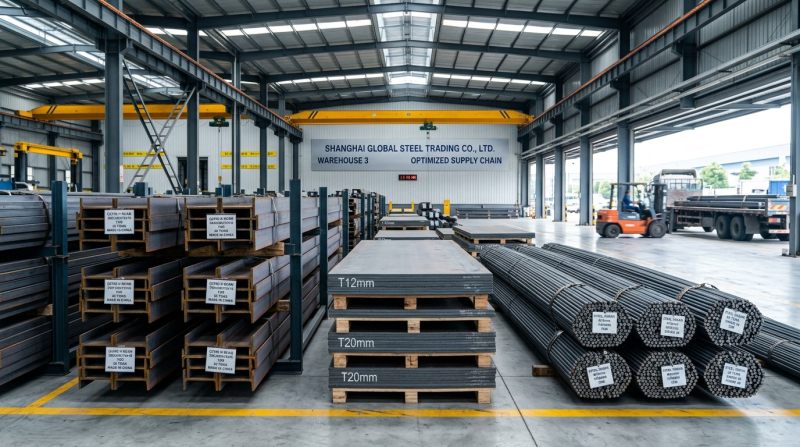
The short answer is that steel markets react in real time, but project budgets do not. Carbon steel producers and exporters adjust prices whenever major cost inputs change. Construction and industrial project budgets, by contrast, are usually based on early estimates, tender assumptions, and approval cycles that may be outdated by the time purchasing begins.
Several timing differences create this gap:
- Raw material costs update quickly: Iron ore, coking coal, scrap, zinc, and alloy inputs can rise or fall within days.
- Energy and utility costs are variable: Electricity and fuel directly affect rolling, cutting, coating, and transport costs.
- Freight changes hit landed cost immediately: Ocean shipping, inland trucking, port fees, and container availability can shift faster than internal budget revisions.
- Trade policy can change with little notice: Tariffs, anti-dumping rules, export controls, or tax rebate adjustments may alter supplier pricing almost overnight.
- Mill order books change weekly: When demand spikes, lead times extend and mills increase offers.
For a project owner or contractor, this means the original budget may still look acceptable on paper while actual steel procurement has already become more expensive.
What are the biggest factors behind carbon steel price volatility?
If your goal is to predict cost risk, focus on the factors that most directly affect supplier quotations.
1. Raw material movements
Carbon steel pricing is heavily influenced by upstream inputs. Scrap and iron ore are obvious drivers, but coating materials also matter. If a product includes galvanizing, zinc price movements can materially affect the final quote. This is especially relevant when comparing plain carbon steel with galvanized alternatives for construction or industrial use.
2. Supply-demand imbalance
Steel prices rise quickly when infrastructure demand, manufacturing output, or seasonal construction activity accelerates. Even if long-term demand looks stable, short-term shortages in specific sizes or grades can push up prices. A project may be well planned, but if many buyers suddenly need the same beam, plate, or profile, the market will respond faster than a budgeting committee can.
3. Energy, environmental, and production controls
Steelmaking is energy-intensive. Power restrictions, emissions-control policies, or temporary production cuts can reduce available supply and lift prices. In export-oriented markets, these policy changes often affect both lead time and cost at the same time.
4. Currency exchange and international trade
For global buyers, steel cost is not just the mill price. Exchange rate shifts between the U.S. dollar, RMB, euro, or local currency can change the actual procurement cost. This matters especially for distributors, importers, and project procurement teams comparing multiple overseas suppliers.
5. Processing and specification complexity
Not all carbon steel products react equally. Standard commodity sizes usually move with the market, while customized structural components may also reflect tooling, fabrication, inspection, and lower production flexibility. As a result, customized items can become harder to re-budget when the market turns.
Why are project budgets slower to adjust?
Many readers already know steel prices fluctuate. The more useful question is why budgets cannot keep up even when teams see the change coming.
Project budgets are slower because they depend on process, not market speed:
- Initial estimates may be based on historical averages instead of live quotations.
- Internal approvals often lock a cost baseline early.
- Tender cycles can separate pricing from ordering by several months.
- Engineering changes may happen after budget approval.
- Finance teams may treat steel as one line item instead of separating high-volatility categories.
This is why two teams can both be “correct”: procurement sees current market risk, while finance still works from an approved plan. The problem is structural, not personal.
How does this affect real purchasing decisions?
When steel prices change faster than budgets, the impact appears in practical ways:
- Reduced purchasing flexibility: Buyers may be forced to accept lower stock availability or longer lead times to stay near budget.
- Specification pressure: Teams may consider alternative grades, sizes, or coatings to control cost.
- Supplier switching risk: A cheaper quote may look attractive, but inconsistency in quality, delivery, or compliance can create larger downstream losses.
- Phase-by-phase procurement: Instead of buying the full requirement at once, teams may split orders to manage price exposure.
- Higher total installed cost: Delays, redesign, urgent freight, and rework often cost more than the steel price increase itself.
For example, a buyer comparing structural sections with coated sheet products may find that lifecycle cost matters as much as spot price. In some applications, using Galv Sheeting can support corrosion resistance, reduce maintenance exposure, and improve suitability across construction, energy, transportation, agriculture, and light industry projects. With options such as DX51D+Z, SGCC, and S350GD+Z, thickness from 0.12mm to 6.00mm, width from 600mm to 1500mm, and zinc coating ranges up to 275g/m², the right specification decision can help control long-term project cost rather than focusing only on the lowest immediate carbon steel quote.
What should buyers, engineers, and project managers watch most closely?
The most effective teams do not try to predict every market move. They track the signals that change buying decisions.
For procurement teams
- Monitor weekly mill pricing trends, not just monthly averages.
- Ask suppliers how long quotations remain valid.
- Separate ex-works price, processing cost, coating cost, and freight cost.
- Check whether the quoted lead time is realistic under current demand.
For engineers and technical evaluators
- Identify where specification flexibility is acceptable and where it is not.
- Confirm compliance with ASTM, EN, JIS, or GB before considering substitutions.
- Evaluate total-use performance, especially for corrosion-sensitive environments.
For project managers and decision-makers
- Build contingency for high-volatility steel categories.
- Prioritize supply reliability for critical path materials.
- Review whether delayed purchasing increases total project risk.
How can companies reduce the budget risk caused by steel price changes?
There is no perfect way to eliminate volatility, but there are practical ways to manage it.
Use live supplier engagement earlier
Do not wait until the final purchasing stage to validate steel pricing. Early contact with qualified manufacturers and exporters gives your team a realistic cost baseline and helps avoid budget surprises later.
Break down the steel package by risk level
Some items are standard and easy to replace; others are project-critical or custom-made. Treat them differently. Lock in the high-risk items earlier where possible.
Compare total supply value, not just unit price
A lower quote is not always lower cost. Stable production capacity, quality control, standard compliance, and dependable lead time often matter more than a small short-term discount. For international sourcing, supplier execution can protect the project far better than chasing the lowest number.
Include approved alternatives in advance
If the engineering team pre-approves equivalent grades or dimensions, procurement gains flexibility when the market moves. This reduces delays caused by emergency re-evaluation.
Work with suppliers that understand export requirements
For global projects, a supplier should be able to support standard compliance, customization, documentation, quality consistency, and schedule reliability. This is especially important when steel products are not simple stock items but part of a broader structural or industrial package.
How should you evaluate a steel supplier when prices are unstable?
In volatile markets, supplier selection should be based on resilience as well as price. Ask these questions:
- Can the supplier maintain stable output during demand peaks?
- Do they support international standards such as ASTM, EN, JIS, and GB?
- Can they offer both standard specifications and customized solutions?
- Is their quotation transparent about material, coating, processing, and shipping?
- Do they have experience serving your destination market?
- Can they keep quality consistent across batches?
For many buyers, especially distributors, contractors, and industrial procurement teams, these capabilities are what protect margin and project schedule when the market becomes difficult.
Final takeaway: steel market speed and budget speed are not the same
Carbon steel prices change faster than project budgets because the market reacts instantly to raw materials, energy, freight, policy, and mill capacity, while budgets depend on internal planning and approvals. For buyers and project teams, the solution is not guesswork. It is better timing, better supplier evaluation, clearer specification planning, and stronger risk control.
If you treat steel as a fixed-cost line item, volatility will keep creating surprises. If you treat it as a managed procurement risk, you can make smarter sourcing decisions, protect project timelines, and control total cost more effectively.
Please give us a message


Please enter what you want to find