In compact industrial and construction-related systems, choosing the right tubing format can improve space efficiency, flow control, and installation flexibility. A stainless steel tube coil is often the better fit when projects require long continuous runs, reduced joint points, and dependable corrosion resistance. For buyers comparing material options, understanding where coil tubing performs best helps support safer sourcing decisions and more efficient system design.
When is a stainless steel tube coil the smarter choice?
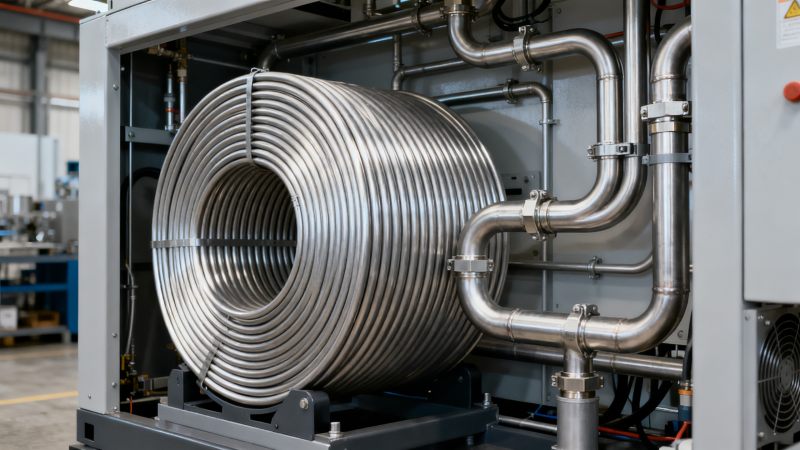
The core search intent behind stainless steel tube coil is practical evaluation. Readers usually want to know when coiled tubing outperforms straight lengths in compact systems.
For most information-stage buyers, the short answer is this: a stainless steel tube coil is the better fit when installation space is limited, routing is complex, and leak risk must be reduced.
It is especially useful in systems that need long continuous tube runs without many fittings. Fewer joints can mean lower maintenance demand and more stable long-term performance.
Compared with straight tube sections, coil tubing can simplify layout inside skids, panels, equipment frames, and other constrained assemblies. That matters when every connection adds labor, cost, and inspection effort.
What information-stage buyers usually care about first
Target readers at the research stage are rarely looking for theory alone. They want a clear way to judge fit, risk, sourcing implications, and likely performance under real operating conditions.
Their most common concerns include available space, bend radius, pressure requirements, corrosion exposure, vibration, installation time, and total installed cost rather than only material price.
They also want to avoid buying the wrong format. A poor tubing choice can create routing difficulty, too many joints, more potential leak points, and extra field labor.
That is why the best evaluation method is not asking whether coiled tubing is generally better. It is asking whether the system benefits from continuity, flexibility, and compact routing.
Why compact systems often benefit from coiled tubing
Compact systems place unusual demands on materials because designers must balance performance with limited physical space. In many cases, tube geometry matters almost as much as material grade.
A stainless steel tube coil supports tighter packaging because it can be supplied in long lengths and shaped to suit the route. This reduces dependence on multiple cut-and-connect sections.
That continuity is valuable in hydraulic lines, instrumentation systems, heat transfer assemblies, control panels, fluid delivery networks, and similar space-sensitive equipment layouts.
When fewer fittings are required, there are fewer locations where installation quality can vary. This can improve consistency across projects and reduce the number of points needing periodic inspection.
Coils can also support cleaner internal flow paths in some designs by minimizing abrupt connection transitions. While exact performance depends on system design, continuity often helps preserve operating stability.
How a stainless steel tube coil helps reduce joints and leakage risk
One of the strongest reasons buyers choose a stainless steel tube coil is risk reduction. Every additional connection introduces a possible source of leakage, loosening, or installation error.
In compact systems, fitting density can increase quickly because routing is more complicated. If straight lengths are used, installers may need many more unions, elbows, or couplings.
Each added fitting increases procurement complexity as well. Buyers must source compatible components, verify specifications, and manage tolerance consistency across the complete assembly.
By using longer continuous tubing, project teams can reduce total fitting count. This often lowers assembly time and can help improve reliability in systems exposed to pressure cycling or vibration.
For buyers focused on lifecycle cost, this matters more than simple material comparison. The savings often come from installation efficiency, reduced rework, and lower maintenance exposure over time.
Where stainless steel tube coil performs especially well
Not every application needs coiled tubing, but several scenarios strongly favor it. The first is any installation where equipment footprint is limited and routing paths are not straight or open.
Examples include instrumentation lines on process skids, compact utility modules, refrigeration units, chemical dosing systems, marine equipment, and prefabricated industrial assemblies.
It is also a strong option where corrosion resistance is important. Stainless steel remains widely valued in environments involving moisture, chemicals, outdoor exposure, or hygiene-related conditions.
Another good fit is when systems must be prefabricated before delivery. Coils can support workshop-based shaping and assembly, which may reduce field installation pressure and improve schedule control.
For export-oriented projects, prefabrication advantages are important because they help global buyers manage on-site labor risk and maintain more predictable installation standards.
What to check before deciding on coiled tubing
Although a stainless steel tube coil offers clear advantages, buyers still need to verify suitability against the actual service conditions. A wrong assumption at this stage can create downstream problems.
Start with pressure and temperature requirements. Tube wall thickness, outside diameter, and material grade must match the operating range and relevant code or project specification.
Then evaluate minimum bend radius and routing complexity. Coiled tubing works best when bends can be formed without damaging the tube or creating unacceptable stress concentrations.
Corrosion conditions should also be reviewed carefully. Stainless steel is not a single-performance category, and grade selection must consider chlorides, humidity, chemical media, and cleaning methods.
Buyers should also ask about delivery condition, surface finish, dimensional tolerance, testing, and compliance with standards such as ASTM, EN, JIS, or GB where applicable.
How to compare coil tubing with straight tube fairly
A fair comparison should look beyond the purchase price per meter. Straight tube may seem simpler at first, but total project cost depends on installation method and system layout.
If a design requires many short segments, straight lengths usually mean more cutting, more fittings, and more labor. That can offset any initial unit-price advantage very quickly.
Coiled tubing may deliver better value when labor is expensive, access is limited, or system downtime carries significant cost. In those cases, installation efficiency becomes a major economic factor.
On the other hand, straight tube can still be suitable for open layouts, simple routes, or systems where modular replacement of short sections is a bigger priority than continuity.
The best decision comes from evaluating total installed cost, reliability impact, and maintenance exposure together rather than isolating raw material cost from the rest of the project.
Material sourcing decisions should consider the full steel supply chain
Even when the immediate need is a stainless steel tube coil, experienced buyers often assess broader supplier capability. This is especially true for industrial or construction-related projects with multiple steel inputs.
A supplier with stable quality systems, export experience, and standards compliance can reduce sourcing friction across the wider procurement plan. That lowers risk beyond the tubing itself.
For example, many projects combine tubing, structural sections, and fabricated components in one schedule. Coordinating these materials with a dependable steel partner can improve delivery consistency.
In some manufacturing and construction applications, buyers may also need complementary stainless products for machined parts or structural details, such as 310 Stainless Square steel rod.
This product line supports uses across kitchenware, decoration, medical instruments, automotive parts, shipbuilding, textiles, paper and pulp, cement, heavy equipment, and construction environments.
Available specifications include square bar sizes from 18mm to 47mm, customized lengths, and finishes such as bright polished, black, rough turning, matt surface treatment, No. 4, and BA.
Its referenced material data includes tensile strength of at least 520, yield strength of at least 275, elongation around 55 to 60, and compliance coverage including ASTM, AISI, JIS, GB, DIN, and EN.
For buyers, the larger lesson is simple: whether sourcing tubing or bar products, supplier consistency, standards alignment, and customization capability all affect project success.
Questions buyers should ask suppliers before placing an order
Information-stage readers often benefit most from knowing what to ask. Good supplier questions can reveal whether a stainless steel tube coil will truly support the intended application.
Ask which grades are available and how they are recommended based on corrosion environment. Request support for matching grade choice to media, temperature range, and installation location.
Confirm dimensional tolerances, coil length options, wall thickness range, testing methods, and packaging approach. These details influence both manufacturing compatibility and transportation safety.
It is also useful to ask whether the supplier supports customized solutions. In compact systems, standard dimensions may not always provide the most efficient fit or easiest assembly process.
Finally, ask about export documentation, lead times, production stability, and prior experience with international standards. These points matter greatly for overseas procurement and schedule planning.
How to know if a stainless steel tube coil is the better fit for your project
If your system requires long runs in a small space, multiple direction changes, strong corrosion resistance, and fewer connection points, coiled tubing is often the better answer.
If your design is simple, open, and easy to assemble with standard straight sections, then straight tube may remain fully practical and easier to replace in short segments.
The key is to evaluate function before format. Buyers should begin with routing, maintenance goals, leak tolerance, and installation conditions rather than starting from stock form alone.
In many compact industrial systems, the performance benefit of fewer joints and better space use is large enough to justify choosing a stainless steel tube coil from the start.
For sourcing teams, that decision becomes even stronger when supported by a supplier with dependable quality control, international standards familiarity, and the ability to support broader steel requirements.
Conclusion
A stainless steel tube coil is not automatically the best option for every project, but it is often the right choice for compact systems where continuity, flexibility, and corrosion resistance matter most.
Its value comes from solving practical problems: limited space, complex routing, high fitting counts, leak risk, and installation inefficiency. Those are the issues buyers usually need to address first.
By comparing total installed value instead of material price alone, information-stage readers can make more confident decisions and identify when coiled tubing offers real operational advantages.
For projects involving broader steel procurement, working with an experienced manufacturer and exporter can further reduce sourcing risk, improve quality consistency, and support efficient project execution.
Please give us a message


Please enter what you want to find