Understanding galvanized sheet price in 2026 is essential for buyers who are comparing material costs, planning budgets, or sourcing steel for construction and industrial projects. Prices are influenced by factors such as raw material trends, coating thickness, steel grade, order volume, and global supply chain conditions. For information researchers and procurement teams, knowing what drives these changes can help you make smarter purchasing decisions and reduce sourcing risk.
Why Scenario Differences Matter When Evaluating Galvanized Sheet Price
The same galvanized sheet price can feel affordable in one project and expensive in another. That is because buyers do not purchase steel in a vacuum. A roofing contractor may focus on weather resistance and coating consistency, while an appliance manufacturer may prioritize surface finish, formability, and batch stability. An exporter serving multiple markets may also need different standards, packaging, and lead times, all of which affect the final landed cost.
In 2026, this scenario-based difference becomes even more important. Steel buyers face changing zinc prices, energy cost swings, exchange-rate pressure, logistics uncertainty, and stricter quality expectations. As a result, understanding galvanized sheet price is not just about checking a quote. It is about matching the material, coating, standard, and supply model to the actual application.
For information researchers, the practical question is not only “What is the price?” but also “Why is this price reasonable for this use case?” That shift helps procurement teams compare offers more accurately and avoid low-price mistakes that later create quality claims, delays, or replacement costs.
Common Business Scenarios Where Galvanized Sheet Price Becomes a Key Decision Point
Galvanized sheet is widely used across construction, fabrication, industrial equipment, ducting, automotive-related components, storage systems, and general manufacturing. However, the drivers behind galvanized sheet price vary significantly depending on the project type.
Construction and Roofing Projects
For buildings, warehouses, workshops, and prefabricated structures, buyers usually care about corrosion resistance, service life, and thickness tolerance. In this scenario, zinc coating mass, base steel thickness, and local climate conditions strongly influence value. A coastal or humid environment often requires a heavier coating, which raises galvanized sheet price but reduces long-term maintenance risk.
HVAC, Ducting, and Ventilation Systems
HVAC fabricators usually focus on flatness, formability, and consistency from coil to coil. Here, price is affected not only by steel and zinc cost but also by production accuracy and surface quality. In this case, a lower quoted galvanized sheet price may hide processing issues such as poor bend performance or inconsistent coating.
Industrial Fabrication and Equipment Casings
Factories making cabinets, control boxes, light equipment housings, and storage products often need clean surfaces and stable mechanical properties. They may also require slit coil, cut-to-length sheets, or customized dimensions. This means galvanized sheet price is shaped by processing services, tolerance requirements, and order complexity rather than raw material alone.
Export Procurement and Distribution
Traders and regional distributors compare galvanized sheet price across mills, countries, and shipping routes. In this scenario, total cost includes packing, port charges, inspection, certification, and shipping reliability. A competitive EXW or FOB price does not always translate into the best delivered cost.
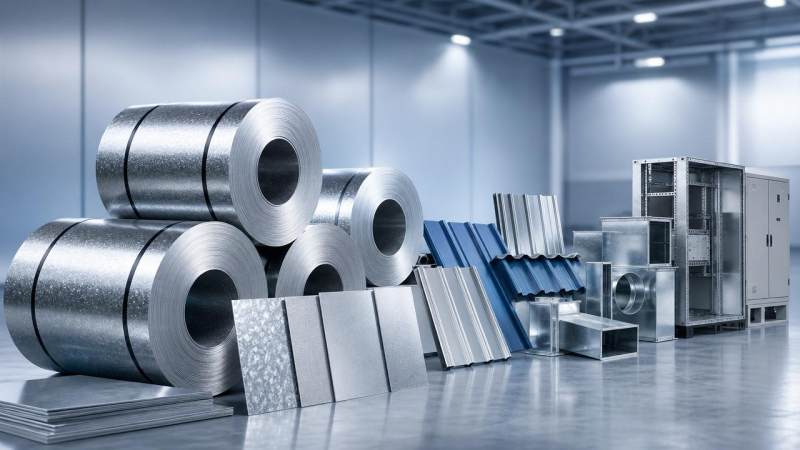
A Practical Comparison Table for Different Application Scenarios
The table below shows how galvanized sheet price should be evaluated differently based on application. This is often more useful than comparing price per ton alone.
What Actually Drives Galvanized Sheet Price in 2026
When researching galvanized sheet price in 2026, buyers should separate the cost drivers into five practical categories: raw materials, specification factors, order-related factors, supply chain conditions, and compliance requirements. Each category has different relevance depending on the application scenario.
1. Raw Material Trends
Hot rolled coil or cold rolled base steel remains the foundation of galvanized sheet cost. Zinc is the second major variable. If zinc prices rise globally, galvanized sheet price usually moves upward, especially for high-coating specifications. Energy costs, including electricity and natural gas used in steel and galvanizing production, also influence mill pricing.
2. Coating Thickness and Steel Grade
A heavier zinc coating improves corrosion resistance but adds cost. Likewise, special steel grades with better forming or strength performance increase price. For buyers, this means the right question is not whether a higher galvanized sheet price is acceptable, but whether the additional specification creates measurable value in the final application.
3. Dimensions, Tolerance, and Processing
Thin gauges, narrow widths, slit coil, or cut-to-length sheets may carry processing premiums. Tighter tolerance requirements also affect production yield and quality control cost. These details matter in manufacturing scenarios where downstream efficiency is more valuable than buying the lowest tonnage rate.
4. Volume and Delivery Terms
Order volume often changes galvanized sheet price significantly. Large and regular purchase schedules allow mills or exporters to optimize production planning. Small trial orders, mixed specifications, or urgent shipments usually cost more. Incoterms also matter. FOB, CFR, and DDP pricing structures can look very different even when the product itself is identical.
5. Supply Chain and Regional Market Conditions
Shipping capacity, trade policy, anti-dumping rules, currency movement, and port congestion may all influence final price levels in 2026. For overseas buyers, a modest mill increase can become a major delivered-cost increase when freight and financing costs rise at the same time.
How Different Buyers Should Judge Price Suitability
Different companies should not evaluate galvanized sheet price using the same logic. A project contractor, a factory, and a distributor face different risk structures.
For Project Contractors
Contractors should focus on lifespan, weather exposure, and installation timing. If a low-priced sheet requires earlier replacement or creates fitting problems on site, the initial saving disappears quickly. In many construction projects, consistency and lead time are as important as price.
For Manufacturers
Manufacturers should calculate total conversion cost. A slightly higher galvanized sheet price may be justified if it improves stamping, bending, welding, or surface appearance. Stable input material often reduces scrap and rework.
For Traders and Importers
Traders should compare source flexibility, standard compatibility, and shipment reliability. Delivered cost, claims risk, and turnover speed are critical. Price competitiveness only matters when the goods can be sold smoothly in the target market.
A Mid-Process Example: Why Cross-Product Thinking Helps Buyers
In many industrial procurement environments, buyers compare not only one steel product but the wider material mix used across a project or factory. For example, some facilities that source galvanized sheet for casings, enclosures, or structural accessories may also purchase stainless mesh for filtration, sieving, architecture, or chemical applications. In such cases, procurement teams value corrosion resistance, dimensional consistency, and long-term durability across categories.
A relevant example is 306 Stainless Steel Welded Mesh, which is used in filters, sieve systems, the chemical industry, mine industry, architecture, and residences. Available material options include SS 201, 304, 304L, 316, 316L, and 430, with diameter ranges from 0.0008″ to 0.12″, mesh counts from 2 to 635 mesh, roll width up to 240″, and roll length up to 2000′. Products in this category are valued for resistance to rust, corrosion, acid, alkali, heat, and chemicals, along with high strength and durability. For steel buyers, this comparison is useful because it reinforces a key principle: the best price is not the lowest unit quote, but the specification that best fits the actual service environment.
Common Misjudgments When Comparing Galvanized Sheet Price
Many buyers make avoidable mistakes when reviewing galvanized sheet price quotations. The most common is comparing offers with different coating weights as if they were equivalent. Another is ignoring tolerance range, surface quality, or packaging method. These details often explain why one supplier appears much cheaper than another.
A second misjudgment is overlooking logistics and delivery timing. In fast-moving projects, a delayed shipment can be more expensive than a higher material price. A third issue is relying on a single short-term quote without watching market movement. Because steel and zinc costs can change quickly, a price that seems high today may become competitive next month if market direction shifts.
How to Build a Better Sourcing Strategy for 2026
To manage galvanized sheet price more effectively in 2026, buyers should first define the application scenario clearly. Confirm whether the project needs higher corrosion protection, better forming performance, tighter tolerance, or faster supply. Then ask suppliers to quote on a truly comparable basis: same grade, same coating, same thickness, same packaging, same trade term, and same inspection standard.
It is also wise to build a supplier shortlist rather than depend on a single source. A reliable structural steel manufacturer and exporter can support this approach by offering standard specifications, customized processing, and stable production planning. Companies with modern facilities, strict quality control, and international standard compliance help reduce procurement uncertainty, especially for cross-border projects.
For buyers serving construction, industrial, or manufacturing markets, supplier capability matters beyond the quote sheet. Strong exporters can support ASTM, EN, JIS, and GB requirements, offer more dependable lead times, and help buyers control sourcing risk. This is especially valuable when balancing price, quality, and schedule across multiple projects.
FAQ: Scenario-Based Questions About Galvanized Sheet Price
Is a lower galvanized sheet price always better for construction projects?
No. In roofing, walling, or outdoor structural use, lower price may mean lighter zinc coating or lower consistency. If the environment is corrosive, the cheaper option may raise lifecycle cost.
What matters most for factories using galvanized sheet in fabrication?
Surface quality, flatness, and forming performance often matter as much as the purchase price. Better material can improve productivity and reduce waste.
How should importers compare international offers?
Use landed cost, not only mill price. Include freight, exchange-rate risk, customs factors, inspection, and delivery reliability.
Final Takeaway for Buyers Researching Galvanized Sheet Price
The most useful way to understand galvanized sheet price in 2026 is through application scenarios. Construction projects, HVAC systems, industrial manufacturing, and export distribution all evaluate price through different priorities. Raw material trends, coating thickness, grade, processing, order volume, and logistics all play a role, but their importance changes from one use case to another.
If you are researching galvanized sheet price for an upcoming project, start by defining the service environment and technical requirement before comparing suppliers. That approach makes quotations more meaningful, reduces sourcing errors, and supports better long-term purchasing decisions. For businesses sourcing structural steel and related products globally, working with a reliable China-based manufacturing and export partner can also improve cost control, supply stability, and project execution confidence.
Please give us a message


Please enter what you want to find