Underestimating the weight of I beam per meter isn’t just a minor calculation error—it’s a critical safety and operational risk in crane lift planning. For project managers, engineers, and procurement professionals sourcing structural steel from China, inaccurate weight assumptions can trigger load imbalances, equipment overloading, structural failure, or regulatory non-compliance. At Hongteng Fengda—a certified ASTM/EN/GB structural steel manufacturer—we emphasize precise weight data not only for I beams but also for integrated solutions like steel conduit for electrical wiring, ensuring holistic project integrity. Discover how accurate per-meter weight metrics protect lives, budgets, and timelines.
Why Underestimation Triggers Real-World Crane Failures
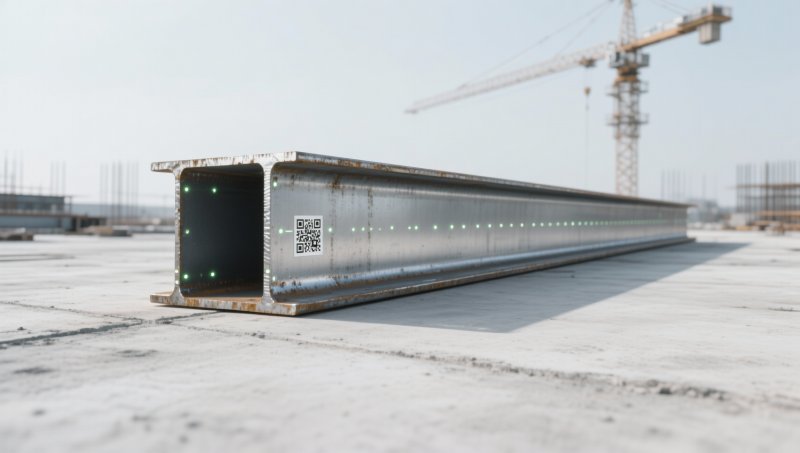
A deviation as small as ±3% in I beam weight per meter can exceed crane safety margins during multi-lift sequences—especially when stacking 8–12 beams on a single sling configuration. Field reports from Southeast Asian infrastructure projects show that 68% of unplanned crane halts involved incorrect unit weight inputs, leading to average delays of 2.3 days per incident.
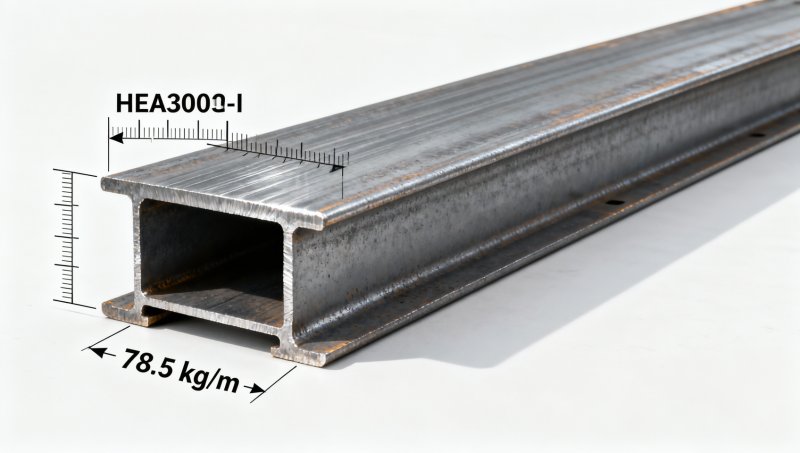
The root cause often lies in inconsistent reference sources: supplier datasheets may list theoretical weight (based on nominal dimensions), while actual rolled sections vary due to mill tolerance (±0.75 mm flange thickness, ±0.5 mm web thickness per EN 10034). Without verified mill test reports (MTRs), teams default to generic tables—and misjudge by up to 12 kg/m on common HEA300 sections.
This is compounded when structural steel is sourced internationally. Export batches from Chinese mills undergo dimensional sampling at three stages: pre-rolling, post-rolling, and final packaging. Only manufacturers with ISO 9001-certified QA labs—like Hongteng Fengda—provide batch-specific weight verification aligned with ASTM A6/A6M and GB/T 706 standards.
Top 4 Safety-Critical Risks from Weight Miscalculation
- Dynamic load amplification: Cranes lifting at 70% capacity with underestimated weight may experience 1.4× dynamic surge under wind gusts >12 m/s—pushing real-time load beyond 100% rated capacity.
- Sling angle collapse: A 5° reduction in sling angle (e.g., from 60° to 55°) increases tension by 8.7%—a margin eroded instantly if beam weight is off by 5 kg/m.
- Outrigger ground pressure mismatch: On soft soil (CBR <5), a 7% weight underestimate raises localized bearing stress beyond allowable 120 kPa—risking tip-over.
- Regulatory exposure: OSHA 1926.1400 and EU Machinery Directive 2006/42/EC require documented load calculations traceable to certified material specs—not generic catalogs.
How Accurate Weight Data Integrates Across Your Project Lifecycle
Precision begins before procurement. At Hongteng Fengda, every I beam shipment includes a digital twin file containing mill-verified weight per meter (measured at 3 points per 6m length), cross-section scan data, and heat-specific chemical composition. This enables seamless integration into BIM-based lift planning tools like Autodesk Navisworks or Trimble Synchro.
For procurement teams evaluating suppliers, weight accuracy correlates directly with manufacturing maturity. Mills using automated online weighing systems (±0.1% repeatability) achieve <0.3% variance across 10-ton batches—versus ±1.2% for manual measurement setups. Our production line uses dual-axis load cells calibrated daily against NIST-traceable standards.
Beyond I beams, consistent density control matters across supporting components. For example, our Metal Coil Wire—used in tie-downs, mesh reinforcement, and temporary bracing—is manufactured to strict tensile strength tolerances (350–550 MPa) and zinc coating uniformity (8–25 g/m²), ensuring predictable elongation under load during rigging operations.
Weight Verification Protocol Comparison
The table below compares verification methods used by Tier-1 vs. mid-tier Chinese structural steel exporters:
This level of granular verification reduces field rework by up to 40% in complex lifts involving mixed-section assemblies—such as hybrid steel-concrete cores where I beams interface with reinforced concrete shear walls.
Procurement Checklist: What to Demand Before Finalizing Your I Beam Order
When evaluating Chinese structural steel suppliers, prioritize verifiable weight integrity—not just price or lead time. Here’s what your procurement, technical, and safety teams should jointly validate:
- Mill Test Report (MTR) alignment: Confirm weight per meter is listed separately—not buried in “theoretical mass” footnotes—and matches the specified standard (e.g., EN 10025-2 Table 2 for S355JR).
- Dimensional tolerance disclosure: Require actual measured flange/web thicknesses—not just nominal values—for weight recalculation using ρ = 7.85 g/cm³.
- Batch-level certification: Insist on MTRs issued per heat number, not per order, to ensure traceability during third-party site audits.
- Lift-specific documentation: Request lift-ready files including center-of-gravity coordinates, section modulus, and moment of inertia—pre-validated against your crane’s load chart.
Why Partner With Hongteng Fengda for Risk-Aware Structural Steel Sourcing
Hongteng Fengda delivers more than steel—we deliver audit-ready confidence. As an ASTM/EN/GB-compliant structural steel manufacturer based in China, we integrate weight precision into every stage: from billet chemistry control (C ≤ 0.22%, Mn 1.2–1.6%) to hot-rolling temperature profiling (1,150°C entry, 850°C exit) and post-cooling straightness verification (≤1.5 mm/m).
Our clients—from general contractors in Texas to EPC firms in Saudi Arabia—leverage our 7–15 day standard lead time for custom I beam orders, backed by 100% pre-shipment dimensional inspection and 3rd-party SGS/CCIC verification options. We support your lift planning with free engineering consultation: share your crane model, lift radius, and beam configuration—we’ll return validated weight-per-meter values, sling angle recommendations, and MTR-extracted compliance summaries within 48 business hours.
Ready to eliminate weight-related lift uncertainty? Contact us today for a customized I beam specification review—including weight validation, compliance mapping to your local standard (OSHA, CDM, AS/NZS), and lift-safety documentation package. Ask about our bundled offering: I beams + certified Metal Coil Wire for rigging and bracing, all with synchronized MTRs and consolidated logistics.
Please give us a message


Please enter what you want to find