When evaluating stainless flat sheet costs, thickness is only one part of the equation. Buyers also need to consider grade, surface finish, width, processing requirements, order volume, and global supply conditions. For procurement teams seeking stable pricing and reliable quality, understanding these cost drivers can reduce sourcing risks and improve purchasing decisions.
Understanding the Real Price Logic Behind Stainless Flat Sheet
In the steel industry, many buyers start price evaluation by asking for thickness first. That is understandable, because thicker material generally uses more metal and often carries a higher unit cost. However, for stainless flat sheet, the final quotation is influenced by a broader cost structure. Material chemistry, rolling source, coil availability, finish quality, dimensional tolerance, and downstream processing all affect the number that appears on an offer sheet.
For procurement professionals, this matters because a lower initial price does not always mean a lower total sourcing cost. Two stainless flat sheet offers with the same thickness may vary significantly when one uses a higher nickel grade, tighter flatness control, or additional cutting and protective packaging. In practical purchasing, thickness is visible, but cost drivers behind the surface often determine whether a supply plan is economical, consistent, and suitable for the end application.
This is especially important for import buyers, project contractors, equipment manufacturers, and distributors who need predictable supply. A procurement decision should not be based on gauge alone. It should be based on a full understanding of what the sheet is made of, how it is processed, and what level of quality assurance is required for the project.
Why the Market Pays Close Attention to More Than Thickness
The stainless steel market has become more complex because end users now demand stronger corrosion resistance, better appearance, cleaner surface quality, and more precise fabrication performance. As a result, stainless flat sheet pricing reflects not just raw metal weight, but also production route and application expectations. A sheet for architectural decoration is priced differently from one intended for food equipment, industrial panels, or chemical processing units.
Another reason thickness is not the only driver is the role of alloy content. Stainless grades depend on elements such as chromium, nickel, molybdenum, and manganese. When international alloy prices move, the price of stainless flat sheet can change quickly even if thickness stays exactly the same. This is why experienced buyers monitor surcharge mechanisms, grade substitution possibilities, and mill trends rather than treating all stainless sheets as interchangeable commodities.
Key Factors That Often Influence Stainless Flat Sheet Prices More Than Thickness
The following factors regularly have a major impact on stainless flat sheet cost and should be reviewed before comparing offers.
Among these, grade is often the strongest variable. For example, 304 and 316 stainless flat sheet may have the same thickness, but 316 usually carries a higher price because of its molybdenum content and stronger corrosion resistance. Likewise, ferritic grades may look more economical, yet they may not suit every fabrication or environmental condition.
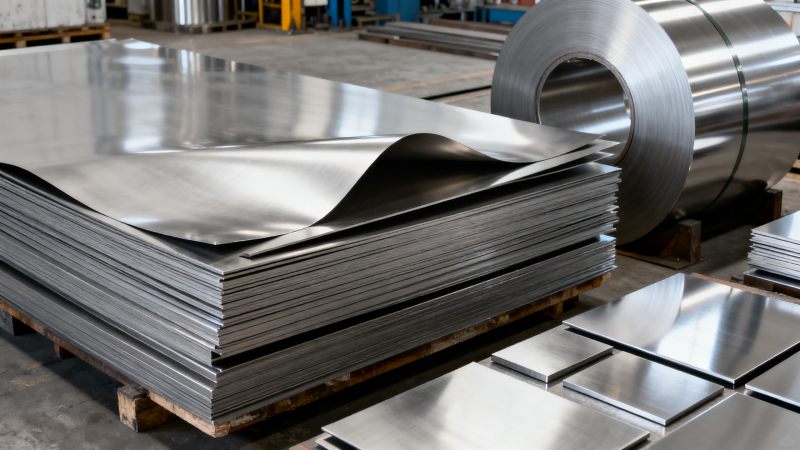
Grade Selection Often Outweighs Gauge in Budget Planning
When buyers compare stainless flat sheet offers, grade selection should come before thickness optimization. A project in coastal construction, food processing, wastewater systems, or humid environments may need better corrosion performance, which can justify a more expensive grade. In contrast, indoor decorative panels or general fabrication may not require the same alloy level. If the wrong grade is selected, buyers may either overpay for unnecessary performance or underbuy and face early failure.
This is where supplier support becomes valuable. A capable structural steel manufacturer and exporter should help customers match product specifications to actual use conditions instead of quoting only by basic dimensions. Companies serving global markets under ASTM, EN, JIS, and GB standards typically understand how technical specifications influence both price and application suitability. That knowledge helps procurement teams avoid cost errors at the specification stage.
Surface Finish and Appearance Requirements Can Change the Offer Significantly
Surface finish is another factor that can influence stainless flat sheet prices more than many new buyers expect. A hot rolled No.1 finish and a cold rolled 2B finish may differ in both production method and final application. If the material is intended for visible architectural use, interior fit-out, equipment panels, or consumer-facing fabrication, polishing and visual consistency become part of the cost structure.
For example, brushed, BA, or mirror-like finishes involve additional processing, stricter inspection, and better protective handling. Even packaging can become more expensive because surface damage risks are higher. This means a thinner polished stainless flat sheet can sometimes cost more than a thicker industrial-grade sheet with a basic finish.
Size, Yield, and Processing Requirements Also Shape Price
Standard mill sizes are usually more economical because they align with established production lines and reduce scrap. Once a buyer requests uncommon widths, exact cut lengths, laser blanks, or special edge conditions, the quote changes. Yield loss, machine time, labor input, and inspection effort all increase. In many cases, these added requirements have a greater impact on unit price than a small change in thickness.
Procurement teams should therefore calculate total fabricated value, not just raw sheet price. If a supplier can deliver cut-to-size material that reduces downstream waste and speeds workshop processing, the slightly higher material quote may still create a lower overall project cost. This is one reason experienced buyers evaluate service capability together with base material pricing.
A related example can be seen in broader steel sourcing. Buyers who also purchase products such as 45# Carbon Steel Round Bar often already understand that dimensions alone do not define value. Material grade, strength, wear resistance, surface treatment, certification, and readiness for fabrication all affect the purchasing decision. The same logic applies when assessing stainless flat sheet in multi-material projects across construction, manufacturing, and industrial supply.
Application Categories and Their Typical Pricing Sensitivities
Different end uses prioritize different pricing variables. This helps explain why one buyer focuses on finish while another focuses on corrosion resistance or lead time.
For purchasing managers, this classification is useful because it turns a general inquiry into a more accurate sourcing strategy. Rather than asking only for stainless flat sheet by thickness, buyers should define the intended use, finish expectation, environmental exposure, and any fabrication steps required after delivery.
Global Supply Conditions Can Override Normal Pricing Patterns
Even with a fixed specification, stainless flat sheet prices can move because of broader market conditions. Stainless steel depends on raw materials with international price volatility. Energy costs, freight rates, exchange rates, environmental policy, and regional mill production levels can all shift quotations within a short period. Anti-dumping duties and import controls may also change sourcing economics from one origin to another.
This is why procurement teams often work with suppliers that combine stable manufacturing capacity, quality control, and export experience. A supplier able to support buyers across North America, Europe, the Middle East, and Southeast Asia is usually better positioned to manage documentation, standards compliance, and dependable lead times. In practical terms, stability in fulfillment can be just as important as the price of the stainless flat sheet itself.
Practical Evaluation Steps for Procurement Teams
A sound sourcing process begins with complete specification clarity. Buyers should confirm grade, finish, thickness, width, length, tolerance, protective film needs, edge condition, and test or certification requirements. Once these are fixed, price comparisons become more meaningful. Without that discipline, quotations for stainless flat sheet may look similar while actually covering very different product quality levels.
It is also wise to review total cost rather than ex-works unit price alone. Freight, local processing, defect risk, delivery delay, and replacement exposure should all be considered. In many projects, the best-value stainless flat sheet offer is the one that balances consistent quality, practical lead time, and reduced operational risk.
Another useful approach is to discuss possible standardization. If multiple sizes can be aligned into fewer standard dimensions, buyers may improve mill yield, reduce scrap, and negotiate better long-term terms. Framework purchasing, shipment scheduling, and annual volume commitments may also support more stable prices.
Conclusion and Next-Step Considerations
Thickness remains an important specification, but it is rarely the only or even the biggest pricing factor for stainless flat sheet. Grade, finish, dimensions, tolerances, processing scope, order structure, and global supply conditions frequently have a stronger effect on final cost. For buyers in the steel sector, understanding this broader picture leads to better budgeting, fewer sourcing surprises, and stronger project outcomes.
If your team is comparing stainless flat sheet options for construction, industrial, or manufacturing use, the most effective step is to evaluate the complete technical and supply requirement before requesting a final quotation. Working with a reliable steel manufacturing and export partner can help transform pricing from a simple number comparison into a more secure, efficient sourcing decision.
Please give us a message


Please enter what you want to find