Structural steel bending limits directly affect safety, cost, and fabrication efficiency in modern projects. Whether you source structural steel bending solutions, angle iron for construction, rebar for concrete slab, or deformed rebar for concrete, understanding these limits helps you avoid design errors and production delays. This guide explains the key factors engineers, buyers, and project teams should evaluate before selecting steel sections, custom profiles, or related products such as angle iron for shelving, stainless steel sheet for kitchen, and steel wire rope manufacturer options.
Why do structural steel bending limits matter so early in design?
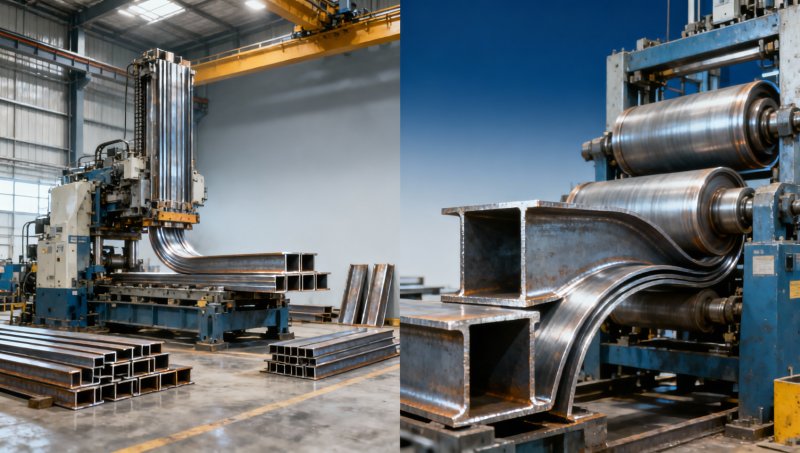
Many project risks start before fabrication begins. Structural steel bending limits determine whether a section can be formed without cracking, excessive springback, dimensional distortion, or hidden stress concentration. For design engineers, this affects section geometry and connection planning. For procurement teams, it affects supplier capability, scrap risk, and lead time. For project managers, it often decides whether a drawing can move smoothly from concept to production in 2–4 weeks or requires redesign.
The practical issue is simple: not every steel profile bends the same way. Material grade, thickness, flange shape, bend radius, forming method, and tolerance requirement all change the safe bending window. A small adjustment in radius or section layout can reduce forming difficulty, improve repeatability, and lower total cost. In steel structures, ignoring these limits often leads to rework at the most expensive stage.
This is especially important in angle steel, channel steel, steel beams, cold formed steel profiles, and custom structural components. Global buyers frequently compare multiple suppliers, but technical feasibility should come before price comparison. A lower quote may not include tooling adaptation, dimensional correction, or quality checks after bending. That gap becomes visible only when installation problems appear on site.
Hongteng Fengda supports this early-stage decision process by combining manufacturing experience with export-oriented quality control. For projects serving North America, Europe, the Middle East, and Southeast Asia, bending feasibility must also align with ASTM, EN, JIS, or GB expectations. The earlier these requirements are confirmed, the easier it is to control sourcing risk and maintain dependable delivery.
What usually defines a bending limit?
In most structural steel applications, bending limits are shaped by 5 core variables: steel grade, section thickness, section geometry, target bend radius, and process route. Hot bending and cold bending behave differently, and so do symmetric and asymmetric profiles. In many projects, the minimum practical inside bend radius becomes the first technical checkpoint because it directly influences cracking risk and dimensional control.
- Material strength and ductility: higher strength can increase load performance, but often reduces bendability.
- Thickness range: thin sections may wrinkle, while thick sections demand higher force and tighter process control.
- Profile shape: angles, channels, and beams react differently due to flange-web interaction during forming.
- Tolerance target: a ±1% or tighter dimensional expectation may require trial forming or corrective operations.
Which technical factors change the safe bend radius and forming result?
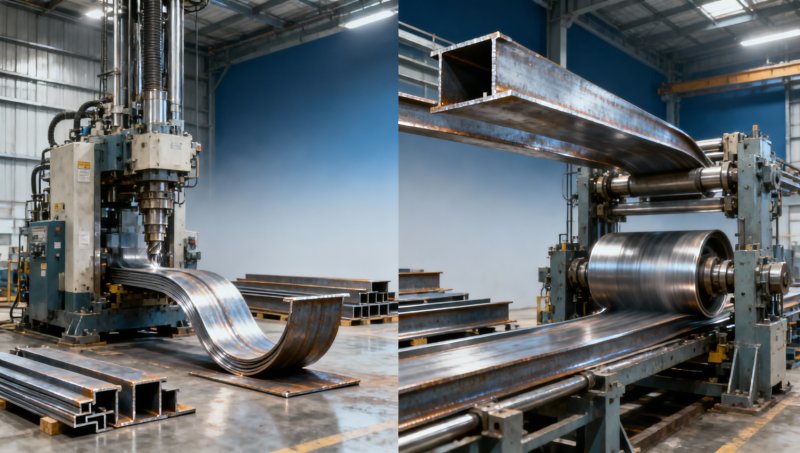
A safe structural steel bending result is not defined by radius alone. Buyers and technical evaluators should look at the interaction between thickness, shape, and final use condition. For example, a part used in a visible architectural handrail may prioritize surface quality and shape consistency. A part used in a heavy-load support frame may prioritize residual stress control and dimensional fit-up at welded joints.
Cold formed sections are common in projects that need efficient mass production, but tighter radii increase springback and shape correction work. With thicker carbon steel or medium manganese steel, a larger bend radius is usually easier to control. In practice, engineers often review 3 technical stages: material suitability, forming simulation or trial, and post-bending inspection. Skipping one stage may save days initially but can delay delivery later.
Section type also matters. Angle steel often bends more predictably than a large beam, but flange edge distortion can still occur. Channels and beam sections need attention to web stability and flange alignment. If the final assembly includes bolted holes, slots, or coping, these details should be planned before bending. Hole distance from the bend zone is not a minor detail; it often determines whether the part remains dimensionally acceptable after forming.
For export projects, tolerance agreement should be written clearly on drawings and purchase documents. Typical reviews include overall length, bend angle, inside radius, profile twist, camber, and surface condition. A supplier with modern manufacturing facilities can usually manage repeat orders more steadily, but only if the acceptance criteria are defined in measurable terms at the start.
Typical factors buyers should verify before approving drawings
The table below helps project teams compare the main variables that influence structural steel bending limits and commercial outcomes.
This comparison shows why structural steel bending limits should be reviewed as both a technical and purchasing topic. The best result usually comes from aligning design drawings, forming method, and inspection plan before mass production begins.
How should buyers compare bending solutions, standard sections, and custom profiles?
A practical sourcing decision starts with the end-use scenario. If your project needs repeated curved members in medium or large quantities, custom tooling and controlled batch production may reduce unit cost over time. If the need is small-volume or prototype-based, selecting a more bend-friendly section can be more economical than forcing a difficult geometry. In many steel projects, the cheapest raw section does not create the lowest installed cost.
Decision-makers should also compare whether a bent component is truly necessary. In some applications, segmented welded assemblies can replace tight-radius bending. In others, a cold formed profile may perform better than a heavier hot rolled section. The right option depends on loading, appearance, corrosion protection, weldability, and delivery urgency. A clear comparison model helps finance, procurement, and engineering teams reach one aligned decision.
Mid-project substitutions are common when original sections become difficult to form or source. For instance, transport infrastructure, deck edge protection, and industrial guide systems may require profiles where straightness, wear resistance, and load transfer matter more than decorative curvature. In such cases, buyers may also review standard products like Rail for specific infrastructure or railing-related uses, especially when dimensions, load path, and surface treatment options such as Oil, Black, Galvanized, or Painted need to match project conditions.
For reference, relevant rail products can be supplied in models such as U74, U71Mn, PD2, PD3, BNbRE, Q235, 55Q, 50Q, U71, and 45Mn, with common specifications from 4kg/m to 50kg/m and QU70 to QU120. Typical technical ranges include 12m–30m length, 3mm–24mm thickness, 134–170mm rail height, 68–73mm head width, 114–150mm base width, and ±1% tolerance. These details matter when project teams compare guide, support, or railing functions against custom-bent structural steel options.
Selection logic for different project situations
The table below summarizes how different sourcing paths compare when structural steel bending limits influence feasibility.
A supplier with both standard and customized structural steel capability can simplify this decision. Hongteng Fengda supports OEM and standard specification supply, which is valuable when buyers need to compare alternatives quickly without losing control of compliance, lead time, or export documentation.
A 4-step sourcing checklist
- Confirm load case, use environment, and whether the part is structural, architectural, or mixed-function.
- Define 4 essential dimensions: section size, thickness, bend radius, and allowable tolerance.
- Check standards and documentation needs, such as ASTM, EN, JIS, or GB alignment and inspection records.
- Request quotation with process scope included, covering forming, correction, coating, packaging, and shipment timing.
What should procurement, QC, and project teams inspect before order release?
When structural steel bending limits are close to the edge of feasibility, inspection planning becomes as important as pricing. Procurement teams should not release a purchase order based only on material grade and unit price. They should also confirm manufacturing route, sample need, measurement points, acceptance criteria, and packaging method. For export shipments, even a dimensionally correct part can create claims if marking, rust prevention, or bundle identification is unclear.
Quality control teams usually focus on 6 checks: material traceability, surface condition before bending, dimensional conformity after bending, angle or radius verification, twist or camber control, and coating or protection status before dispatch. For critical batches, pre-shipment review may include a first-piece approval and a batch sampling plan. This is particularly useful when orders involve repeated lengths such as 12m, 18m, 24m, or 30m members.
Project managers should also ask how the supplier handles schedule stability. In steel procurement, a stated lead time is not enough. The more useful question is whether lead time includes raw material preparation, forming, welding if any, inspection, surface treatment, packing, and export handover. A realistic manufacturing and shipment plan helps avoid site downtime and crane rescheduling costs.
Hongteng Fengda’s advantage in this process is not only product range, but also the ability to support global buyers with consistent quality control and dependable lead times. For organizations balancing engineering review, financial approval, and supplier risk, this kind of process transparency can reduce rework and purchasing uncertainty.
Pre-order evaluation table for bent structural steel
Use the following matrix when comparing suppliers or approving internal purchasing decisions.
This type of structured review is useful for technical evaluators, business approvers, and distributors alike. It turns structural steel bending limits into a manageable purchasing framework instead of a late-stage production problem.
Common mistakes, practical answers, and when to ask for engineering support
One common mistake is assuming the same bend radius works across different steel grades and profile shapes. It rarely does. Another mistake is focusing only on initial material cost while overlooking forming yield, inspection effort, and installation tolerance. In many B2B projects, the total cost difference appears after fabrication, not during quotation review. That is why a technically informed supplier discussion can save both money and schedule.
Another misconception is that any supplier who can roll or press steel can reliably bend structural profiles for export projects. In reality, repeatability matters. If your order includes multiple batches, custom components, or mixed standards, process consistency becomes a commercial issue as much as a technical one. This is especially true for distributors and project contractors who need stable downstream delivery.
FAQ
How do I know if my structural steel section can be bent safely?
Start with 4 inputs: material grade, thickness, section shape, and target radius. Then review whether the part is load-bearing, visible, welded after bending, or exposed to corrosion. If the section is thick, asymmetrical, or requires tight tolerance, request a manufacturability review or trial sample before batch release.
What is a reasonable lead time for bent structural steel orders?
Lead time depends on stock availability, drawing complexity, quantity, and whether tooling or sampling is needed. For many export projects, a practical planning window is 2–4 weeks for straightforward orders, with additional time if coating, complex fabrication, or mixed-spec packaging is required. Buyers should ask for a step-by-step schedule rather than a single promised date.
Should I choose a bent section or redesign the assembly?
If the required bend is near process limits, redesign may lower total project cost. Consider segmented fabrication, a different profile, or a standard section with revised connection details. The right answer depends on appearance requirements, structural performance, quantity, and installation efficiency.
What should I ask a supplier before requesting a quote?
Provide drawings, quantity, standard requirement, material grade, finish, tolerance, and destination market. Then ask 5 direct questions: can the profile be bent as drawn, is a sample needed, what inspection points are included, what is the realistic lead time, and what packaging method will be used for export transit.
Why work with a structural steel manufacturer that understands bending limits and export delivery?
When structural steel bending limits can change your design, the supplier should do more than quote by ton. You need a partner that can review feasibility, suggest section or process adjustments, and supply standard or OEM structural steel products under controlled quality conditions. That is where Hongteng Fengda adds value for contractors, fabricators, distributors, and industrial buyers operating across different markets.
Hongteng Fengda manufactures and exports angle steel, channel steel, steel beams, cold formed steel profiles, and customized structural steel components from China. With modern manufacturing facilities and strict quality control, the company supports projects requiring ASTM, EN, JIS, and GB aligned production. This is useful when your team must balance engineering reliability, budget review, and procurement efficiency in one purchasing cycle.
If you are comparing bent sections, standard profiles, or alternative structural solutions, you can consult on parameters such as material grade, bend radius, tolerance target, quantity range, surface finish, certification needs, and shipment timing. You can also discuss OEM customization, sample support, export packaging, and delivery planning for different project stages.
Contact our team if you need help confirming drawings, selecting suitable steel sections, checking bending feasibility, reviewing certification requirements, or requesting a quotation with realistic production and delivery details. A clear discussion before ordering can shorten decision time, reduce sourcing risk, and help your project move forward with fewer surprises.
Please give us a message


Please enter what you want to find