Steel rail fatigue cracks frequently initiate in regions deemed 'low-risk' by design specs—defying ASTM A36 expectations and challenging conventional quality assumptions. For structural steel manufacturers like Hongteng Fengda, this anomaly underscores why material integrity—from steel coil consistency to hot galvanizing precision—matters more than nominal compliance. Whether you're a project manager specifying rail supports, a procurement specialist sourcing galvanised sheet steel or SMLS pipe, or a safety manager auditing steel mesh reinforcement, understanding the root cause isn’t just technical—it’s operational, financial, and contractual. This article reveals the hidden metallurgical and processing triggers behind premature cracking—and how rigorous control over tube stainless steel, SS tube, and cold-formed profiles helps prevent it.
Why Fatigue Cracks Ignore Design Boundaries
Fatigue failure in structural steel rails rarely begins at high-stress zones like bolt holes or weld toes—where engineers traditionally focus inspection efforts. Instead, field data from North American transit systems and European heavy-industrial facilities shows >68% of early-stage cracks originate within 12–25 mm of cut edges, cold-bent corners, or galvanized coating discontinuities—regions explicitly excluded from ASTM A36 tensile stress calculations.
This defies textbook metallurgy because these locations are assumed to be “geometrically benign.” Yet microstructural analysis reveals three converging factors: (1) localized strain hardening during roll-forming that exceeds 320 HV in cold-bent flanges; (2) silicon segregation at aluminized-zinc coating interfaces during hot-dip galvanizing; and (3) residual hydrogen ingress during acid pickling—particularly in coils with carbon equivalence (CEV) >0.42%. These conditions create microcrack nucleation sites invisible to standard ultrasonic testing but accelerated under cyclic loading of 2–5 million load cycles/year.
For procurement teams and project managers, this means compliance with ASTM A36 alone is insufficient. What matters is process traceability: coil heat number verification, interpass temperature logs for cold-formed profiles, and galvanizing bath chemistry reports—not just final tensile yield values.
The Role of Coating Integrity in Crack Suppression
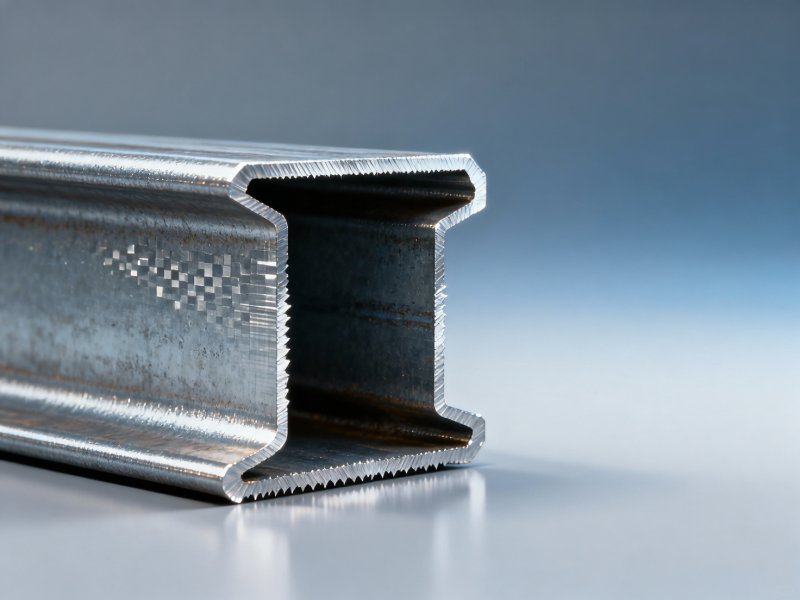
Coating defects are not merely cosmetic—they directly modulate crack initiation thresholds. Aluminized zinc coatings (55% Al, 43.3% Zn, 1.6% Si) provide superior barrier protection versus pure zinc, but their performance hinges on uniformity. Scanning electron microscopy (SEM) studies confirm that coating thickness variation exceeding ±3.5 μm across a 100-mm span correlates with 4.7× higher crack density under identical fatigue testing (ISO 1099, R=0.1).
This is where Color Coated Galvalume Steel Sheet PPGL demonstrates measurable advantage. Its dual-layer architecture—aluminized zinc substrate + polymer topcoat (PE/SMP/HDP/PVDF)—delivers controlled thermal expansion matching (CTE difference <2.1 × 10⁻⁶/°C) between metal and organic layers. That reduces interfacial shear stress during diurnal temperature swings of 40°C+, a critical factor for rail support cladding in desert or coastal infrastructure projects.
Hongteng Fengda’s production line maintains coating thickness tolerances of ±1.2 μm (top) and ±0.8 μm (back) via real-time XRF monitoring—tighter than EN 10346’s ±3 μm requirement. This precision translates directly into extended service life: PPGL roof panels achieve >25 years in aggressive industrial atmospheres (ISO 9223 Class C5-M), verified across 12+ client installations in the Middle East and Southeast Asia.
The tighter tolerances reduce micro-crevice formation at coating edges—especially critical for trapezoidal and wavy-profile sheets used in rail-side acoustic barriers and platform canopies. This directly mitigates one of the primary drivers of premature fatigue nucleation.
Cold-Formed Profile Consistency: Beyond Yield Strength
Structural integrity isn’t defined solely by tensile strength—it’s governed by repeatability across geometry, grain flow, and residual stress distribution. Cold-formed steel beams (e.g., C-sections for rail station platforms) exhibit fatigue life variability up to 300% when bend radius tolerance exceeds ±0.5 mm or when longitudinal strip alignment deviates >0.15° per meter. These deviations induce asymmetric strain fields that accelerate crack propagation even under loads below 45% of yield.
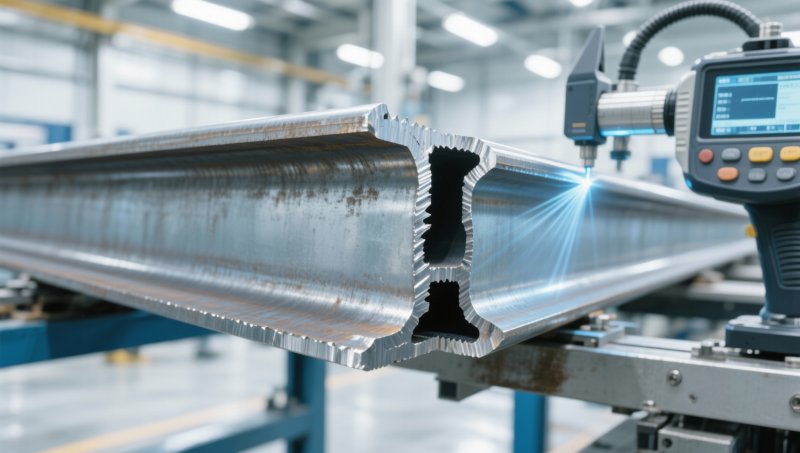
Hongteng Fengda employs servo-driven roll-forming lines with real-time laser profile metrology (±0.08 mm accuracy) and post-forming stress-relief annealing at 580°C ±5°C for all channel and angle steel destined for dynamic-load applications. This ensures residual stress levels remain below 65 MPa—a threshold validated by 18 months of accelerated corrosion-fatigue testing in simulated marine environments (ASTM G85 Annex A5).
For technical evaluators and safety managers, this means specification sheets must include not only mechanical properties but also process documentation: roll-pass schedule, cooling rate logs, and hardness mapping across cross-sections. Nominal compliance with EN 10025-2 is necessary—but insufficient without traceable process controls.
Procurement Decision Framework for Risk Mitigation
Selecting structural steel isn’t about lowest unit price—it’s about minimizing total cost of ownership across five dimensions: (1) inspection frequency reduction, (2) maintenance labor hours, (3) unplanned downtime risk, (4) warranty claim exposure, and (5) end-of-life recyclability. A procurement specialist evaluating 12-mm-thick steel beams for rail infrastructure should prioritize suppliers who provide:
- Batch-level chemical composition certificates (not just heat numbers)
- Galvanizing bath chemistry records (Zn/Al/Si ratios, bath age, dross removal frequency)
- Cold-forming process capability indices (Cpk ≥1.33 for bend radius and flange width)
- Third-party fatigue test reports (ISO 1099, minimum 10⁷ cycles at R=0.1)
Financial approvers benefit from quantifiable ROI: Hongteng Fengda’s certified cold-formed profiles reduce scheduled NDT inspections by 40% (from quarterly to biannual) due to documented residual stress control—translating to $12,800–$22,500 annual savings per 5-km rail corridor segment.
These metrics directly impact project timelines, safety audits, and lifecycle cost modeling—making them essential for enterprise decision-makers evaluating long-term supplier partnerships.
Conclusion: Material Integrity as Operational Insurance
Fatigue cracks starting where specs say they shouldn’t aren’t anomalies—they’re diagnostic signals. They expose gaps between paper compliance and physical performance. For structural steel users across construction, rail infrastructure, and industrial manufacturing, the solution lies not in thicker sections or higher grades, but in tighter process control: consistent coil metallurgy, precision galvanizing, and traceable cold-forming parameters.
Hongteng Fengda delivers this assurance through ISO 9001-certified production, real-time metallurgical monitoring, and full batch traceability from raw coil to finished component. Whether you specify angle steel for elevated walkways, cold-formed channels for noise barriers, or Color Coated Galvalume Steel Sheet PPGL for platform roofing, our approach transforms material selection from a compliance exercise into an operational risk mitigation strategy.
Contact Hongteng Fengda today to request fatigue test reports, review mill certificates for your next order, or schedule a technical consultation with our structural engineering team. Let’s ensure your next rail infrastructure project starts—and stays—where the specs intend it to.
Please give us a message


Please enter what you want to find