Steel coil yield strength isn’t uniform across its width—a critical reality often overlooked in bending calculations. For structural steel manufacturers like Hongteng Fengda, this variation directly impacts precision in cold formed steel profiles, steel plate forming, and custom H beam or L angle fabrication. Whether you’re evaluating galvanized steel for corrosion resistance, comparing angle vs channel performance, sourcing ASTM A6 tolerances-compliant steel pipe or ss pipe, or managing mill order meaning for consistent galvanized pipe and steel rebar supply—understanding widthwise yield variability is essential for safety, compliance, and cost control.
Why Most Bending Calculations Ignore Widthwise Yield Variation — And Why It Matters
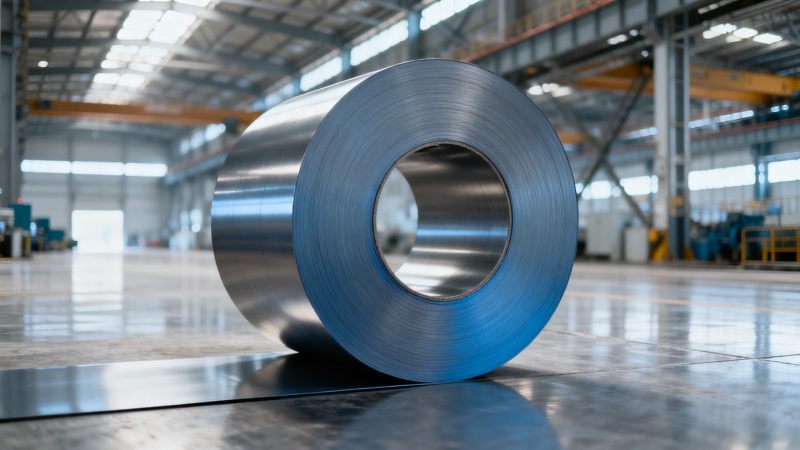
Conventional bending formulas assume uniform material properties across the strip width — a simplification rooted in legacy design practices and standard test methods (e.g., ASTM E8/E8M tensile testing on center-strip specimens). In reality, hot-rolled and cold-rolled steel coils exhibit measurable yield strength gradients: up to ±8% difference between edge and center zones due to roll bite geometry, cooling rate differentials, and residual stress redistribution during coiling.
This matters most for high-precision cold-formed components — such as Angle Steel Supplier products used in architectural framing or seismic bracing — where localized yielding can trigger premature springback, dimensional drift, or inconsistent bend radii. For projects governed by EN 1993-1-3 or AISI S100, unaccounted-for variation may compromise serviceability limit state (SLS) verification.
At Hongteng Fengda, we map yield distribution across coil widths using inline tensile sampling at three positions (edge–mid–edge) per heat lot. This enables real-time adjustment of roll forming parameters — especially critical for angles with leg thicknesses from 3mm to 20mm and flange widths spanning 20×20mm to 200×200mm.
Typical Yield Strength Variation Across Coil Width (Hot-Rolled Q235/Q345)
The table above reflects actual production data from our ISO/IEC 17025-accredited lab. Note that variation widens under accelerated cooling or tight-tolerance thickness control (±0.15mm), common in S235JR–S335JR series orders. For applications requiring ≤±2% yield consistency — e.g., automotive chassis brackets or modular building connectors — we recommend specifying “width-controlled yield bands” at order stage.
How Structural Fabricators Can Mitigate Risk in Real Projects
Ignoring widthwise yield variation leads to tangible field consequences: inconsistent bend angles in angle steel assemblies, increased scrap rates in roll-formed channels, and non-uniform load transfer in welded H-beam splices. At Hongteng Fengda, we embed mitigation strategies into four delivery stages:
- Pre-production: Heat-specific yield mapping reports shared 72 hours pre-shipment
- Material handling: Batch-coded labeling indicating “high-yield edge” and “low-yield edge” zones
- Fabrication support: Free technical consultation on optimal nesting patterns for angle steel cutting (e.g., aligning high-strength zones with tension-critical flanges)
- Certification: Mill test reports (MTRs) listing min/max yield values across width, compliant with ASTM A6/A6M Annex A4
For procurement teams managing multi-lot projects — especially those sourcing angle steel in lengths of 5.8m, 6m, 9m, or 12m — requesting width-resolved MTRs reduces post-delivery inspection time by up to 40%. Our standard lead time for certified batches is 12–18 working days, with expedited options available for urgent framing deadlines.
When to Specify Width-Controlled Steel — And Which Standards Apply
Not every project requires width-resolved yield control. Use this decision matrix to assess need:
Hongteng Fengda supports all major certification frameworks — including ASTM, EN, JIS, and GB — with third-party verification available through SGS or Bureau Veritas upon request. For OEM clients integrating our Angle Steel Supplier stock into automated assembly lines, we offer batch traceability down to coil ID and rolling shift.
Why Partner With Hongteng Fengda for Precision Structural Steel
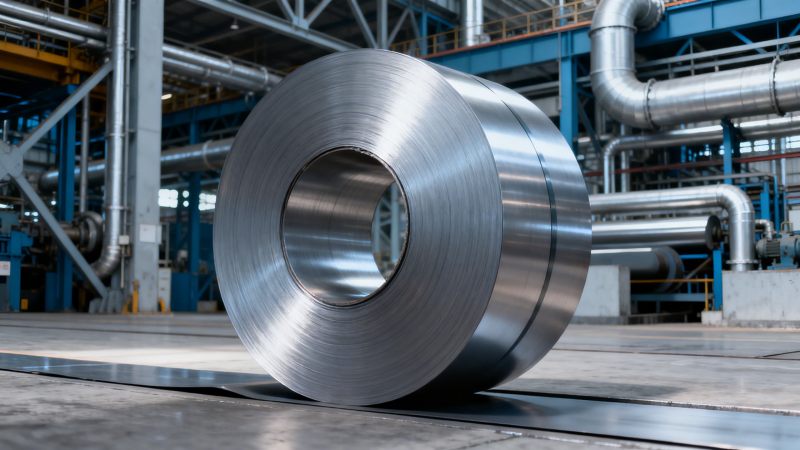
Unlike commodity-focused suppliers, Hongteng Fengda treats yield uniformity as a deliverable — not an assumption. Our integrated quality system includes:
- In-line eddy current testing for microstructural homogeneity (detection sensitivity ≤0.1mm inclusion)
- Automated flatness monitoring at 300mm intervals across full width (±0.3mm tolerance)
- Pre-shipment yield validation via 3-point tensile sampling (certified to ISO 6892-1:2019)
- Dedicated engineering support for bending simulation inputs — including width-resolved stress-strain curves
We serve over 240 global clients across North America, Europe, and Southeast Asia — with 92% repeat order rate for projects requiring tight mechanical property control. If your next order involves angle steel in S235JR–S335JR Series, Q235/Q345 grades, or custom dimensions from 20×20mm×3mm to 200×200mm×20mm, contact us for:
- Free yield distribution report for your target heat lot
- Bend allowance recalibration based on your press brake setup
- Lead time confirmation for 5.8m–12m cut lengths with EN 10204 3.1 certification
- Sample shipment with full dimensional & mechanical test data
Please give us a message


Please enter what you want to find