Steel coil price per ton in 2026 will depend on more than raw material costs. For buyers comparing steel sheet price, galvanized steel for construction, high strength steel plate, or steel rebar for construction, the final quote is shaped by supply-demand shifts, energy, freight, standards, and sourcing strategy. This guide explains the key price drivers and how global buyers can evaluate offers with greater confidence.
What will move steel coil price per ton in 2026 most directly?
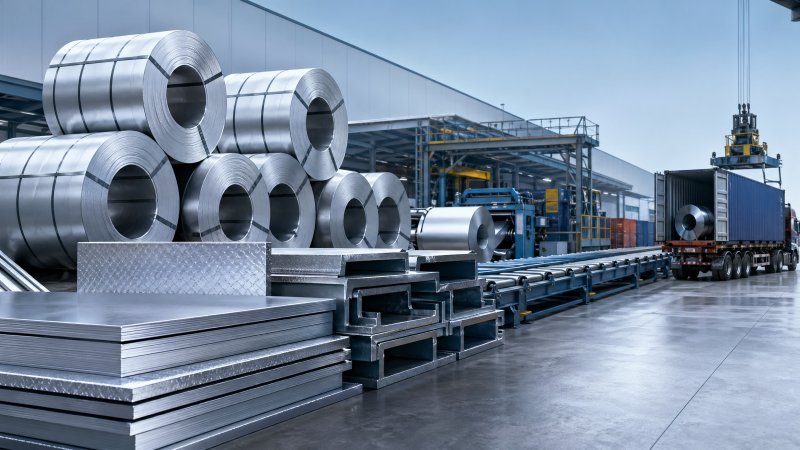
For most steel buyers, the first mistake is treating steel coil price per ton as a simple mill number. In practice, the quote often changes across 4 linked layers: raw materials, mill operations, logistics, and compliance. If one layer tightens within a 2–6 week period, the final offer can move even when demand from end users looks stable.
Raw material direction still matters. Iron ore, coking coal, scrap, zinc, and alloy additions all influence the steel sheet price depending on grade and process route. Hot rolled coil, cold rolled coil, galvanized steel for construction, and high strength steel plate do not respond in exactly the same way, because coating, forming, and chemistry requirements change the cost base.
Energy is another major variable for 2026. Electricity, natural gas, and fuel costs affect reheating, rolling, galvanizing, and finishing. In some markets, energy volatility over 1–3 months can change competitiveness between blast furnace and electric arc furnace producers. Buyers who only compare a headline unit price often overlook this and miss the reason behind sudden quote adjustments.
Freight and export conditions also matter. Ocean rates, port congestion, inland transport, and container or bulk vessel availability can shift the delivered steel coil price per ton by a meaningful amount. For project cargo or urgent orders, a difference of 7–15 days in shipping readiness can be more important than a small gap in ex-works price.
The 5 price levers procurement teams should track
- Raw material basket: ore, coal, scrap, zinc, and alloy costs affect different coil categories unevenly.
- Production route and capacity: hot rolling, cold rolling, coating, slitting, and cutting schedules influence lead time and price.
- Order specification: grade, thickness tolerance, width, coating mass, and testing scope change conversion cost.
- Trade terms: EXW, FOB, CFR, and CIF quotes can differ sharply once local handling and freight are included.
- Risk premium: fast delivery, volatile exchange rates, and destination-specific documentation may add hidden cost.
For finance approvers and business evaluators, this means a low initial quote is not always the lowest landed cost. A quote that seems 2% lower can become less competitive after testing, repacking, coating changes, or destination port fees are added. Good purchasing decisions compare the full delivered package, not only the starting number.
How do grade, specification, and standards change the quote?
Specification is where many project teams lose cost control. Two products may both be called steel coil, but the actual price basis changes with thickness, width, grade, surface condition, tolerance, and testing level. A 3 mm product and a 12 mm product are not just different in weight; they may require different rolling conditions, handling methods, and yield assumptions.
Standards can also move the quote significantly. Buyers asking for ASTM, EN, JIS, or GB compliance may need extra documentation, inspection records, or tighter chemistry and mechanical property control. This is especially relevant for galvanized steel for construction and high strength steel plate, where coating consistency or structural performance affects engineering acceptance and safety review.
For operators, quality control staff, and technical reviewers, the quote should be read together with the mill test scope. Does the offer include tensile strength, yield strength, elongation, coating mass, dimensional tolerance, or impact testing where applicable? In many supply situations, the test package is part of the commercial value and should not be treated as a side note.
The table below shows why seemingly similar steel products may have different quotation logic in 2026. It is not a universal price list, but it helps procurement teams compare cost drivers more accurately across common categories.
This comparison highlights a practical rule: the more demanding the performance, tolerance, and documentation requirements, the less useful a simple per-ton comparison becomes. Buyers should ask suppliers to quote on the same basis, especially when reviewing 3–5 offers from different exporting regions.
What should be confirmed before comparing offers?
Key specification checks
- Grade and equivalent standard, because nominally similar grades may not be interchangeable in structural use.
- Thickness and width range, including tolerance band and minimum order quantity.
- Surface and coating requirement, such as oiled, black, galvanized, or painted finish.
- Inspection scope and documentation, including MTC, third-party inspection, and packing detail.
When these points are aligned, the steel coil price per ton becomes a much more reliable decision metric. Without alignment, procurement teams may approve a quote that looks attractive but later triggers technical rejection, installation delay, or project variation claims.
How should global buyers evaluate the real delivered cost?
The real buying decision is not ex-works versus ex-works. It is landed, usable, compliant material versus project risk. A disciplined cost review usually includes 6 checkpoints: base material price, processing charge, packaging, inland transport, ocean freight, and compliance or inspection cost. This is the level at which purchasing, technical, and finance teams can make aligned decisions.
Lead time matters as much as price when construction schedules are tight. A coil or plate order that ships in 20–35 days may be more useful than a lower-priced offer requiring 45–60 days. For project managers, the cost of idle labor, delayed fabrication, or postponed site installation can exceed any savings from a slower supplier.
Global buyers also need to evaluate whether a supplier can support adjacent structural steel demand, not only one item. A manufacturer with broader capabilities in angle steel, channel steel, steel beams, cold formed steel profiles, and customized structural components can reduce sourcing fragmentation and improve schedule control across multi-item projects.
In this context, mid-project demand sometimes extends beyond coil or plate into rail-related or structural line items. For buyers handling transport infrastructure, industrial yards, or fabricated access systems, Rail may also enter the sourcing package. Typical options include carbon steel and medium manganese steel in models such as U74, U71Mn, PD2, PD3, Q235, 55Q, 50Q, U71, and 45Mn, with common lengths from 12 m to 30 m and rail height in the 134–170 mm range.
A practical landed-cost review table
Before approving a supplier, many companies use a side-by-side evaluation sheet. The table below can help buyers compare steel sheet price offers, galvanized steel for construction packages, or other structural steel orders on a consistent commercial basis.
Using this structure, decision-makers can see why the cheapest number is not always the best sourcing outcome. A supplier that offers stable production, consistent quality control, and dependable lead times often helps reduce total project cost even when the nominal steel coil price per ton is not the lowest in the inbox.
Why supplier capability matters in volatile markets
When markets move quickly, buyers benefit from suppliers that can respond with flexible specifications and coordinated export support. Hongteng Fengda serves customers across North America, Europe, the Middle East, and Southeast Asia with structural steel manufacturing and export experience. That matters when your team needs standard products, OEM solutions, or parallel sourcing across several steel categories.
A capable supplier should be able to discuss ASTM, EN, JIS, and GB requirements clearly, explain the effect of standard choice on cost, and suggest realistic delivery planning. This reduces sourcing risk for procurement officers, project managers, and quality teams who cannot afford surprises after the purchase order is issued.
What mistakes cause poor steel purchasing decisions in 2026?
One common mistake is buying on ton price alone. This often happens when the request for quotation does not define grade equivalency, dimensional tolerance, surface condition, or test requirements. The supplier then quotes a different basis, and the buyer compares offers that are not technically equal. The result is rework, clarification cycles, or rejection after material arrival.
Another mistake is ignoring usage scenario. Steel for high humidity construction, fabricated structural members, or mechanical forming may need different surface treatment or performance margins. Galvanized steel for construction, for example, should be evaluated for coating requirement and service environment rather than only for base steel sheet price.
A third mistake is underestimating the operational cost of delay. If a project loses 2–4 weeks because material needs replacement or documentation correction, the indirect cost can be severe. This affects not only the purchasing department but also site operations, fabrication scheduling, quality inspection, and cash-flow planning.
The final mistake is not planning alternative options early. In some cases, buyers can compare hot rolled material, galvanized alternatives, or different structural forms to manage budget pressure. However, substitution should always be reviewed by technical teams against load, corrosion, fabrication, and compliance needs.
A 4-step procurement approach that reduces risk
- Define the exact application: structural use, fabrication, roofing, transport, or general construction.
- Lock the technical basis: grade, standard, dimensions, tolerance, finish, and required test documents.
- Compare the delivered package: price term, lead time, packing, shipping plan, and inspection support.
- Review supply stability: production capacity, export experience, communication speed, and issue-handling process.
This approach works well for information researchers, technical evaluators, purchasers, and financial approvers because it converts a confusing quote review into a structured decision. It also helps distributors and agents explain to downstream customers why one steel coil price per ton may be more bankable than another.
FAQ: how can buyers prepare for steel price discussions in 2026?
How often should buyers refresh steel quotations?
In active markets, quote validity may be as short as 3–7 days for some export offers, especially when freight or raw materials fluctuate. For project planning, many buyers refresh commercial comparisons every 2–4 weeks, then confirm again before purchase order release. This reduces the risk of approving a budget based on outdated steel sheet price assumptions.
What is more important: low unit price or short lead time?
That depends on project exposure. If material delay can interrupt fabrication or site installation, a 10–20 day lead time advantage may outweigh a small unit-price gap. For stock trading or non-urgent replenishment, the balance may shift toward price. The correct decision compares landed cost plus schedule impact, not price in isolation.
How do buyers evaluate suppliers for compliance-sensitive projects?
Ask for the standard basis first, such as ASTM, EN, JIS, or GB, then confirm whether the supplier can provide the needed documentation package. In many cases, the key checks are 5 items: mill test certificate, dimensional tolerance control, mechanical property records, packing details, and shipment documents. If any of these are unclear, the quote is incomplete.
Can buyers combine multiple steel categories with one supplier?
Yes, and this can improve coordination when the supplier has proven capability across structural steel products. Combining angle steel, channel steel, steel beams, cold formed profiles, customized components, and related items may reduce communication gaps, simplify logistics, and improve delivery planning across a 1-project or multi-project schedule.
Why work with a structural steel exporter that understands total project cost?
In 2026, steel purchasing will reward buyers who look beyond a headline steel coil price per ton and focus on the full commercial and technical picture. That includes specification clarity, standard compliance, lead time reliability, packing quality, and export coordination. These factors are especially important for construction, industrial manufacturing, distribution, and project procurement teams managing budget and deadline pressure together.
Hongteng Fengda supports global buyers with structural steel manufacturing and export services built around stable production capacity, consistent quality control, and dependable lead times. With experience serving North America, Europe, the Middle East, and Southeast Asia, the company can help customers review standard specifications, OEM requirements, and practical sourcing options for complex projects.
If you are comparing steel sheet price offers, reviewing galvanized steel for construction, planning high strength steel plate procurement, or aligning multiple structural steel items under one sourcing plan, you can discuss 6 concrete topics before ordering: grade confirmation, dimension range, applicable standards, inspection scope, delivery cycle, and packaging or shipment method.
Contact us to evaluate your drawings, application scenario, target standard, sample needs, quotation basis, and delivery schedule. A focused discussion at the start can help your team reduce sourcing risk, control total cost, and choose a steel supply plan that fits both technical requirements and commercial objectives.
Please give us a message


Please enter what you want to find