When a steel wire rope supplier misses delivery dates, the problem often begins far upstream—in raw material planning, mill scheduling, and quality control. For buyers comparing a steel wire rope manufacturer, carbon steel manufacturer, or Steel Channel supplier, understanding these hidden supply chain risks is essential to protecting project timelines, costs, and procurement decisions.
In steel purchasing, delays rarely start at the shipping dock. They often begin 2–8 weeks earlier, when billet allocation changes, hot-rolling lines are overbooked, zinc supply tightens, or inspection queues lengthen. For project managers, procurement teams, distributors, and technical evaluators, that upstream visibility can make the difference between an on-time handover and a costly site disruption.
This matters not only for wire rope but for structural products as well. Buyers sourcing steel channels, beams, cold-formed sections, and custom fabricated profiles face many of the same risks: unstable raw material cost, rolling schedule conflicts, coating bottlenecks, specification mismatch, and incomplete quality documents. A capable structural steel manufacturer does more than quote a price; it manages the production chain from material grade selection to final dispatch.
For global buyers working across North America, Europe, the Middle East, and Southeast Asia, supplier evaluation should therefore include lead-time reliability, standards compliance, response speed, and customization ability. Hongteng Fengda, as a structural steel manufacturer and exporter from China, supports these priorities with controlled production planning, broad grade coverage, and practical solutions for construction and industrial use.
How Upstream Disruptions Trigger Downstream Delivery Delays
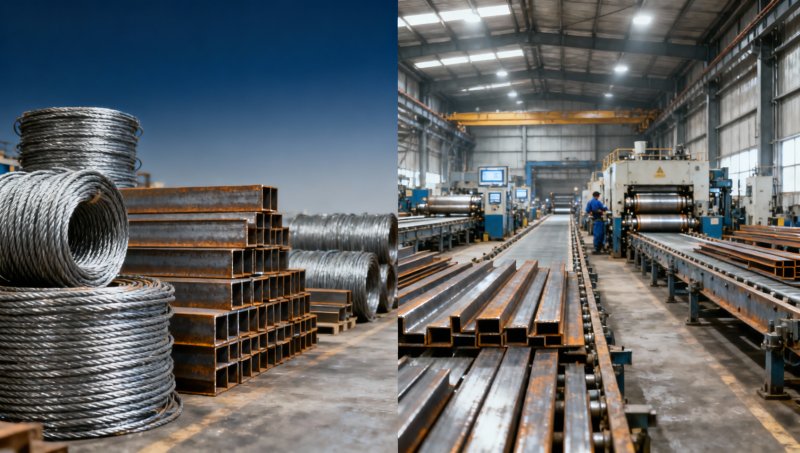
A delayed shipment often has a simple visible symptom but a complex operational cause. In the steel industry, the first trigger is usually raw material availability. If a mill cannot secure the right feedstock grade such as Q235B, Q345B, S355, or A572 on time, downstream rolling or forming schedules shift immediately. Even a 3–5 day slip in billet or strip allocation can extend customer delivery by 1–2 weeks when production lines are already full.
The second trigger is scheduling congestion. Structural steel products and steel wire rope components may share upstream resources such as rolling mills, galvanizing capacity, slitting lines, or inspection teams. During peak construction seasons, lead times that are normally 15–25 days can move to 30–45 days, especially for customized dimensions, perforated sections, or mixed-grade orders.
Quality control can also create hidden delay. If dimensional tolerance moves beyond ±1%, if coating thickness does not meet specification, or if mechanical properties require retesting, finished goods cannot move to packing and loading. This is particularly important for export buyers who need complete documentation aligned with ASTM, EN, JIS, or GB standards before goods are released.
For procurement professionals, the lesson is practical: the quoted delivery date is only as reliable as the supplier’s upstream planning discipline. A supplier that does not clearly communicate raw material sourcing, mill slot booking, and inspection workflow is more likely to face preventable delays.
The 4 most common upstream bottlenecks
- Raw material mismatch: ordered grade is available, but not in the thickness, chemistry range, or quantity required for the production batch.
- Rolling or forming queue overload: standard items may move quickly, while custom lengths from 2–12 m or nonstandard punching patterns wait for open slots.
- Surface treatment constraints: galvanized or coated products often add 5–10 days compared with black steel, depending on line availability.
- Inspection and export documentation lag: third-party checks, mill test certificates, and packing verification can hold cargo after production is complete.
The table below shows how common upstream events affect steel delivery performance in practical purchasing scenarios.
The key conclusion is that buyers should monitor not only finished inventory but also production readiness. A supplier with transparent planning can often reduce uncertainty even when market conditions tighten.
What Buyers Should Evaluate Beyond Price and Stated Lead Time
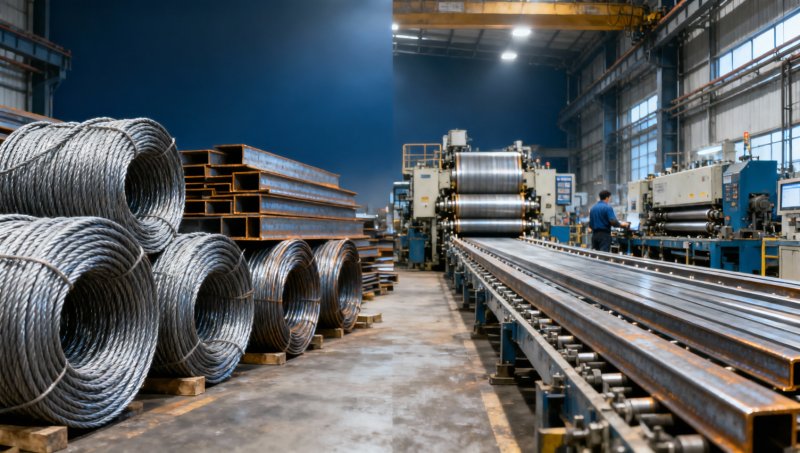
A low quotation can hide expensive uncertainty. In B2B steel sourcing, technical evaluators and financial approvers should review at least 5 areas before comparing offers: material grade availability, production capacity, quality consistency, export documentation, and communication speed. A 2% lower unit price can be quickly offset by crane idle time, subcontractor waiting charges, or emergency replacement purchasing.
For structural steel projects, the supplier’s range also matters. A manufacturer that can supply angle steel, channel steel, steel beams, cold-formed profiles, and customized components from a coordinated production system usually provides better schedule control than a trading source relying on multiple disconnected factories. Fewer handoffs mean fewer opportunities for dimension errors, packing confusion, or missed dispatch windows.
Standards compliance is another decision point. Buyers should confirm whether the supplier routinely works with ASTM, EN, JIS, and GB standards and whether it can match grade equivalence accurately. For example, a project requiring S275 or S355 should not be fulfilled with a near-match without formal engineering acceptance, because chemistry, strength range, and application suitability can differ.
Response discipline also reveals reliability. In many export transactions, the strongest suppliers answer technical queries within 24–48 hours, issue drawings or confirmation sheets before production, and provide milestone updates at 3 key stages: material preparation, production completion, and shipment readiness. That process helps project owners and distributors make earlier decisions and reduce internal approval delays.
Practical supplier assessment checklist
- Confirm available grades, thickness range, and whether mixed specifications can be consolidated in one shipment.
- Ask for realistic lead time by process, not only total days, including rolling, punching, galvanizing, inspection, and packing.
- Check tolerance control, especially for length, straightness, hole position, and thickness on formed sections.
- Verify export support such as labels, packing lists, MTCs, and third-party inspection coordination.
- Review how change orders are handled after drawing approval and whether schedule impact is clearly stated.
The table below can be used by procurement teams, technical departments, and business decision-makers to compare steel suppliers in a more balanced way.
This comparison framework is especially useful when several offers appear similar on price. The most dependable supplier is usually the one that can explain process detail, not just the one that responds with the lowest number.
Mid-Project Flexibility Matters: A Structural Example in Practice
Many buyers first notice upstream risk when they request a design adjustment after the order is placed. For example, purlin systems, wall beams, brackets, and light roof framing often require exact section shape, punching position, and corrosion protection. If a supplier lacks integrated planning, even a moderate revision can cause a full production restart.
A good example is Z-beam applications in large-scale steel structure workshops and lightweight roof systems. These sections may be specified in thicknesses from 6–25 mm, lengths from 2–12 m or customized, with Mill Edge or Slit Edge processing. Depending on the project, buyers may also require perforated versions, galvanized coating, and material grades such as Q235B, Q345B, SS400, S275, S355, A36, or A572 G50.
From a sourcing perspective, these details affect more than engineering fit. They directly influence raw material allocation, roll tooling sequence, hole punching workflow, coating schedule, and inspection criteria. A supplier that confirms all details before manufacturing can keep tolerance within ±1% and reduce the chance of rework after dispatch.
For contractors and distributors, the practical value is clear: when one supplier can support standard profiles and customized structural components under one quality system, coordination becomes easier. That is especially important when multiple steel items must arrive in the same delivery window for erection or fabrication.
Why specification discipline affects delivery reliability
1. Grade confirmation
Strength grade changes alter procurement and processing routes. Moving from Q235B to Q460C, for instance, is not just a paperwork update; it may affect plate availability, forming parameters, and inspection steps.
2. Surface treatment selection
Galvanized coated products add corrosion protection but usually extend the schedule compared with untreated sections. Buyers should decide coating requirements before production, not after fabrication is complete.
3. Custom processing scope
Perforation patterns, arm or bracket geometry, and nonstandard lengths reduce site work, but they require earlier engineering confirmation. The more precise the drawing package, the lower the delivery risk.
The table below shows how typical configuration choices influence schedule and purchasing decisions for structural profiles.
For buyers, the takeaway is straightforward: technical clarity improves commercial certainty. The earlier the specification is frozen, the easier it is for the manufacturer to protect both price and delivery.
How to Reduce Sourcing Risk in Steel Projects
Risk reduction starts before the purchase order is issued. Buyers should create a sourcing plan that matches the project schedule, not just the estimated shipping date. For standard structural products, booking 4–6 weeks in advance is often reasonable. For customized fabricated or galvanized items, 6–10 weeks is safer, especially when project delivery depends on one consolidated shipment.
The second step is staged confirmation. A reliable steel procurement process usually has 5 checkpoints: technical drawing approval, material grade confirmation, production scheduling notice, inspection release, and shipping document review. Missing any of these checkpoints increases the chance of last-minute changes or hidden nonconformities.
The third step is supplier collaboration. Buyers should ask not only “When can you deliver?” but also “What could delay this order?” That question often reveals more about a supplier’s operational maturity than a polished brochure. Manufacturers with real process control can explain likely constraints and offer alternatives such as split shipments, equivalent grades where acceptable, or phased production.
For large projects, dual-layer communication works best. The commercial team should align on pricing, Incoterms, and payment milestones, while the technical team tracks dimensions, standards, tolerances, and packing. This approach is valuable for project managers, quality staff, and safety reviewers who need predictable material arrival to maintain site sequencing.
5 actions that improve on-time delivery
- Place steel orders according to installation sequence rather than waiting for all items to be finalized together.
- Freeze critical dimensions early, especially lengths, hole positions, and load-related section grades.
- Specify acceptable standard sets at the quotation stage, such as ASTM, EN, JIS, or GB alignment requirements.
- Request milestone updates every 7–10 days for longer production cycles.
- Prepare contingency plans for high-risk items, including alternate section sizes or phased deliveries.
These actions do not eliminate market volatility, but they reduce exposure to avoidable delay. In most steel projects, predictability is more valuable than a small nominal saving that later triggers idle labor or emergency freight.
Common Buyer Questions About Steel Lead Time and Supplier Reliability
Procurement teams often ask similar questions when comparing structural steel manufacturers, steel channel suppliers, and other export sources. The answers usually depend on specification complexity, order size, and process route rather than one fixed market rule.
How long does structural steel delivery usually take?
For standard sections, production commonly falls within 15–30 days. Customized processing, galvanizing, or third-party inspection can extend that to 30–45 days. Shipping time is separate and depends on destination, port conditions, and booking availability.
What documents should buyers request?
At minimum, buyers usually request packing lists, commercial invoices, mill test certificates, and dimension or coating confirmation where relevant. If the market or project requires it, third-party inspection support and certificates such as CE, SGS, BV, or ISO-related documentation may also be important.
Is a trader always less reliable than a manufacturer?
Not necessarily, but direct manufacturers generally provide better visibility into production scheduling and technical control. For buyers who need custom structural profiles, stable repeat quality, or integrated supply of several categories, manufacturer-based sourcing often reduces communication gaps.
What is the most overlooked delay factor?
Late specification changes are one of the most common causes. Even a minor drawing revision after material preparation can affect punching, forming, coating, and packaging. The downstream effect may exceed the apparent size of the change.
For companies sourcing from China, the best results usually come from suppliers that combine manufacturing discipline, export experience, and responsive communication. That combination helps buyers make faster internal approvals and maintain project confidence across multiple departments.
Steel delivery delays often begin long before the shipment date, which is why upstream visibility is essential for procurement success. By evaluating raw material planning, scheduling discipline, quality control, customization capability, and documentation readiness, buyers can make stronger decisions and reduce project risk. Hongteng Fengda supports global customers with structural steel manufacturing, export coordination, and customized solutions designed for dependable lead times and consistent quality. If you are reviewing steel channels, beams, cold-formed sections, or custom structural components, contact us now to discuss specifications, request a tailored quotation, or get a sourcing plan aligned with your project schedule.
Please give us a message


Please enter what you want to find