Choosing the right steel angle for construction is critical to balancing safety, performance, and budget. Over-specifying materials may increase project costs without adding real structural value, especially for buyers comparing global standards and sourcing options. This article explores how engineers, purchasers, and project managers can evaluate specifications more effectively while reducing risk, improving cost control, and selecting reliable structural steel solutions.
In structural steel procurement, the decision is rarely just about strength. It also affects fabrication efficiency, transport weight, galvanizing cost, lead time, and long-term project cash flow. For contractors, distributors, and technical evaluators, steel angle selection must match actual design loads, connection methods, environmental exposure, and applicable standards such as ASTM, EN, JIS, or GB.
For global buyers sourcing from China, the challenge is often practical: how to distinguish between a necessary safety margin and unnecessary oversizing. A well-chosen angle section can reduce waste, improve installation speed, and support predictable delivery. A poorly specified section can increase tonnage by 10% to 30% without improving project performance in any meaningful way.
Why Over-Specifying Steel Angle Happens in Construction Projects
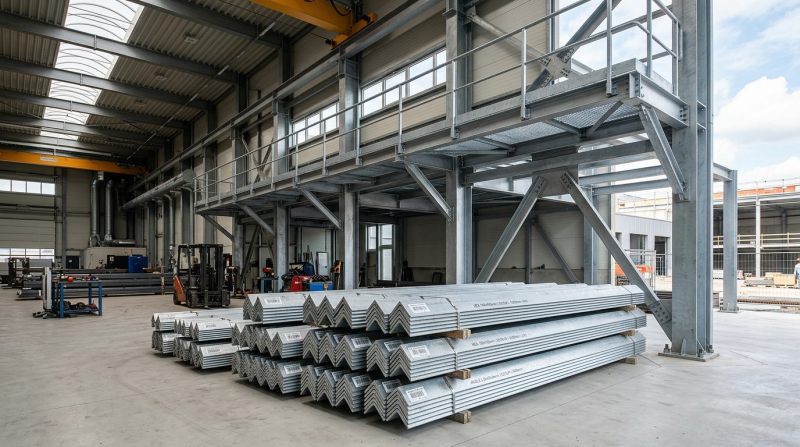
Over-specification usually begins with risk avoidance. Engineers may add extra section size when load assumptions are incomplete, when future use is uncertain, or when multiple international standards must be compared in a short approval window. Procurement teams may also accept heavier sections because they appear safer on paper, even when the design demand does not justify the added steel mass.
In real projects, this issue appears in secondary framing, support brackets, stair structures, equipment platforms, warehouse racking supports, and light industrial frames. A section that is 3 mm thicker or one leg size larger may seem like a small change, but across 200 to 500 pieces, the material increase becomes significant. It can affect freight, handling, welding time, and coating consumption.
Common drivers behind over-specification
Several patterns are common across construction and industrial steel purchasing:
- Using one angle size for all locations instead of differentiating by load zone.
- Applying a high-corrosion or high-load specification to indoor dry environments.
- Confusing yield strength grade with section geometry and selecting both at the high end.
- Ignoring fabrication details such as hole spacing, weld length, and connection eccentricity.
- Relying on historical purchasing habits rather than updated design calculations.
Another cause is mismatch between design documents and sourcing language. Technical teams may specify equal angle, unequal angle, coating, and tolerances in one system, while suppliers quote according to another. Without a line-by-line review, buyers may approve a heavier equivalent section. This is especially common in export projects where ASTM A36, EN S275, JIS SS400, and GB Q235 are compared for practicality rather than exact one-to-one substitution.
The table below shows how over-specification typically affects project economics beyond the base steel price.
The key point is that extra steel does not automatically create extra value. In many support and framing applications, the smarter choice is a section that satisfies load, stiffness, connection, and corrosion requirements with a controlled margin rather than a blanket increase in size.
How to Evaluate the Right Steel Angle Specification
A practical evaluation starts with four variables: load, span or unsupported length, connection type, and service environment. These determine whether the project needs equal angle or unequal angle, what thickness range is reasonable, and whether additional corrosion protection is necessary. For many construction applications, section choice is less about selecting the biggest profile and more about matching geometry to force direction.
Four-step screening method
- Confirm the actual design load, including dead load, live load, wind, or equipment load combinations.
- Check the member function: brace, edge frame, lintel support, connection cleat, or platform component.
- Review the exposure condition: indoor dry area, outdoor weather exposure, marine zone, or chemical environment.
- Align the standard, grade, dimensional tolerance, and coating requirement with the approval documents.
When these four points are clear, technical evaluators can narrow the section family quickly. For example, an indoor support angle in a dry warehouse may only require base structural compliance and standard primer or no coating depending on system design. An outdoor platform angle in a humid or corrosive environment may need galvanizing and stricter coating thickness control. The cost difference comes not only from steel weight but from finishing and logistics.
Dimensional and quality checkpoints
Buyers should also pay attention to straightness, leg equality, thickness tolerance, edge condition, and hole-processing compatibility. A section with acceptable nominal size but unstable tolerance can create site rework. In export supply, consistency from batch to batch is often more valuable than buying a nominally larger section with poor dimensional control.
The following table can help engineering, procurement, and quality teams evaluate steel angle specifications in a common language.
This framework helps prevent a common mistake: paying for a larger section when the real project need is a different grade, a better coating system, or tighter processing control. In many cases, that shift improves field performance while keeping total cost under control.
Cost Control Without Compromising Structural Reliability
Cost control in structural steel should focus on total installed cost, not only ex-works price per ton. A lighter but suitable steel angle can reduce transport volume, lower crane time, and cut welding or drilling effort. On projects with 2 to 4 weeks of fabrication and staged delivery, those savings can be more important than a small difference in unit price.
There are also situations where the best savings come from combining materials strategically. A project may use angle steel for frame connections and supports, while corrosion-sensitive utility lines or low-pressure fluid transport are better served by products such as Hot diped-Galvanized Pipe. With standards including ASTM, DIN, JIS, GB, and EN, and common dimensions such as 1–12 m length and thickness tolerance around ±0.15 mm in related supply categories, buyers can align protection level with application rather than forcing one specification across all steel items.
Where savings are usually found
- Separating primary load-bearing members from secondary supports instead of applying one heavy section everywhere.
- Using galvanized or painted finish only where exposure requires it.
- Standardizing cut lengths to reduce scrap during fabrication.
- Matching production batches to container loading plans for export shipments.
- Reviewing whether OEM processing can reduce site labor by 1 to 2 installation steps.
For finance approvers and project managers, the most useful comparison is often not “cheap versus expensive,” but “optimized versus oversized.” An optimized specification balances compliance, durability, and delivery reliability. An oversized specification may consume capital earlier, raise inventory weight, and reduce flexibility if design adjustments occur after production starts.
Chinese structural steel manufacturers with stable production capacity can support this process by offering standard sizes, processed components, and document-backed quality control. For buyers across North America, Europe, the Middle East, and Southeast Asia, that supply model helps reduce sourcing risk, especially when the project includes mixed items such as angle steel, channels, beams, and corrosion-resistant pipe products.
Procurement, Quality Control, and Delivery Planning for Global Buyers
Once the right steel angle specification is identified, procurement success depends on documentation and execution. The buying process should connect technical approval, mill production, inspection, packaging, and shipping. Missing details at the quotation stage often lead to the very overspecification that buyers wanted to avoid, because suppliers compensate for ambiguity by quoting heavier or more conservative options.
Key items to confirm before placing the order
- Applicable standard and grade, including any required equivalency review.
- Exact leg size, thickness, length, and quantity breakdown by piece count or tonnage.
- Surface finish, such as black, blasted, painted, or galvanized.
- Packing method, bundle marking, and traceability needs for site distribution.
- Inspection scope, including dimensional checks and material test documentation.
Delivery planning matters because lead time is not only mill rolling time. Export buyers should consider production scheduling, coating or processing time, document preparation, container booking, and inland transport. Depending on order complexity, typical preparation can range from 2 to 6 weeks. OEM drilling, cutting, or welded assemblies may extend that timeline, but can reduce field labor and shorten installation by several days on site.
The following table summarizes practical checkpoints for procurement teams, distributors, and project owners.
A disciplined procurement workflow helps all stakeholders. Engineers get the right section, quality teams get traceable records, finance teams get better cost visibility, and project managers reduce the risk of delay from mis-specified material.
FAQ and Practical Selection Advice for Construction Steel Buyers
Many buyers ask the same questions when reviewing angle steel for construction. The answers usually depend on application details rather than a single universal rule. Below are several practical points that help align structural reliability with purchasing efficiency.
How do you know if a steel angle is oversized?
It is likely oversized when section weight has been increased without a corresponding need in load, connection design, deflection control, or corrosion resistance. If a heavier angle is chosen only because “it feels safer,” the design should be reviewed. In many secondary structural uses, a 1-step reduction in thickness or leg size can still meet performance requirements while lowering installed cost.
Is galvanized always better for construction steel?
Not always. Galvanizing is valuable in outdoor, humid, or corrosive environments and can extend service life significantly. However, for enclosed dry applications, a painted or uncoated specification may be sufficient depending on the system design and maintenance plan. The same logic applies when selecting related components such as Hot diped-Galvanized Pipe for low-pressure water, gas, oil, or industrial support uses.
Which supplier capabilities matter most?
For B2B buyers, five capabilities usually matter most: stable capacity, standard compliance, dimensional consistency, responsive documentation, and dependable lead time. A supplier that can support ASTM, EN, JIS, and GB requirements while providing standard products and OEM processing is often easier to work with over repeated projects than a low-price source with weak quality coordination.
What should distributors and project teams ask before ordering?
They should ask for a clear weight schedule, specification breakdown, finish details, tolerance expectations, and delivery milestones. It is also useful to confirm whether the steel will be supplied in stock lengths or cut-to-length pieces. Even a difference of 5% to 8% in scrap rate can influence the final economics of a distribution or project package.
Selecting the right steel angle for construction is ultimately about precision, not excess. Buyers who align section size, grade, finish, and processing with actual application needs can control cost without reducing safety. Hongteng Fengda supports global construction, industrial, and manufacturing projects with structural steel products, customized solutions, strict quality control, and standards-based production. If you need help comparing angle steel options, reviewing technical requirements, or building a cost-effective export sourcing plan, contact us now to get a customized solution and learn more about reliable structural steel supply.
Please give us a message


Please enter what you want to find