When comparing standard vs custom steel lead time, delays often start long before rolling, cutting, welding, or packing begins. In structural steel supply, the most critical lost days usually come from unclear specifications, repeated drawing revisions, slow approval loops, raw material mismatch, and production slot conflicts. As global projects become more schedule-driven and cost-sensitive, understanding standard vs custom steel lead time is no longer just a purchasing issue; it is a planning discipline that directly affects installation sequence, cash flow, logistics coordination, and overall project certainty.
Why standard vs custom steel lead time is becoming a bigger scheduling issue
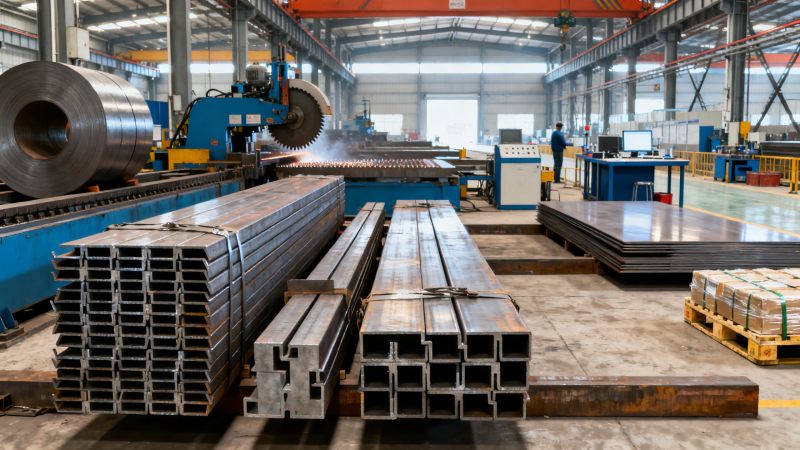
In the steel sector, lead time used to be judged mainly by mill output speed. That view is now incomplete. International orders involve more specification layers, more compliance requirements, and more cross-border coordination than before. Even for common structural products such as angle steel, channel steel, beams, cold formed profiles, and fabricated components, the timeline depends on how early the technical and commercial details are frozen.
This is exactly where standard vs custom steel lead time begins to diverge. Standard steel items often move faster because dimensions, grades, tolerances, and inspection norms are already defined. Custom steel, by contrast, may require drawing confirmation, process review, tooling adjustment, testing alignment, surface treatment decisions, and packaging customization. Each additional variable is manageable on its own, but together they create the first hidden delay window.
For exporters serving North America, Europe, the Middle East, and Southeast Asia, these timing differences are amplified by documentation rules, vessel booking pressure, and port-side coordination. That is why the question is not simply which option is faster, but where delays usually start and how they can be prevented before factory execution is affected.
The earliest trend signal: most delays begin before production starts
A clear industry pattern has emerged: the first delay in standard vs custom steel lead time is rarely the machine itself. It is usually the handoff between inquiry, engineering, confirmation, and procurement. In many steel projects, production is blamed for late delivery, while the original schedule loss actually happened in the pre-production stage.
The difference can be summarized simply. Standard steel generally enters production after quantity and shipping details are confirmed. Custom steel often cannot move forward until technical files are complete and approved. If there are open questions about grade substitution, hole positions, bending radius, coating, marking, or acceptance criteria, the clock continues running even though no material has been processed.
Main drivers behind lead time differences
Where standard vs custom steel lead time usually slips in real orders
Looking closely at actual steel orders, the recurring delay points are highly consistent. These are the moments where standard vs custom steel lead time separates most clearly:
- Incomplete inquiry data: missing grade, tolerance, coating, test standard, or destination packing requirement.
- Drawing approval cycles: revised holes, weld details, dimensions, and fabrication notes can add days or weeks.
- Raw material mismatch: a common thickness may be available, while a less common width or grade requires new rolling or sourcing.
- Factory slot competition: standard products fit regular capacity plans, but custom products often wait for the right machine window.
- Inspection escalation: third-party inspection, added mechanical tests, or special documentation can slow release.
- Export coordination: booking changes, port congestion, or split-shipment decisions can erase time saved in production.
In the middle of such planning, even a seemingly simple item like SS440 Patterned steel plate can show how standard and semi-custom demand overlap. This product is widely used in transportation, construction, decoration, machinery platforms, shipbuilding, and floors around equipment because of its anti-skid and decorative performance. With thickness from 2-8mm, width from 600mm-1800mm, and length from 2m-12m, some requirements can be supplied quickly from abundant stock, while others depend on exact grade, size combination, and certification needs such as ASTM, JIS, DIN, GB/TC, ISO, SGS, or BV. That makes early confirmation especially important when patterned plate is part of a broader structural steel package.
Why current market conditions make custom steel more sensitive than before
Several broader changes are increasing lead time sensitivity across the steel supply chain. First, projects are demanding tighter installation sequencing. Steel is no longer delivered only by total tonnage; it is often required by zone, phase, mark number, or assembly logic. Second, more international buyers want exact compliance with ASTM, EN, JIS, and GB-related requirements, which adds technical review steps. Third, shipping volatility means lost days before dispatch are harder to recover later.
For this reason, standard vs custom steel lead time should be evaluated as a risk profile rather than just a calendar figure. Standard material tends to carry lower engineering risk and faster replenishment options. Custom steel provides better fit, performance, and project integration, but it also has more timeline dependency on communication quality and scheduling discipline. The more specialized the part, the more expensive late clarification becomes.
How lead time differences affect cost, quality control, and delivery confidence
The impact of standard vs custom steel lead time extends far beyond delivery date. When lead time slips early, several downstream effects appear at once. Expedite costs rise. Alternative materials may be considered too late. Inspection windows become compressed. Packing accuracy may suffer under schedule pressure. Ocean freight decisions become less flexible, especially for oversized or mixed steel cargo.
Quality control is also affected. Standard steel usually follows a stable process route with predictable inspection checkpoints. Custom steel can still achieve high quality, but only if the review stage is handled carefully. If approved drawings, material grades, and tolerance expectations are not fully aligned, the risk of rework increases. In steel fabrication and export, rework is one of the most damaging lead time events because it consumes both capacity and logistics buffer.
Reliable suppliers reduce this risk by combining production capacity with early technical coordination. A structural steel manufacturer and exporter with experience in standard sections and OEM solutions is usually better positioned to flag timing conflicts before they become shipment delays. This is especially valuable for projects requiring mixed product categories, such as beams, channels, cold formed profiles, and plates in one delivery schedule.
What deserves the most attention when comparing standard vs custom steel lead time
- Freeze specifications early: grade, size, standard, tolerance, surface condition, and application should be clear before quote confirmation.
- Separate critical-path items: identify which steel components control installation or shipment sequence.
- Check raw material logic: not every dimension combination is equally available, even within the same steel grade.
- Review approval responsibilities: drawing comments, response time, and final sign-off should have a defined owner and deadline.
- Align testing and certification in advance: late requests for extra inspection often create avoidable waiting time.
- Build logistics buffer realistically: export lead time includes inland movement, packing, customs documents, and vessel space.
A practical way to judge and improve steel delivery planning
The most effective response to standard vs custom steel lead time is not simply asking for a shorter promise. It is creating a better order launch condition. When steel supply starts with complete specifications, realistic factory scheduling, and aligned inspection expectations, the final delivery date becomes far more dependable.
For upcoming steel requirements, compare standard and custom options by looking at where time can be lost first: specification, approval, material sourcing, production setup, or export release. A qualified structural steel partner should be able to review these points early, suggest practical alternatives, and support stable lead times across both standard products and custom components. That approach reduces sourcing risk, improves schedule visibility, and keeps project execution on stronger ground.
Please give us a message


Please enter what you want to find