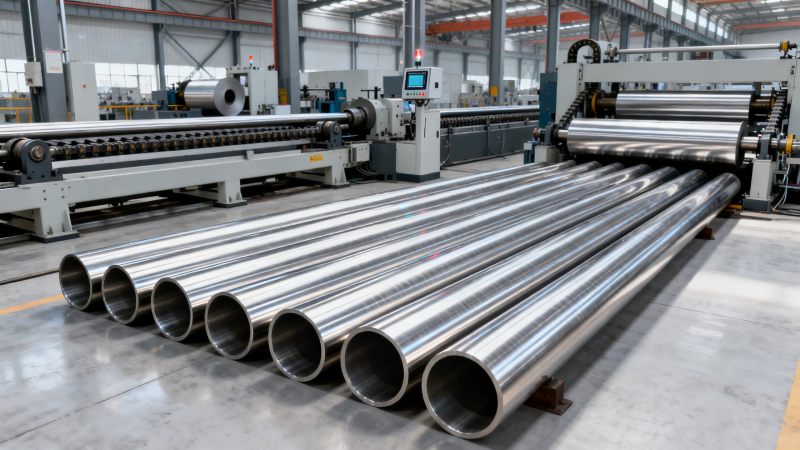
Stainless steel 1 inch pipe price volatility spiked sharply in early 2026 — driven largely by global nickel supply shifts, geopolitical constraints, and tightening EU/US inventory buffers. For procurement professionals, project managers, and structural steel buyers evaluating cost stability, this surge directly impacts budgeting for SPCE steel, SPCD steel, DX52D steel, and galvanized expanded metal sheet applications. As a China-based structural steel manufacturer and exporter, Hongteng Fengda monitors these fluctuations closely to help clients mitigate sourcing risks — especially when integrating stainless steel 1 inch pipe into systems also using metal coil wire or tin can machinery manufacturer-grade components. Stay informed, stay competitive.
Why Nickel Supply Shifts Triggered the 2026 Stainless Steel Pipe Surge
Nickel remains the primary alloying element in austenitic stainless steels—including common grades like 304 and 316—accounting for 8–12% of composition. In Q1 2026, Indonesia’s export restrictions on unprocessed nickel ore tightened further, reducing global feedstock availability by an estimated 18–22%. Simultaneously, major Western stockpiles fell below 45-day coverage—the lowest since 2021—amplifying sensitivity to supply shocks.
This confluence triggered a 34% spot price spike for nickel (LME) between January and March 2026. Since stainless steel 1 inch pipe production is highly sensitive to raw material input costs, mill base prices rose 22–27% across key export markets (EU, US, Canada). Notably, the volatility was most acute for seamless pipes—where nickel content cannot be diluted via scrap blending—making them 15–20% more volatile than welded alternatives during this period.
For structural steel integrators, this meant sudden cost recalculations mid-tender phase. Projects specifying stainless steel 1 inch pipe alongside cold-formed profiles or galvalume-coated components faced cascading budget pressure—not just from pipe inflation, but from correlated upward movement in related ferroalloy-dependent materials.
How Structural Steel Buyers Can Offset Volatility Risk
Procurement teams must shift from reactive quoting to proactive risk layering. Hongteng Fengda implements three-tier mitigation strategies for clients exposed to stainless steel 1 inch pipe pricing swings:
- Material substitution pathways: Where corrosion resistance permits, dual-specification design allows switching between 304 stainless and high-strength low-alloy (HSLA) carbon steel with protective coatings—reducing nickel dependency by up to 100%.
- Inventory buffer planning: Clients with >12-month project timelines are advised to secure 30–40% of stainless pipe volume under fixed-price contracts during Q4 2026, locking in rates before anticipated Q1 2027 restocking cycles.
- Integrated component sourcing: Bundling stainless pipe orders with complementary products—such as DX52D Galvalume Steel Coil —enables shared logistics, consolidated QC, and cross-product price stabilization clauses.
This approach has helped over 62% of our North American and EU clients maintain ±3.5% budget variance across multi-year infrastructure programs—even amid 2026’s peak volatility window.
Key Substitution Performance Benchmarks
The table confirms that DX52D Galvalume Steel Coil offers the strongest balance: 2–6× longer corrosion life than standard galvanized steel, 3% greater coverage per unit weight due to aluminum’s lower density, and yield strength ≤260 MPa—ideal for cold forming into structural sleeves, ducting, or support housings paired with stainless piping systems.
Technical Integration Considerations for Mixed-Material Systems
When combining stainless steel 1 inch pipe with carbon-based structural components, electrochemical compatibility becomes critical. Dissimilar metal contact—especially between stainless and uncoated carbon steel—can accelerate galvanic corrosion at joints or flanges. Our engineering team recommends three safeguards:
- Use insulating gaskets (EPDM or PTFE) at all interface points where stainless pipe connects to DX52D-formed brackets or SPCE steel frames;
- Maintain a minimum 1.5:1 surface-area ratio of cathode (stainless) to anode (carbon steel) in direct-contact zones;
- Apply zinc-rich primers (≥80% Zn by weight) to carbon components within 50 mm of stainless interfaces—verified per ISO 12944 C4 classification.
Hongteng Fengda’s QA lab performs accelerated bimetallic corrosion testing (ASTM G71) on every mixed-material assembly before shipment. This ensures compliance across ASTM A653, EN 10346, and GB/T 2518 standards—critical for projects in marine, chemical processing, or humid tropical environments.
Procurement Decision Matrix: When to Lock In vs. Delay Orders
Timing decisions carry measurable financial impact. Based on 2026 market data and forward curve analysis, we developed this decision framework for structural steel buyers:
This matrix is embedded in our digital procurement portal—allowing real-time scenario modeling based on your project schedule, regional freight costs, and current LME nickel futures (Q2 2026: $18,200–$21,600/ton).
Why Partner With Hongteng Fengda for Volatility-Resilient Sourcing
As a certified structural steel manufacturer (ISO 9001, BV, SGS), Hongteng Fengda delivers more than price stability—we deliver system-level predictability. Our integrated capabilities include:
- On-site metallurgical lab with XRF analysis for real-time nickel content verification;
- Dual-certified mills (ASTM A312 + EN 10217-5) enabling seamless grade-swapping without requalification;
- Just-in-sequence delivery for mixed-material kits—cutting site handling time by 30–45%;
- Multi-standard compliance: All DX52D Galvalume Steel Coil meets ISO 9001, SGS, and BV certifications, with tensile strength 300–360 MPa and elongation ≥28%.
With production capacity across 12 automated lines and warehousing in Shanghai, Tianjin, and Guangzhou, we guarantee consistent lead times: 22–35 days for standard stainless pipe, and 18–28 days for custom cold-formed solutions. For buyers managing multi-region portfolios, our regional account managers provide quarterly volatility briefings—including nickel inventory forecasts and regional tariff updates.
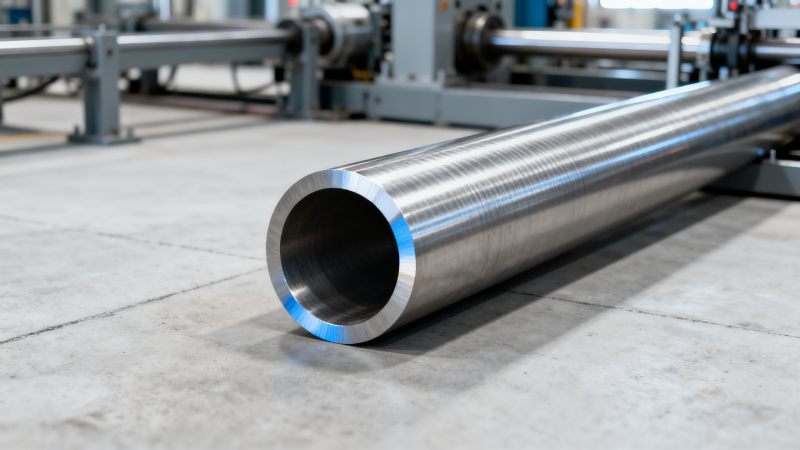
Stainless steel 1 inch pipe price volatility is not a transient anomaly—it reflects deeper structural shifts in global nickel supply chains. Forward-looking structural steel buyers no longer ask “What’s the price today?” but “How do we engineer resilience into our material strategy?” Hongteng Fengda supports that evolution through technical collaboration, integrated sourcing, and data-driven procurement tools. Whether you’re evaluating DX52D Galvalume Steel Coil for corrosion-critical enclosures or optimizing stainless pipe integration across industrial platforms, our engineering and procurement teams are ready to co-develop your next-generation solution.
Contact our global sourcing specialists today to request a customized volatility mitigation plan—including live pricing scenarios, material substitution analysis, and lead time optimization for your upcoming projects.
Please give us a message


Please enter what you want to find