Understanding stainless steel square pipe price factors is essential for buyers comparing material grades, production methods, and supply options. From welded stainless tubing and seamless steel tube choices to cost differences related to Q235 steel, API pipe standards, and corrosion-resistant pipe performance, each variable affects budgeting, quality, and project value. This guide helps procurement teams, engineers, and distributors evaluate pricing with greater confidence.
In steel procurement, price is rarely driven by one element alone. For stainless steel square pipe, the final quotation usually reflects a combination of raw material grade, wall thickness, surface finish, dimensional tolerance, order volume, testing requirements, and delivery terms. For project managers and purchasing teams, understanding these variables can reduce sourcing risk, improve cost forecasting, and avoid performance issues during fabrication or installation.
As a structural steel manufacturer and exporter from China, Hongteng Fengda supports global buyers with standard and customized steel solutions for construction, industrial processing, and manufacturing applications. For customers comparing stainless tubing with carbon steel alternatives or related structural products, a structured pricing analysis helps align technical requirements with budget targets and supply reliability.
Core Material Factors That Influence Stainless Steel Square Pipe Pricing
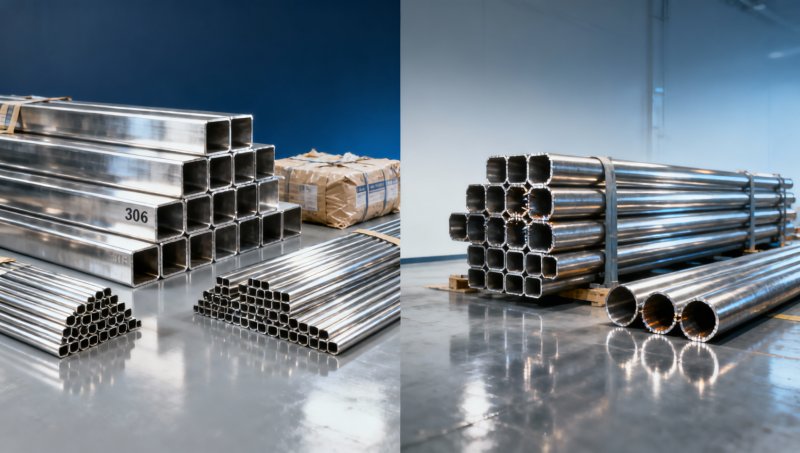
The first major driver of stainless steel square pipe price is the material grade. In most international markets, 201, 304, 316, and 430 are common reference grades. Among them, 304 is widely selected for general corrosion resistance and fabrication balance, while 316 normally carries a higher price because of its molybdenum content and stronger resistance in chloride-rich or marine environments. In practical sourcing, the gap between 304 and 316 can become significant when nickel and alloy costs rise over a 30 to 90 day purchasing cycle.
Wall thickness and section size also have a direct cost impact. A square pipe measuring 40 mm x 40 mm x 2.0 mm will be priced very differently from one at 100 mm x 100 mm x 6.0 mm, even if both use the same stainless grade. More steel input means higher weight per meter, and freight cost also increases. For buyers requesting long lengths such as 6 m or 12 m, packing method and container optimization can influence the landed cost by an additional 3% to 8%.
Surface finish matters more than some buyers expect. Mill finish square pipe is usually more economical than polished, brushed, or decorative tubing. If the application is structural support, equipment frames, or industrial enclosures, a standard finish may be sufficient. However, for architectural, food-processing, or visible commercial applications, additional polishing steps increase labor and processing time, which may add 5% to 15% to the unit price.
Another key issue is whether the buyer is truly comparing stainless steel with stainless steel. Some market confusion happens when users compare stainless square pipe pricing with Q235 steel tube or other carbon steel sections. Q235 steel is usually lower in initial material cost, but it does not offer the same corrosion resistance and may require galvanizing, painting, or more frequent maintenance. In humid or chemical-exposure environments, the life-cycle cost difference can narrow considerably over 3 to 10 years.
Grade and application relationship
Technical evaluation teams should always match grade selection to service conditions. For indoor dry environments, 201 or 304 may be considered depending on fabrication and corrosion expectations. For coastal installations, wastewater systems, or chemical exposure, 316 may be more appropriate. Over-specifying the grade raises purchase cost, while under-specifying it increases replacement risk, inspection cost, and shutdown losses.
The table below summarizes how common factors affect stainless steel square pipe pricing and purchasing decisions.
The main takeaway is simple: material grade, wall thickness, and finishing are often the three largest cost drivers at the quotation stage. Buyers who define these clearly in the RFQ can shorten comparison time and improve quote accuracy across multiple suppliers.
How Production Method, Standards, and Quality Control Affect Cost
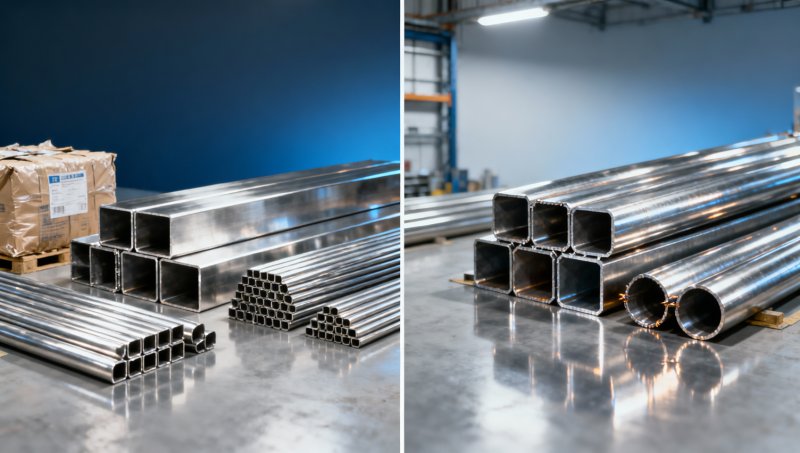
Production method is another major factor in stainless steel square pipe pricing. Welded stainless tubing is generally more cost-effective than seamless steel tube because the manufacturing route is less material-intensive and supports efficient volume production. For many architectural, mechanical, and light structural applications, welded square pipe provides adequate performance when the supplier controls weld integrity, straightness, and dimensional consistency.
Seamless steel tube, on the other hand, is commonly used where pressure, temperature, or mechanical demands are higher. It usually costs more because of the production process and lower output efficiency compared with welded products. However, not every project needs seamless material. Engineers and procurement teams should confirm whether the service condition actually requires it, especially when the budget difference may exceed 20% to 40% depending on size and grade.
Compliance standards also influence price. Requirements linked to ASTM, EN, JIS, GB, or API pipe specifications may involve additional testing, documentation, or dimensional controls. For example, if a buyer requires PMI, hydrostatic testing, third-party inspection, or full mill test reports, the total cost will rise accordingly. These are not unnecessary extras; they are part of risk management for projects where traceability and safety are critical.
Quality control affects both direct price and hidden cost. A lower quotation may look attractive, but inconsistent wall thickness, poor weld seam treatment, or loose tolerances can create fabrication delays, scrap, and installation problems. For industrial buyers, a 2% to 4% rejection rate can be more expensive than paying a slightly higher ex-works price to a supplier with stable production and documented inspection procedures.
Common production and inspection checkpoints
- Raw material verification by heat number, grade, and chemical composition before forming.
- Dimensional checks on side length, wall thickness, straightness, and squareness during production.
- Weld seam examination, surface inspection, and end-condition checks before packing.
- Optional third-party inspection for export projects with stricter approval procedures.
Why buyers should compare total delivered quality
A useful purchasing approach is to compare not only the base unit price, but also the complete delivered package: standard compliance, tolerance control, lead time, testing scope, packaging, and after-sales response. For project-driven sourcing, a supplier that can maintain stable quality over 2 to 3 repeated shipments often creates better long-term value than a lower-cost supplier with inconsistent output.
For buyers handling broader steel procurement, this is also where integrated supply capability matters. In addition to square pipe and structural profiles, some projects require sheet piling or retaining solutions. In hydraulic or foundation-related construction, Hot Rolled Steel Sheet Pile can be inserted into procurement planning when retaining wall or water retaining wall performance is required. Available in U Sheet Pile configurations, with steel grades such as S275, S355, S390, S430, SY295, SY390, and ASTM A690, these products are produced to EN10248, EN10249, JIS5528, JIS5523, and ASTM standards, with single lengths extending to over 80 m for certain project demands.
For engineering teams, such product integration can simplify supplier coordination. The U-shaped steel sheet pile range supports flexible combinations to form continuous and tight retaining walls, while certifications such as ISO9001, ISO14001, ISO18001, and CE FPC help align with project compliance expectations. Customized dimensions and special lengths can also reduce site joining work and improve construction efficiency.
Supply Chain, Order Volume, and Export Terms in Final Price Calculation
Even when grade and specification are fixed, stainless steel square pipe prices can still vary because of supply chain conditions. Nickel, chromium, and energy costs often fluctuate by month, and suppliers may only hold a quotation valid for 3 to 7 days in volatile periods. For budget-sensitive projects, timing matters. Procurement teams that monitor raw material trends and lock in larger orders strategically may reduce exposure to short-term market swings.
Order quantity has a practical effect on pricing. A small trial order of 1 to 3 tons may carry higher processing and packing cost per ton than a regular container load of 20 to 25 tons. Custom sizes, unusual wall thicknesses, or mixed specifications in one order also affect mill scheduling efficiency. If a buyer can consolidate requirements into fewer specifications, better price consistency is often possible.
Trade terms also reshape the final number. EXW, FOB, CFR, and CIF do not represent the same cost structure. A quote that looks lower on an EXW basis may become less competitive after inland trucking, port handling, export documentation, and ocean freight are added. For buyers in North America, Europe, the Middle East, or Southeast Asia, comparing landed cost rather than ex-factory price is the more accurate decision method.
Lead time is another hidden factor. Standard stainless square pipe sizes may be ready in 7 to 20 days depending on quantity and mill schedule, while customized sections or extra finishing can extend delivery to 3 to 6 weeks. If a project has strict installation milestones, paying a moderate premium for reliable lead time can protect the overall schedule and reduce the risk of costly site delays.
Typical pricing variables in export procurement
The table below shows common commercial factors that influence export pricing for stainless steel square pipe and related steel products.
For distributors and project buyers, the most practical strategy is to standardize the inquiry sheet. Include grade, size, wall thickness, length, finish, quantity, tolerance request, test requirement, destination port, and target delivery time. This 8-point approach reduces quotation gaps and makes supplier comparison more meaningful.
How to Evaluate Stainless Steel Square Pipe Quotes Without Missing Hidden Risks
A low quote does not always equal a low-cost purchase. Decision-makers should assess technical fit, documentation, supplier consistency, and service responsiveness before final approval. This is especially important for procurement staff, quality managers, and financial approvers who need to balance capex control with operational reliability. A price that is 8% lower may be attractive, but not if it creates downstream losses in welding, fitting, inspection, or replacement.
One common mistake is comparing welded stainless square pipe from one supplier with seamless tube from another supplier without adjusting the application criteria. Another is accepting unclear grade descriptions without confirming standards or chemical composition. In export sourcing, terms such as “stainless pipe” are too broad. Buyers should request exact grade designation, production method, dimensional tolerance, and testing scope in writing before purchase order confirmation.
For projects involving corrosive environments, the focus should be on service life rather than initial piece price. Corrosion-resistant pipe performance can produce large value differences over time. If maintenance access is difficult, or downtime cost is high, choosing a more suitable grade and stronger inspection protocol can be the more economical decision across the asset life cycle.
Buyers should also consider supplier capability beyond one product. Manufacturers with modern facilities, strict quality control, and experience across structural sections, beams, channels, cold formed profiles, and OEM steel components are often better positioned to support repeat orders and project coordination. This matters when multi-category sourcing needs stable schedules and consistent standards across shipments.
A practical 5-step quote review method
- Confirm the exact stainless grade and whether it matches the operating environment.
- Verify dimensions, wall thickness tolerance, length, and finish requirement.
- Check whether the pipe is welded or seamless and whether that choice is technically justified.
- Review testing documents, inspection scope, and export packing details.
- Compare landed cost, lead time, and supplier response speed before approval.
FAQ: questions buyers often ask
How much does stainless steel square pipe price vary by grade? It depends on alloy content and market timing, but price differences between 201, 304, and 316 are usually meaningful enough that grade confirmation should happen before any budget sign-off.
Is welded tubing always cheaper than seamless? In most cases, yes. However, the decision should be based on service condition, not price alone. For many standard structural and fabrication uses, welded tubing is sufficient and more economical.
What documents should be requested? At minimum, buyers often request mill test reports, grade confirmation, size details, packing list references, and where necessary, third-party inspection records or special test reports.
How can importers reduce sourcing risk? Use detailed RFQs, approve pre-production samples where needed, align inspection standards, and work with suppliers that offer stable capacity and clear communication on delivery schedules.
Procurement Recommendations for Engineers, Distributors, and Project Teams
For engineers, the best way to control stainless steel square pipe price is to avoid over-specification while preserving safety and service life. Define the environment, load condition, fabrication method, and expected durability first. Then select the grade and wall thickness accordingly. A technically correct specification can prevent both underperformance and unnecessary material cost.
For distributors, quote competitiveness depends not only on purchase price but also on inventory strategy. Standard sizes with stronger turnover often justify volume buying, while less common sizes may be better sourced project by project. Monitoring 2 to 4 key variables such as alloy trend, freight changes, lead time, and customer demand frequency can improve margin stability.
For project managers and commercial teams, supplier reliability should be treated as part of cost control. Stable production capacity, consistent quality, and dependable lead times help reduce schedule risk. This is particularly important for overseas buyers coordinating construction and manufacturing timelines across multiple stakeholders. A delayed shipment can affect installation crews, site planning, and payment milestones.
Hongteng Fengda supports global buyers with structural steel products and customized solutions aligned with ASTM, EN, JIS, and GB standards. For companies sourcing angle steel, channel steel, beams, cold formed steel profiles, customized structural components, and corrosion-sensitive tubing requirements, working with a supplier that understands both technical needs and export execution can simplify procurement and improve long-term value.
If you are comparing stainless steel square pipe options, planning a mixed steel procurement package, or evaluating supply terms for an upcoming project, now is the right time to clarify specifications and request a detailed quotation. Contact Hongteng Fengda to discuss your application, get a customized sourcing plan, and explore more reliable steel solutions for construction, industrial, and manufacturing projects.
Please give us a message


Please enter what you want to find