Choosing the right stainless steel square bar supplier can determine whether your project stays on schedule or faces costly delays. For buyers comparing angle stainless steel supplier options, stainless steel pipe wholesale sources, or a stainless steel pipe exporter, understanding what slows orders most—from raw material issues to quality checks and shipping—helps reduce sourcing risks and improve delivery confidence.
Where Do Stainless Steel Square Bar Orders Get Delayed Most?
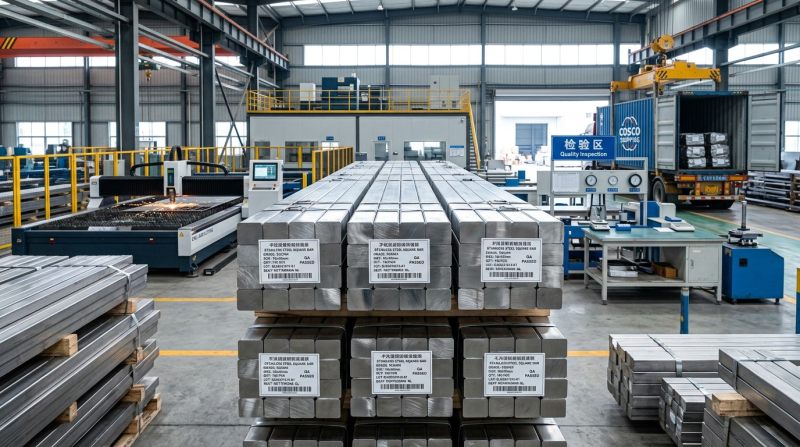
In steel sourcing, delays rarely come from one single issue. In most cases, order disruption happens across 4 linked stages: raw material preparation, production scheduling, inspection approval, and international shipment. For project managers, buyers, and quality teams, this means the real risk is not only supplier price, but also process control from inquiry to delivery.
A stainless steel square bar supplier may offer attractive quotations, yet lead time can still stretch from a planned 15–20 days to 30–45 days when material grades, dimensions, or finish requirements are not fully aligned at the start. This is especially common when buyers request mixed specifications, urgent dispatch, or third-party inspection after production is complete.
For global construction and industrial buyers, order delays create a chain reaction. Fabrication teams may wait for incoming bars, financial approval may be held back, and contractors may face site rescheduling. In export business, even a 3–7 day delay at the factory can become 1–2 extra weeks after vessel booking changes, customs queueing, and document revision.
Hongteng Fengda focuses on reducing these bottlenecks through stable production capacity, standard-compliant manufacturing, and clearer order coordination. As a structural steel manufacturer and exporter from China, the company supports buyers who need standard steel sections, custom structural components, and more predictable lead times across North America, Europe, the Middle East, and Southeast Asia.
The 5 delay points procurement teams should check first
- Raw material availability: common grades may move fast, while special chemistry, oversized sections, or custom tolerance orders often require additional mill coordination.
- Specification ambiguity: unclear length, corner radius, tolerance, finish, or test document needs can stop production before cutting or packing begins.
- Capacity conflict: orders placed during peak periods may wait behind existing production plans, especially when several product families share the same line.
- Inspection timing: internal QC, customer witness inspection, or third-party verification can add 2–5 working days if not booked early.
- Shipping readiness: incomplete packing list, marking inconsistency, or delayed payment release can prevent container loading on the target vessel.
Why raw materials and specifications often cause the earliest delays
The first major delay usually appears before production even starts. A stainless steel square bar supplier must confirm grade, section size, tolerance, quantity, and finish against available stock or rolling plans. If buyers only send a brief inquiry such as “square bar, stainless, urgent,” the supplier still needs 6–10 data points before locking the process, including application, end-use environment, document requirements, and destination market.
This is where technical evaluators and procurement teams should work together. A project may require corrosion resistance, machining suitability, or welding compatibility, but if the purchase order lacks these details, material substitution discussions can create unnecessary back-and-forth. In cross-border sourcing, every clarification cycle may cost 24–48 hours, and over several rounds this can easily add a week.
Mixed orders also create planning pressure. If a buyer combines square bars with angle steel, channels, beams, or custom structural members in one shipment, production becomes more efficient overall, but only when specifications are frozen early. Hongteng Fengda has experience supporting such combined steel sourcing programs, which helps buyers reduce fragmented purchasing risk and better align fabrication schedules.
Some buyers also compare adjacent materials during sourcing. For example, applications involving sheet fabrication, food processing, or equipment covers may require plate instead of bar. In those cases, checking available dimensions and standards in advance helps reduce substitution delay. A relevant reference is 304 Stainless Steel Plate, which is commonly used in chemical, food industry, medical equipment construction, kitchen supplies, and transportation components.
What information should be confirmed before order release?
The more complete the technical package, the faster the factory can move from quotation to production. For many export orders, a well-prepared confirmation file can save 3–5 working days compared with fragmented communication.
The key takeaway is simple: many steel order delays are preventable. They begin when the purchase side and technical side do not confirm the same version of the requirement. A supplier that asks detailed questions early is often reducing risk, not slowing the sale.
How production, inspection, and packaging affect lead time
After material confirmation, the next delay cluster happens inside the factory. Even when stainless steel square bar stock exists, processing may still include cutting, straightening, surface treatment, marking, bundling, and final inspection. For custom orders, the line may also need tooling adjustment or batch segregation. These steps are manageable, but they must be scheduled clearly.
For industrial and construction buyers, inspection is one of the most underestimated lead-time variables. Internal quality control may be completed within 1–2 days, but if customer-appointed inspection or SGS/BV-type third-party review is added late, production can sit in the finished goods area waiting for release. That waiting time does not improve quality, but it still delays shipment.
Packaging is another frequent issue in export steel orders. Square bars, channels, beams, and plates each require different bundling and loading logic. Incorrect bundle weight, weak seaworthy packing, or unclear heat number marking can trigger repacking. For distributors and project importers, repacking often costs both time and labor, especially when delivery windows are already tight.
This is why experienced exporters build inspection and packing into the lead time from day one. Hongteng Fengda supports global buyers with strict quality control and export-oriented order coordination, helping reduce problems that usually appear only at the final stage, when changing plans becomes expensive.
Typical factory-stage timeline for a steel export order
The timeline below reflects a common export workflow for standard or moderately customized steel products. Actual timing depends on grade, quantity, and whether mixed products are involved.
For buyers, the practical lesson is to evaluate factory lead time as a sequence, not just a single number. A quotation that says “20 days” is only useful when each stage has a clear owner, inspection plan, and shipping target.
Three ways to reduce production-stage delays
- Freeze specifications before deposit or production release, especially if the order includes more than 3 sizes or multiple steel categories.
- Book third-party inspection at least 5–7 days before expected completion, not after goods are finished.
- Confirm packing method, bundle weight range, labeling, and loading preference before the first production lot is completed.
What should buyers compare when choosing a stainless steel square bar supplier?
Price matters, but for B2B steel sourcing it should not be the only comparison point. Procurement personnel, business evaluators, and finance approvers need a more complete view. A lower unit price can become a higher landed cost if the supplier misses delivery, fails inspection, or creates extra cutting waste due to poor dimensional control.
The most effective supplier comparison model usually covers 5 dimensions: technical clarity, production stability, quality system, export execution, and communication speed. These are especially important when the buyer is managing a project schedule, resale inventory, or downstream manufacturing commitments.
For example, a structural steel manufacturer with broad product capability can be more efficient for mixed procurement. If you need square bars together with angle steel, channel steel, steel beams, cold formed profiles, or custom structural components, consolidated sourcing may reduce vendor management effort, shorten communication cycles, and simplify inspection coordination across 2–3 departments.
Hongteng Fengda’s advantage in this context is not limited to one product category. The company supports standard specifications and OEM solutions, follows major international standards such as ASTM, EN, JIS, and GB, and helps overseas buyers balance quality consistency, cost control, and dependable lead times.
Supplier comparison checklist for technical and commercial teams
Before final approval, many buyers use a side-by-side matrix. This avoids decisions based only on quote speed or headline price.
This comparison method is useful not only for procurement teams, but also for distributors, resellers, and engineering decision-makers. It turns supplier evaluation into an operational review instead of a purely commercial discussion.
How standards, application needs, and adjacent products influence delivery planning
Not every delay is a factory problem. Sometimes the order becomes slow because the required standard or end-use application adds extra controls. If stainless steel square bars are intended for industrial frameworks, machine parts, fabrication, or transport-related assemblies, the buyer may require tighter traceability, more detailed material certificates, or additional dimensional records.
The same logic applies when buyers compare bars with plate or other stainless forms. For flat-fabricated parts, covers, tanks, kitchen equipment, medical structures, food-contact surfaces, or conveyor elements, plate can be a more suitable choice than bar. One common option is 304 Stainless Steel Plate, available in grades such as 304 and 201, with thickness from 0.3mm to 200mm and widths including 1000mm, 1219mm, 1500mm, and up to 3500mm.
In practical sourcing terms, application determines both product choice and approval speed. For example, when using 304 stainless steel in food industry equipment, chemical environments, medical equipment construction, ship parts, kitchen supplies, trains, airplanes, or vehicle components, buyers often check finish, hardness, and strength before shipment. Typical reference values include tensile strength of at least 520MPa, yield strength of at least 275MPa, elongation around 55–60%, and hardness not exceeding 183HB or 100HRB.
These parameters are not just technical details. They influence whether the material can move directly to production, whether additional testing is needed, and whether finance or quality teams can release payment on time. When standards, application, and documents are aligned early, procurement becomes much smoother.
Common specification factors that change delivery planning
- Standard route: ASTM, AISI, JIS, GB, DIN, EN, ISO, or project-specific combinations may require different review documents.
- Surface condition: BA, 2B, NO.1, NO.4, 4K, HL, or 8K finishes can add processing and inspection steps.
- Dimension range: larger thicknesses, longer lengths such as 6000mm or 12000mm, and wider formats may change packing and transport plans.
- End-use risk level: food, medical, transport, and chemical applications generally require stricter document checks than non-critical fabrication use.
A practical note on substitution
Buyers sometimes switch between 201 and 304 grades to manage cost. That can be reasonable, but substitution should always be checked against corrosion resistance, forming method, end-use environment, and customer specifications. A lower-cost option may reduce initial spend, yet create re-approval delays or downstream performance risk if the environment is more demanding than expected.
FAQ: How can buyers reduce delays and make better sourcing decisions?
For research-driven buyers and decision-makers, the questions below come up repeatedly when comparing a stainless steel square bar supplier with other export steel sources. Addressing them early can save both time and budget.
How long is a normal order cycle for stainless steel square bar?
For standard specifications, a common factory cycle is around 2–4 weeks, depending on stock, processing needs, and order volume. Custom dimensions, mixed loads, third-party inspection, or special export packing can extend the cycle. Buyers should ask for a stage-by-stage schedule rather than a single headline lead time.
What is the biggest mistake buyers make before placing an order?
The most common mistake is releasing a purchase order before finalizing specifications and documents. Missing tolerance details, unclear surface requirements, or late inspection instructions can each add several working days. A complete technical and commercial checklist usually prevents these issues.
Should buyers choose one supplier for multiple steel products?
In many B2B situations, yes. When a supplier can provide angle steel, channel steel, beams, cold formed profiles, custom components, and related stainless items under one coordination process, buyers may reduce communication overlap, inspection complexity, and shipping fragmentation. This is especially useful for project-based procurement with fixed milestones.
How can quality teams reduce shipment hold-ups?
Quality teams should define 3 checkpoints early: pre-production specification review, in-process dimensional control, and pre-shipment document verification. If third-party inspection is required, booking it 5–7 days before completion is a practical rule. Waiting until goods are packed often causes avoidable delays.
Why choose us for steel sourcing and delivery planning?
When buyers evaluate a stainless steel square bar supplier, they are usually trying to solve more than a material question. They need stable manufacturing, accurate specifications, quality consistency, export discipline, and realistic lead times. Hongteng Fengda supports this need as a professional structural steel manufacturer and exporter from China, serving construction, industrial, and manufacturing customers across multiple global markets.
Our strength lies in combining product capability with order coordination. We supply angle steel, channel steel, steel beams, cold formed steel profiles, and customized structural steel components, with support for standard specifications and OEM solutions. This helps buyers who want to reduce sourcing risk, control total procurement cost, and simplify cross-product delivery planning.
If you are comparing suppliers, we can help you confirm 6 practical items before order release: material grade, dimensions and tolerance, applicable standards, inspection requirements, delivery schedule, and packing method. We can also discuss sample support, document expectations, project-based mixed loading, and quotation options for both standard and customized steel products.
Contact us to review your drawings, technical parameters, target lead time, certification needs, and shipment plan. Whether you are at the research stage or ready for quotation, a clearer specification package is often the fastest way to avoid delay and improve delivery confidence.
Please give us a message


Please enter what you want to find