Understanding the ss sheets price outlook for 2026 is essential for business evaluators planning budgets, supplier strategies, and project profitability. From raw material volatility and energy costs to global demand shifts and export dynamics, several factors are reshaping stainless steel sheet pricing. This article breaks down the key cost drivers and what buyers should watch when assessing future sourcing decisions.
For B2B buyers, the challenge is not only estimating the next purchase price, but also understanding which variables are temporary and which may affect contracts for 6 to 18 months. In stainless steel procurement, even a change of 3% to 8% in coil or sheet cost can alter gross margins, tender competitiveness, and inventory strategy.
Business evaluators also need to compare stainless steel sheet pricing with adjacent steel categories used in buildings, industrial fabrication, and manufactured components. Companies such as Hongteng Fengda, a structural steel manufacturer and exporter from China, support global buyers by reducing sourcing risk through stable production, consistent quality, and compliance with ASTM, EN, JIS, and GB requirements.
Key Forces Behind SS Sheets Price Changes in 2026
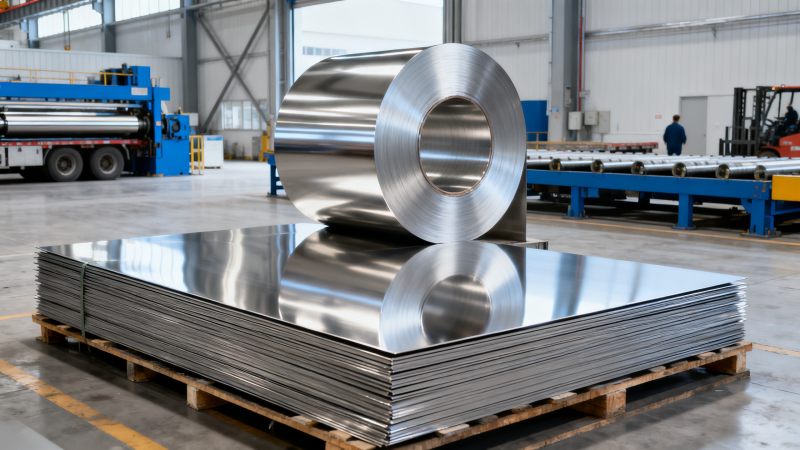
The 2026 ss sheets price trend will be shaped by a combination of raw material costs, mill operating expenses, regional demand, and trade policy. Stainless steel sheets are not priced like ordinary carbon steel plate because nickel, chromium, and in some grades molybdenum account for a meaningful share of the final cost structure.
Raw material volatility remains the first pricing driver
For common stainless grades such as 201, 304, and 316, alloy inputs can move faster than downstream contract prices. When nickel rises within a short 30 to 60 day period, mills often adjust surcharges quickly. Chromium and ferroalloy costs may not be as visible to end buyers, but they still influence the delivered ss sheets price in export markets.
Buyers evaluating 2026 budgets should watch 3 indicators closely: nickel direction, scrap availability, and alloy surcharge timing. If two of these three move upward together, sheet quotations can tighten even when end-user demand is only moderate.
Why scrap supply matters
Stainless production often uses recycled feedstock alongside virgin materials. When scrap collection softens or regional processing capacity becomes constrained, mills may rely more heavily on expensive alloy inputs. That can add cost pressure within 2 to 8 weeks, especially in grades used for industrial tanks, cladding, machinery housings, and fabrication parts.
Energy, freight, and processing charges are still significant
Even if alloy prices stabilize, the ss sheets price can still rise because of electricity, gas, pickling, slitting, and surface finishing costs. Stainless sheet production involves multiple stages, and energy-intensive operations can materially affect the final quotation. In some regions, utility-related manufacturing costs can swing by 5% to 12% over a 12 month period.
Freight is another major factor. Ocean shipping rates do not need to return to extreme peaks to affect import pricing. A container rate increase combined with inland trucking and port handling can raise landed cost per ton enough to change a sourcing decision between domestic, regional, and Chinese suppliers.
The table below summarizes the main cost drivers business evaluators should track when forecasting stainless sheet procurement in 2026.
The main conclusion is that ss sheets price forecasting should not rely on a single commodity chart. Buyers need to monitor at least 4 layers at the same time: alloy inputs, production cost, shipping cost, and demand-side capacity utilization.
Demand recovery will not be uniform across regions
In 2026, demand for stainless sheet may recover at different speeds across North America, Europe, the Middle East, and Southeast Asia. Construction-related applications, food processing equipment, HVAC casings, commercial fit-out, and industrial enclosures all consume sheet material, but order cycles vary from 4 weeks to 6 months depending on the sector.
- Project-based demand tends to create short bursts of sheet buying.
- Manufacturing demand usually produces more stable monthly volumes.
- Export-oriented buyers often face longer lead-time planning windows of 45 to 90 days.
That means the ss sheets price may remain range-bound in one region while rising in another. Business evaluators should therefore analyze destination market conditions rather than relying only on average global sentiment.
How Buyers Should Evaluate Stainless Sheet Costs Beyond the Base Quote
A competitive offer is not always the lowest-cost offer after delivery, inspection, and fabrication. For purchasing teams, the real ss sheets price includes grade consistency, dimensional tolerance, surface quality, packaging, yield loss, and claim risk. A difference of 20 to 30 dollars per ton on the invoice can disappear if rework, delays, or scrap rates increase.
Five practical checkpoints for business evaluators
- Confirm the exact grade, finish, and thickness tolerance before price comparison.
- Separate base material price from cutting, slitting, polishing, and packing charges.
- Check lead time in days, not only shipment month promises.
- Review Incoterms and estimate landed cost under at least 2 scenarios.
- Assess claim handling speed and replacement policy for export orders.
These checkpoints help buyers judge whether a quoted ss sheets price is truly workable for tenders, production planning, or long-term supply agreements.
Comparison framework for sourcing decisions
Before choosing a supplier, evaluators should compare not only unit cost but also delivery reliability and process fit. The following table provides a practical framework often used in industrial steel procurement reviews.
The strongest sourcing decisions usually come from balanced scoring rather than chasing the lowest quote. In most cross-border steel purchases, total commercial risk is often determined by 3 factors together: compliance, delivery control, and consistency in execution.
A useful benchmark from adjacent coated steel products
When assessing sheet-based building materials, many buyers also compare stainless with coated steel alternatives for roofing, walling, and prefabricated structures. For example, Color Coated Galvanized Steel Sheet PPGI is often selected where corrosion resistance, lighter weight, and appearance are priorities but stainless steel is not technically required.
This product category, including PPGL based on aluminum-zinc steel, typically covers thicknesses from 0.2 mm to 1.2 mm, widths from 600 mm to 1250 mm, and coating thicknesses of 11–35 μm on the top side with 5–14 μm on the back. It is widely used in residential, commercial, agricultural, and public building applications.
For evaluators, this comparison is valuable because it helps identify whether the application really needs stainless performance or whether a coated steel solution can control cost more effectively. In many envelope and roofing projects, service life, heat resistance above 300 degrees, and low maintenance can justify coated steel over stainless, while food-grade, chemical, or hygienic uses still point back to stainless sheet.
2026 Procurement Risks, Contract Strategy, and Supplier Selection
The ss sheets price outlook is not only about market direction. It is also about how buyers structure contracts, place orders, and qualify supply partners. A smart procurement strategy can soften cost swings even when the market remains uncertain through two or three quarters.
Common risks that distort budget forecasts
Several procurement risks make stainless sheet budgets less reliable than they appear on paper. These risks are especially important for international buyers sourcing from multiple countries.
- Mixing incomparable grades or finishes in one price review.
- Ignoring exchange-rate movement over a 60 to 90 day order cycle.
- Underestimating customs, anti-dumping, or local compliance costs.
- Assuming all mills can maintain the same lead time during demand spikes.
- Using spot-price logic for projects that require phased deliveries over 3 to 6 months.
Each of these points can create a misleading view of ss sheets price competitiveness. In practice, landed cost and execution risk must be reviewed together.
Why supplier stability matters in export sourcing
For importers, late shipment can be as costly as a high material price. A delayed lot may interrupt fabrication, miss installation windows, or trigger penalty exposure in EPC and construction contracts. That is why buyers often prefer partners with clear production planning, quality control, and dependable lead times.
Hongteng Fengda serves global construction, industrial, and manufacturing customers with structural steel products such as angle steel, channel steel, steel beams, cold formed profiles, and custom steel components. This wider steel manufacturing experience can be relevant for buyers who want fewer vendors, better coordination across product categories, and stronger control over international project schedules.
Recommended contract approaches for 2026
Different purchasing strategies work better under different market conditions. The right choice depends on volume, project duration, and how much price exposure the buyer can tolerate.
- Spot buying: suitable for urgent orders or low volumes under short lead times of 2 to 4 weeks.
- Frame agreements: useful for repeat monthly demand where call-off volumes can be adjusted within a quarter.
- Staggered booking: practical for projects lasting 4 to 9 months, reducing the risk of buying the full quantity at a temporary peak.
- Dual-source strategy: appropriate when one supplier offers cost advantage and another provides schedule backup.
For many business evaluators, staggered purchasing is the most balanced response to 2026 uncertainty. It lowers exposure to a single booking date while preserving planning visibility for production and logistics.
Questions buyers should ask before approving a supplier
A disciplined approval process can help prevent expensive surprises later. Before finalizing a supplier for stainless or related steel sheet products, evaluators should request answers to the following:
- What is the standard lead time for the specific grade and thickness?
- Can the supplier provide mill test documents and dimensional inspection records?
- How are packing, moisture protection, and export loading handled?
- What is the response timeline for quality claims: 24 hours, 72 hours, or longer?
- Can the supplier support mixed product sourcing for structural steel and sheet-based materials?
These questions turn ss sheets price evaluation into a broader cost-control exercise, which is exactly what budget owners and commercial managers need in a changing market.
What to Watch in the First Half of 2026
The first two quarters of 2026 will likely provide the clearest signals for annual stainless procurement planning. Buyers should monitor whether mill lead times move beyond 4 to 6 weeks, whether alloy surcharges hold for more than one pricing cycle, and whether freight remains stable through major export routes.
Three signals that may indicate upward pressure
- Nickel and scrap both strengthening over the same 30 day period.
- Regional mills extending delivery windows by 2 weeks or more.
- Construction and industrial buyers returning to restocking at the same time.
If these three signals appear together, the ss sheets price could shift faster than many annual budget models assume. Early contract action may then be more valuable than waiting for marginal spot declines.
Three signals that may support price stability
- Flat alloy input costs across 6 to 8 weeks.
- Moderate mill utilization with no sharp lead-time extension.
- Balanced freight conditions and normal port operations.
In that environment, buyers may have more room to negotiate processing charges, packaging terms, or phased deliveries, even if the base ss sheets price does not decline sharply.
The 2026 outlook for stainless sheet pricing will depend on more than raw material headlines. Business evaluators should examine the full cost chain, compare technical fit across material options, and select suppliers that can support quality, timing, and documentation with the same discipline as price control. For buyers managing global construction, industrial, or manufacturing supply needs, working with an experienced Chinese steel exporter can improve sourcing flexibility across both structural steel and sheet-related applications.
If you need support evaluating material options, export lead times, or project-based steel sourcing, contact Hongteng Fengda to get a tailored supply plan, review product details, and explore cost-effective solutions for your 2026 procurement strategy.
Please give us a message


Please enter what you want to find