As global construction and manufacturing demand evolves, the S235JR steel price trend in 2026 is becoming a key concern for buyers, engineers, and distributors. From Q235 steel and S235JR steel to API 5L pipe, steel sheet supplier options, and beams weight calculations, understanding price drivers helps reduce sourcing risks, control budgets, and make smarter procurement decisions in a competitive steel market.
For most buyers, the key question is simple: will S235JR steel prices go up, stabilize, or soften in 2026? The practical answer is that prices are likely to remain range-bound but volatile, with short-term fluctuations driven by raw material costs, regional demand recovery, freight, energy prices, and policy changes. For procurement teams, project managers, and distributors, the best strategy is not to wait for a perfect low point, but to understand the price logic, compare sourcing options carefully, and lock in supply when cost and delivery conditions align with project needs.
What Is the Most Likely S235JR Steel Price Trend in 2026?
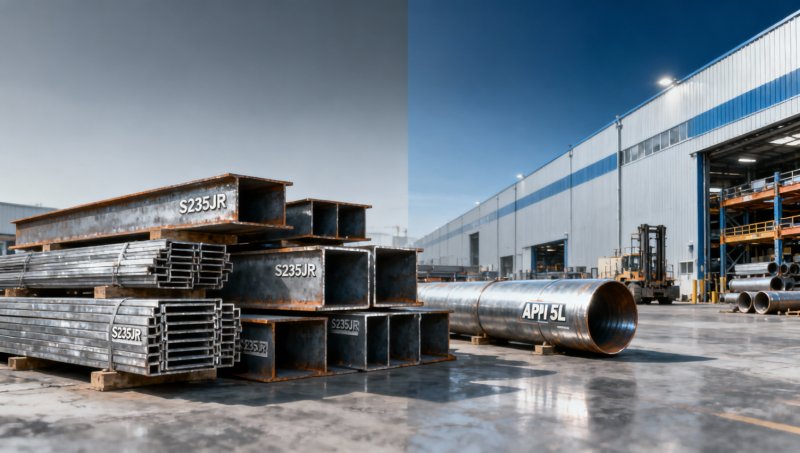
S235JR is one of the most widely used non-alloy structural steels in Europe and international export markets. In 2026, its price trend will likely be shaped less by one single factor and more by the interaction of supply chain stability, steelmaking input costs, downstream demand, and regional trade conditions.
For most market participants, the core search intent behind “S235JR Steel Price Trend in 2026” is to make better purchasing and planning decisions. They want to know:
- Whether prices are likely to rise or fall in the near term
- What factors will have the biggest impact on steel quotations
- When it is smarter to buy, negotiate, or sign longer-term contracts
- How S235JR compares with alternatives such as Q235 steel in sourcing strategy
Based on current industry patterns, 2026 may not bring a one-direction market. Instead, buyers should expect periodic swings. Seasonal construction demand, inventory levels at mills and traders, iron ore and coking coal costs, exchange rates, and export policies will continue to create pricing windows. This means companies with better market visibility and supplier coordination will usually gain more than those trying to time the market blindly.
What Factors Will Influence S235JR Steel Prices the Most?
For technical evaluators, procurement teams, and business decision-makers, understanding the structure behind steel pricing is more useful than watching isolated spot numbers. The following factors are likely to matter most in 2026.
1. Raw material costs
Iron ore, scrap, coking coal, and energy remain the foundation of steel pricing. If upstream inputs rise sharply, mills will try to pass those increases downstream. Even when demand is moderate, production costs can keep S235JR prices firm.
2. Construction and manufacturing demand
S235JR is widely used in buildings, machinery frames, general fabrication, and infrastructure. If global construction activity improves in Europe, the Middle East, and Southeast Asia, demand may support prices. If project delays continue or industrial activity weakens, price growth may be limited.
3. Freight and export logistics
Delivered steel cost is not only about mill price. Ocean freight, inland transportation, container availability, port efficiency, and customs-related delays can all change the real landed cost. For overseas buyers, a lower mill price may still result in a higher final procurement cost if logistics become unstable.
4. Regional standards and substitution
Some buyers compare S235JR steel with Q235 steel or other structural grades for budget reasons. While these materials may have similar applications in some projects, actual substitution depends on standard requirements, mechanical properties, certification, and approval by engineers or end users. If buyers expand sourcing flexibility across equivalent or near-equivalent grades where acceptable, they may gain more pricing leverage.
5. Trade policy and currency movement
Anti-dumping measures, import duties, VAT changes, and currency fluctuations can quickly affect competitiveness across supply origins. A supplier that seems cheaper in one quarter may become less attractive in the next because of exchange rate pressure or policy adjustments.
How Should Buyers, Engineers, and Project Teams Read the Market?
Different readers care about different outcomes, but most decisions come down to cost certainty, quality reliability, and delivery control.
For procurement managers
The main concern is total acquisition cost, not just the quoted price per ton. Evaluate supplier stability, MOQ, packaging, lead time, tolerance control, and claims response. A slightly higher price may still be the better option if it reduces project interruption and quality risk.
For engineers and technical reviewers
The focus is material compliance and suitability. Confirm standard equivalence, chemical composition, yield strength, tensile strength, impact performance where required, and processing compatibility. Price savings are only meaningful when the material fully meets design and safety requirements.
For finance and approvers
Budget predictability matters more than daily market noise. If 2026 remains volatile, structured procurement can help: split orders by milestone, use framework agreements, compare quarterly buying windows, and assess inventory carrying cost versus spot exposure.
For distributors and resellers
Margin protection depends on timing, stock turnover, and customer mix. Monitor demand from construction fabricators, machinery producers, and infrastructure contractors. Fast-moving, commonly specified dimensions may offer safer turnover than broad speculative inventory.
What Is a Smarter Sourcing Strategy for S235JR Steel in 2026?
The most useful response to price uncertainty is a sourcing strategy that balances flexibility and control. Buyers that do this well usually outperform those who focus only on headline market direction.
Use multiple quotation benchmarks
Compare local stockist prices, direct mill export prices, and trader offers. This helps identify whether a quote is influenced mainly by base steel cost, logistics, or margin layering.
Watch the processing and specification details
For structural applications, the true procurement cost may change with cutting, drilling, galvanizing, painting, testing, or custom fabrication. Standard products and OEM components should be quoted on a like-for-like basis.
Plan around lead time, not only price
Delays can cost more than a moderate price increase. This is especially true for project-based construction, industrial installation, and manufacturing schedules. Stable supply capacity and reliable delivery dates often create more value than marginal spot savings.
In many projects, buyers do not source only beams, channels, or angles. They may also need related plate or sheet products for fabrication and equipment applications. In such cases, it can be useful to work with suppliers that support broader structural and industrial steel needs. For example, Carbon Sheet Steel can be applied in construction, shipbuilding, petroleum, chemical industries, boiler heat exchanger systems, machinery, and hardware fields. Available options include hot rolled steel sheets and container corten steel plate, with thickness from 1mm to 100mm and customizable width and length for project requirements. For buyers managing mixed steel procurement, coordinated sourcing can improve consistency, documentation control, and delivery efficiency.
How Can You Reduce Purchasing Risk When Prices Fluctuate?
When the market is uncertain, buyers often ask not just “What is the price trend?” but “How do I avoid making a costly mistake?” The following practices are practical and effective.
- Confirm specification clearly: grade, standard, size tolerance, inspection requirements, surface condition, and destination use should all be defined before comparing prices.
- Request transparent quotations: ask whether the offer includes FOB, CFR, or CIF terms, test certificates, packaging, and any additional processing.
- Check supplier production capability: stable output and quality systems reduce delivery risk.
- Review certification and quality control: this is essential for project compliance, especially for export markets and engineered structures.
- Use phased purchasing: where possible, divide procurement into batches tied to actual project milestones.
- Track comparable market indicators: monitor raw materials, freight, and regional demand instead of relying only on one supplier’s market narrative.
For companies buying from China, the supplier’s export experience is also a major factor. A professional structural steel manufacturer and exporter with modern facilities, international standard compliance, and dependable lead times can help reduce sourcing uncertainty. This is particularly important for overseas buyers who need consistent communication, customized solutions, and stable quality across repeated orders.
Will 2026 Be a Good Year to Buy S235JR Steel?
For most end users and project buyers, 2026 can still be a workable procurement year if decisions are based on project timing and supply fundamentals rather than market guesswork. The best buying window will depend on your order size, delivery urgency, acceptable specification alternatives, and logistics route.
If your project has strict schedules, approved technical standards, or budget control requirements, waiting for the absolute lowest price is often less effective than securing reliable supply at a competitive and manageable level. On the other hand, if your demand is flexible, staged ordering may help you average costs and reduce exposure to short-term volatility.
In practical terms, buyers should treat the S235JR steel price trend in 2026 as a risk-management issue as much as a pricing issue. Market knowledge matters, but execution matters more: good timing, good supplier choice, and good contract clarity usually deliver the best result.
Conclusion
The S235JR steel price trend in 2026 is expected to be shaped by cost pressure, regional demand, logistics, and policy changes rather than by a simple up-or-down cycle. For buyers, engineers, distributors, and decision-makers, the most valuable approach is to look beyond headline price movement and focus on total sourcing value: compliance, delivery reliability, cost transparency, and procurement timing.
If you are evaluating future steel purchases, the strongest position is to prepare early, compare supply channels carefully, and work with reliable exporters that can support both standard structural steel and customized project needs. That approach will help you control budget, reduce risk, and make more confident steel purchasing decisions in 2026.
Please give us a message


Please enter what you want to find