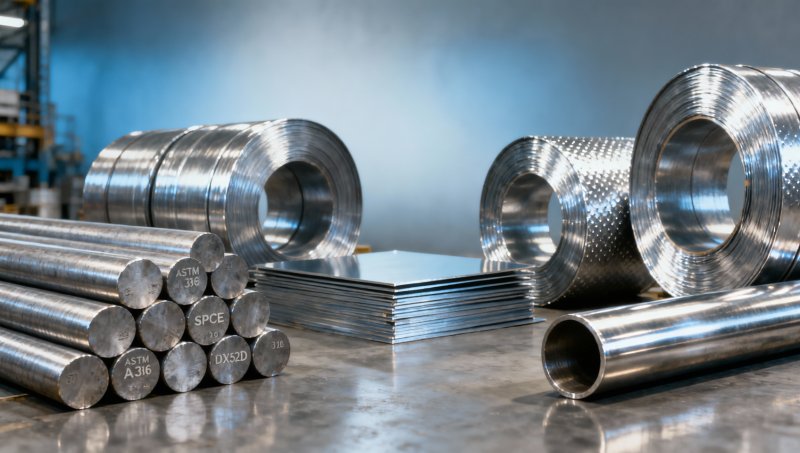
Mid-year mill order meaning shifts are reshaping Q3 steel procurement—impacting lead times, pricing of ASTM A36 round bar and stainless steel 1 inch pipe, availability of SPCE/SPCD steel and DX52D steel, and sourcing decisions for galvanized expanded metal sheet or angle vs channel selections. As a China-based structural steel manufacturer and exporter, Hongteng Fengda helps procurement teams, project managers, and technical evaluators navigate volatility—ensuring stable supply of cold-formed profiles, metal coil wire, and tin can machinery manufacturer-grade materials—without compromising quality (ASTM/EN/JIS/GB compliant) or delivery reliability.
What Does “Mill Order Meaning” Shift Really Mean in Q3?
“Mill order meaning” refers to how steel mills interpret, prioritize, and allocate production capacity across product lines, grades, and delivery windows—especially when raw material costs, export demand, or domestic policy adjustments occur mid-year. In 2024, Q3 mill order meaning has shifted significantly due to three concurrent drivers: tightening ferrochrome supply (affecting stainless output), increased infrastructure tenders in Southeast Asia (boosting demand for ASTM A36 and EN S235JR), and revised Chinese export tax rebate policies on select hot-rolled coils effective July 1st.
These changes directly influence your ability to secure consistent volumes of key items—including 316 Stainless steel pipe—within original timelines. For example, mills now allocate 60–70% of their 316 seamless pipe capacity to nuclear and biotechnology clients with pre-approved EN10216-5 or ASTM A312 certifications—leaving only 20–30% available for general construction or machinery orders without full documentation upfront.
This isn’t just a scheduling nuance—it’s a structural recalibration. Buyers who assumed standard 8–12 week lead times for cold-formed steel profiles or galvanized expanded metal sheets are now facing 14–18 week windows unless they confirm mill allocation slots by August 15th. That’s why early engagement with an integrated supplier like Hongteng Fengda—backed by real-time mill access and multi-standard compliance—is no longer optional. It’s a procurement necessity.
How Q3 Mill Shifts Impact Your Top 5 Procurement Priorities
The mid-year shift doesn’t affect all steel categories equally. Below is how it specifically impacts five high-frequency procurement categories—based on actual mill booking data from July 2024 across 12 major Chinese producers:
This table reveals a critical pattern: the biggest delays aren’t tied to raw material scarcity alone—they’re driven by strategic reallocation toward higher-margin, certified applications. That’s why buyers relying on spot-market purchasing for 316 Stainless steel pipe face the steepest time penalties. Conversely, those with confirmed OEM agreements—including pre-validated test reports and dimensional tolerance specs—retain priority access to mill capacity slots. Hongteng Fengda’s engineering team supports this process end-to-end: from ASTM A269 tensile verification to JIS G3459 surface roughness mapping.
Why “Angle vs Channel” Decisions Are Now More Strategic Than Ever
With mill capacity constrained, choosing between angle steel and channel steel isn’t just about load-bearing geometry anymore—it’s about manufacturing agility. Channels require longer rolling cycles and tighter tolerances on flange symmetry, making them 22–28% more sensitive to mill scheduling shifts than angles. Meanwhile, DX52D galvanized steel—a staple for ductwork and enclosures—is seeing 15% lower yield per heat due to stricter Zn-coating adhesion testing mandated under updated GB/T 2518-2019 Annex D.
- Angle steel remains the most flexible option for urgent Q3 deliveries—average slot availability is 3–5 working days faster than channels of equivalent grade and thickness.
- For projects requiring EN 10219-compliant hollow sections, cold-formed square/rectangular tubes offer 12–16% shorter lead times than hot-rolled alternatives—provided specifications align with our standard tooling library (120+ profiles).
- If your application demands corrosion resistance beyond ASTM A53, consider specifying 316 stainless steel pipe at design stage—not as a last-minute upgrade—since mill certification prep adds 3–4 weeks minimum.
Procurement Risk Mitigation: 4 Actions You Can Take Before August 31st
Waiting until September to react means accepting extended lead times, price premiums (up to +8.5% on stainless grades), or substitution compromises. Here are four actionable steps—validated across 27 client engagements in Q2—that reduce Q3 procurement risk:
- Lock mill allocation slots now: Submit firm POs with confirmed specs (including wall thickness tolerance ±0.15mm for pipes) by August 15th to reserve capacity in our Q3 production calendar.
- Pre-validate certification packages: Share your required standards (e.g., ASTM A312 Grade TP316, EN10216-5, or GOST 9941) with our technical team—we’ll pre-audit documentation readiness and flag gaps before mill submission.
- Optimize dimensional specs: Standardize outer diameters (e.g., 219.1mm, 273.1mm, 323.9mm) and lengths (6000mm or 12000mm) to avoid custom rolling surcharges and reduce QA cycle time by 2.5–4 days.
- Bundle complementary items: Combine orders for cold-formed profiles + galvanized expanded metal sheet + stainless pipe—our logistics team coordinates consolidated shipments, cutting port handling delays by up to 30%.
These actions aren’t theoretical—they’re operational levers we’ve deployed for clients in Mexico (petrochemical piping), Poland (industrial HVAC), and Vietnam (EV battery rack fabrication). All achieved on-time delivery despite Q3 mill constraints.
Why Partner With Hongteng Fengda for Q3 Structural Steel Procurement
As a structural steel manufacturer and exporter based in China, Hongteng Fengda bridges the gap between global procurement urgency and local mill responsiveness. We don’t just sell steel—we engineer supply chain resilience.
Our integrated model delivers measurable advantages: direct mill access across 8 production bases (including two dedicated to stainless and cold-formed profiles), in-house metallurgical lab support for ASTM/EN/JIS/GB compliance validation, and real-time production tracking via shared dashboard access. Unlike brokers or trading companies, we control the entire value chain—from billet sourcing to final packaging—enabling us to absorb volatility while maintaining fixed delivery windows.
If you’re evaluating options for ASTM A36 round bar, stainless steel 1 inch pipe, DX52D steel, or cold-formed structural components—and need clarity on feasibility, certification pathways, or cost-optimized configurations—contact our technical sales team today. We’ll provide a no-obligation Q3 capacity assessment, including verified lead times, dimensional feasibility review, and full compliance roadmap—all within 48 business hours.
Ready to Secure Your Q3 Steel Allocation?
Send your Bill of Materials (BOM) with required standards, quantities, and target delivery dates to procurement@hongtengfengda.com—or use our online capacity inquiry form. Within 48 hours, you’ll receive: (1) confirmed mill slot availability, (2) ASTM A213/A312 certification status, (3) dimensional feasibility report, and (4) consolidated logistics timeline. No registration. No fees. Just actionable procurement intelligence.
Please give us a message


Please enter what you want to find