For business decision-makers, lead time and MOQ risks in steel procurement often remain hidden until schedules slip, costs rise, or inventory pressure builds. In global structural steel sourcing, these late-emerging issues can directly affect project timelines, cash flow, and supplier reliability. Understanding where such risks come from is essential to making better purchasing decisions and building a more stable supply chain. In practice, lead time and MOQ risks in steel procurement are rarely caused by one issue alone. They usually develop through a combination of mill scheduling, order batching, specification complexity, logistics constraints, and weak communication across the supply chain.
Why lead time and MOQ risks in steel procurement emerge late
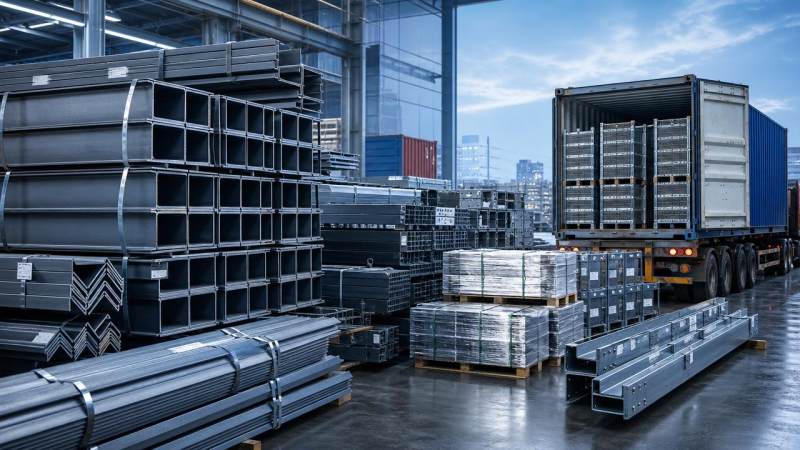
In the steel industry, many sourcing problems are not visible at the quotation stage. A supplier may confirm price and basic availability, but actual production slots, raw material allocation, finishing capacity, packaging sequence, and port booking are often verified later. This is why lead time and MOQ risks in steel procurement can stay hidden until a project enters execution. By then, changing suppliers, revising technical requirements, or splitting orders may no longer be easy or economical.
For structural steel products such as angle steel, channel steel, steel beams, cold formed profiles, and custom fabricated components, MOQ is closely tied to production efficiency. Mills and processors prefer order volumes that fit standard rolling plans, coating lines, cutting patterns, or container utilization. If a purchase quantity falls below the practical threshold, the buyer may face a higher unit price, delayed consolidation, or a request to wait for similar orders. Lead time then extends not because capacity is unavailable, but because the order does not match the supplier’s preferred production rhythm.
Key industry signals behind hidden sourcing delays
In global steel trade, several signals often indicate that lead time and MOQ risks in steel procurement may surface later than expected. These signals are worth checking early, especially when projects depend on imported structural materials that must meet ASTM, EN, JIS, or GB standards.
- Quoted lead times are general rather than tied to confirmed mill schedules.
- MOQ is described vaguely as “negotiable” without defining size, grade, or processing conditions.
- Custom dimensions, drilling, coating, or fabrication are added after the initial quotation.
- The order includes mixed specifications that require separate production runs.
- Logistics plans rely on later cargo consolidation or uncertain vessel space.
- Inspection, documentation, or certification needs are not fixed at the start.
These conditions matter because steel procurement is highly operational. A seemingly simple order can move through raw material purchasing, rolling or forming, secondary processing, surface treatment, quality inspection, bundling, inland transport, customs handling, and ocean shipment. If MOQ is below the economical level at any stage, the supplier may postpone action until enough volume accumulates. The delay appears late, but the root cause was present from the beginning.
How these risks affect cost control and project stability
The main impact of lead time and MOQ risks in steel procurement is not limited to delayed delivery. They also reshape total landed cost. When orders fail to meet practical batch sizes, buyers may absorb surcharges for setup, waste, packaging, inspection, or less-than-container shipping. If delivery slips, downstream costs can include idle labor, disrupted installation sequences, temporary substitutions, emergency freight, and increased working capital. In large construction and industrial programs, a small sourcing mismatch can trigger disproportionately large financial effects.
The risk becomes more serious when custom or nonstandard items are involved. For example, a buyer may order mainstream structural sections together with special accessories, perforated profiles, or fine stainless components used in filtration, architectural detailing, or industrial screening. In such cases, it is important to understand whether all items can be produced and shipped under aligned schedules. A product such as Stainless Steel Welded Mesh may be specified for filters, sieves, chemical applications, mining, architecture, or residences, with grades including SS 201, 304, 304L, 316, 316L, and 430. Its broad technical range—such as 2-635 mesh, wire diameter from 0.0008″-0.12″, roll width up to 240″, and customized plain or twill weave options—shows how specification complexity can influence both MOQ expectations and delivery planning.
When mixed-product procurement is handled without clear sequencing, the slowest or least economical item can hold back the entire shipment. That is why dependable exporters with stable production capacity, modern manufacturing facilities, and strict quality control provide more than products alone. They reduce uncertainty by clarifying realistic lead times, confirming compatibility between standard and OEM orders, and matching delivery commitments with actual factory planning.
Typical steel procurement situations where late risk appears
The table below summarizes common scenarios where lead time and MOQ risks in steel procurement tend to emerge after the order is already moving forward.
Practical ways to reduce sourcing uncertainty
The most effective response to lead time and MOQ risks in steel procurement is to address them before the purchase order is finalized. This means validating operational details, not just commercial terms. Reliable steel sourcing depends on whether the supplier can convert drawings, grades, dimensions, and shipping conditions into a realistic execution plan.
- Ask for MOQ by product type, size range, and processing step rather than one general figure.
- Confirm whether quoted lead time starts from deposit, drawing approval, raw material readiness, or booking confirmation.
- Separate standard items from highly customized items if they have different production cycles.
- Check whether third-party inspection, special packaging, or compliance documents add extra days.
- Align shipment plans with realistic container fill rates and destination schedules.
- Build a buffer for products with wide technical variation, especially when customization is required.
Supplier selection is also central. A structural steel manufacturer and exporter with experience across North America, Europe, the Middle East, and Southeast Asia is typically better prepared to manage standard compliance, production coordination, and documentation accuracy. Stable capacity matters because it allows better schedule discipline when handling angle steel, channel steel, beams, cold formed sections, and customized structural components in parallel. Strict quality control matters because rejected or reworked batches are one of the least visible causes of delayed export delivery.
A more reliable decision path for future orders
Lead time and MOQ risks in steel procurement should be treated as planning variables, not last-minute surprises. The best decisions come from mapping the entire path from specification to shipment: what can be produced immediately, what requires batching, what depends on outside processing, and what may be delayed by logistics or certification. When that path is clear, buyers gain more control over budget timing, inventory pressure, and project continuity.
For future sourcing, the next practical step is to review current steel items by volume, customization level, and schedule criticality, then compare them against supplier production logic. This approach helps identify where lead time and MOQ risks in steel procurement are most likely to surface and where adjustments in lot size, specification standardization, or shipment strategy can create immediate improvement. In a market where steel availability may look stable on paper but vary in execution, clear planning and dependable supply partners remain the strongest protection against late-emerging procurement risk.
Please give us a message


Please enter what you want to find