For project managers planning coastal builds, choosing galvanized steel for construction is often a balance between upfront cost and long-term performance. In harsh marine environments, corrosion resistance, durability, and reduced maintenance can significantly impact project timelines and lifecycle expenses. This article examines whether galvanized steel is worth the investment for coastal projects, helping decision-makers evaluate value, reliability, and sourcing options from a trusted structural steel supplier.
Why coastal projects demand a different material decision
Coastal construction is not just another building scenario. Salt-laden air, high humidity, wind-driven moisture, and occasional spray exposure all accelerate corrosion. For project managers, this means the cheapest steel option can become the most expensive one once repainting, repair access, and service interruptions are counted. That is why galvanized steel for construction is often evaluated not only by purchase price, but by how well it protects structural assets over time.
In practice, the real question is not whether galvanized steel costs more than untreated carbon steel. The better question is whether the reduction in maintenance frequency, downtime risk, and replacement exposure justifies the premium in your specific project setting.
Where galvanized steel for construction delivers the most value
Different coastal project types face different levels of exposure. A sheltered warehouse near the shore does not need the same protection level as a pier-side utility structure or an open-air industrial platform. Below is a practical way to judge fit by scene and operating pressure.
For many of these scenes, galvanized steel for construction is most attractive when the asset must remain stable for years with limited maintenance windows. That is especially relevant for project managers responsible for remote sites, phased handovers, or assets that cannot be easily closed for repairs.
How product selection changes the answer
Material choice is not only about coating. Structural members, reinforcement-related bar products, and fabricated components all behave differently in coastal service. For example, Wire Rod in carbon steel form is often considered in downstream processing for structural steel bar applications, where formability and weldability matter during fabrication. When a project team compares options, they should verify the full specification set, not just the corrosion label.
If your supply chain requires consistent standards, look for products that align with ASTM, GB, EN, DIN, or JIS requirements. In coastal projects, common decision factors include yield strength, fabrication ease, coating consistency, and whether the final component will be welded, cut, bent, or assembled on site. A material that performs well in storage may still fail project expectations if it is difficult to fabricate or if coating damage occurs during installation.
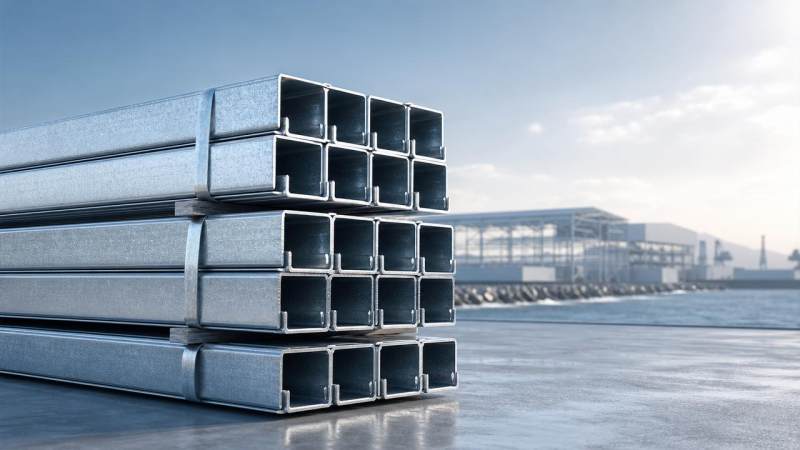
Scene-based comparison for project managers
When the extra cost is justified, and when it is not
Galvanized steel for construction is usually worth the cost when three conditions are present: the project has meaningful salt exposure, maintenance access is difficult, and failure consequences are expensive. Examples include coastal industrial facilities, exposed service structures, utility supports, and building components that are costly to replace after commissioning.
It may be less compelling when the structure is fully sheltered, service life is short, or the design already includes another corrosion-control system that delivers comparable protection. In those cases, project managers should compare coating thickness, fabrication requirements, and total installed cost rather than assuming one material is always superior.
Common mistakes coastal buyers should avoid
One frequent mistake is treating all “galvanized” products as equal. Coating process, surface preparation, and after-fabrication handling can change performance significantly. Another mistake is ignoring compatibility between welded joints, cut edges, and fasteners. Even a strong base material can underperform if the project team fails to protect exposed areas after installation.
A second common issue is buying only on price without confirming supplier consistency. For coastal work, stable production capacity, standard compliance, and reliable lead times matter because schedule slips can push installation into bad weather windows and increase handling damage. That is why many buyers prefer a structural steel partner that can support both standard and customized requirements with documented quality control.
Practical sourcing guidance for project teams
If your project is moving from concept to procurement, ask suppliers for the exact product standard, coating specification, fabrication tolerance, and test documentation. For teams sourcing internationally, it also helps to confirm whether the mill can support mixed order sizes, OEM requests, and export packaging suitable for marine logistics. These details reduce risk more effectively than a simple price comparison.
For structural applications, Hongteng Fengda supplies angle steel, channel steel, steel beams, cold formed steel profiles, and customized structural components to buyers across North America, Europe, the Middle East, and Southeast Asia. If your coastal project needs dependable supply, technical coordination, and standards-based production, early supplier review can save both time and budget.
FAQ: quick answers for coastal project managers
Is galvanized steel for construction always the best choice near the sea?
No. It is strongest when exposure is high and maintenance access is limited. Sheltered or short-life projects may justify other options.
Does galvanized steel reduce maintenance costs?
Usually yes, especially when compared with untreated steel in corrosive environments.
What should buyers confirm first?
Project exposure level, service life target, fabrication needs, and supplier compliance with ASTM, GB, EN, DIN, or JIS standards.
For coastal projects, the cost question is really a lifecycle question. If the structure must stay reliable, safe, and low-maintenance in a corrosive environment, galvanized steel for construction is often a smart investment. The best decision comes from matching the material to the scene, the risk, and the operating plan. When you need a dependable sourcing partner, confirm specifications early and align your steel supply with the real conditions your project will face.
Please give us a message


Please enter what you want to find