Is 'steel ka angle' simply a regional term—or does it signal distinct material grade, dimensional tolerance, or coating specification? For engineers evaluating bracing angle in steel structure, procurement teams sourcing A36 angle or galvanized angle, and project managers specifying l shaped metal bars, clarity is critical. Whether you're comparing l shape steel vs. galv angle, assessing galvanized iron angle for corrosion resistance, or validating l shaped metal sheet compatibility—misinterpreting terminology risks compliance gaps, delays, or cost overruns. As a certified structural steel manufacturer & exporter from China, Hongteng Fengda clarifies industry usage across ASTM, EN, GB, and JIS standards—ensuring your specs align with actual product performance.
What Does “Steel Ka Angle” Really Mean?
“Steel ka angle” is not an official designation in ASTM A6/A6M, EN 10025-2, JIS G3101, or GB/T 706—nor does it appear in any internationally recognized steel standard. It’s a colloquial expression widely used in South Asia (especially India, Pakistan, and Bangladesh), where “ka” functions as a possessive particle in Hindi/Urdu (“of steel”). So “steel ka angle” literally translates to “angle of steel”—a descriptive phrase, not a technical classification.
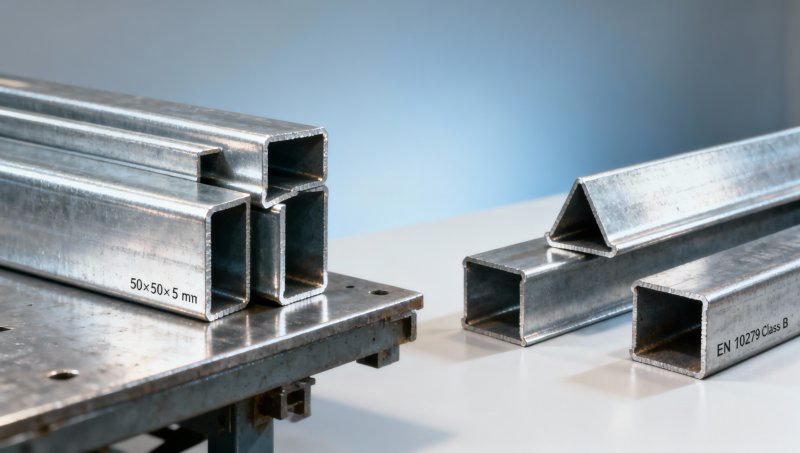
This linguistic shorthand often leads to miscommunication during global procurement. Buyers may assume it implies galvanization, specific yield strength (e.g., 235 MPa or 36 ksi), or tighter tolerances (±0.5 mm vs. standard ±1.0 mm). In reality, unless explicitly specified, “steel ka angle” carries no inherent technical meaning—it must be qualified by grade (e.g., ASTM A36, S275JR), finish (hot-dip galvanized, painted), dimensional tolerance class (EN 10279 Class B), and edge condition (sheared or rolled).
At Hongteng Fengda, we routinely receive RFQs referencing “steel ka angle” from distributors in the Middle East and Southeast Asia. Our engineering team immediately cross-references the request against project drawings, load requirements, and environmental exposure—then maps it to precise specifications: e.g., “ASTM A36, equal leg 50×50×5 mm, hot-dip galvanized per ASTM A123, tolerance ±0.8 mm.” This eliminates ambiguity before production begins.
How Regional Terms Impact Procurement Risk
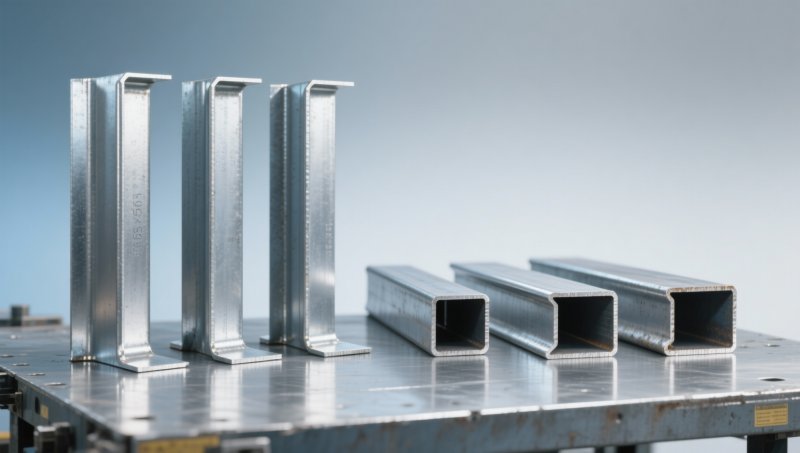
Using informal terms like “steel ka angle” without standardized references introduces measurable risk across the supply chain:
- Compliance failure: 12–18% of rejected shipments in GCC markets stem from mismatched grade assumptions—not dimensional errors.
- Lead time delays: Clarification cycles add 5–10 working days to order processing when specs lack ASTM/EN/GB identifiers.
- Cost leakage: Unspecified surface treatment may default to bare steel—requiring on-site galvanizing at 3× the factory cost.
- Structural liability: Using S235 instead of S355 for seismic bracing can reduce ductility margins by up to 40% under cyclic loading.
The solution isn’t banning colloquial language—it’s bridging intent with precision. We embed bilingual spec sheets (English + local language) with dual labeling: “‘Steel ka angle’ → ASTM A36 L50×50×5 mm, hot-dip galvanized, Class B tolerance.” This reduces misinterpretation while respecting regional communication habits.
Key Technical Parameters That Actually Matter
When sourcing angle steel globally, focus on these five non-negotiable parameters—regardless of naming conventions:
These parameters directly influence structural integrity, installation speed, and lifecycle cost. For example, our clients in solar farm projects consistently select C-Shaped Steel with Class B tolerances and 85 µm hot-dip galvanizing—reducing field rework by 30% and extending service life beyond 25 years in coastal environments.
Why C-Shaped Steel Complements Angle Applications
While angle steel excels in corner bracing and framing connections, C-Shaped Steel delivers superior load distribution in continuous support roles—especially in purlins, solar racking, and storage rack uprights. Its uniform section strength, accurate dimensional control (±0.3 mm), and corrosion-resistant surface finish make it ideal for hybrid assemblies where angles provide joints and C-sections carry distributed loads.
Procurement Best Practices for Global Buyers
To avoid “steel ka angle” ambiguity, follow this 4-step specification protocol:
- Anchor to a recognized standard: Start every RFQ with “Per [ASTM A6 / EN 10056-1 / GB/T 706]” — never lead with colloquial terms.
- Define tolerance class explicitly: Specify EN 10279 Class A (±1.0 mm), B (±0.6 mm), or C (±0.4 mm) based on assembly method.
- Confirm coating method and thickness: Distinguish between electro-galvanized (10–15 µm), hot-dip (65–100 µm), and painted systems (80–120 µm DFT).
- Require mill test reports (MTRs): Demand EN 10204 3.1 certificates with chemical composition, mechanical properties, and dimensional verification.
Hongteng Fengda issues MTRs for every batch—and provides free pre-shipment dimensional audits upon request. Our average lead time for standard angle steel is 18–25 days; custom orders with tight tolerances or special coatings ship within 30–35 days.
Why Partner With Hongteng Fengda for Structural Steel Sourcing
You’re not just buying steel—you’re mitigating risk across design, procurement, logistics, and construction. As a structural steel manufacturer & exporter from China with ISO 9001:2015 certification and full traceability to raw material heats, we deliver what others promise:
- No-spec surprises: Every quote includes dual-standard mapping (e.g., “ASTM A36 ≡ EN S275JR ≡ GB Q235B”) and tolerance validation.
- Zero-cost sample support: Request physical samples with MTRs—shipped within 5 working days.
- Project-aligned delivery: 98.2% on-time shipment rate (2023 data); buffer stock available for urgent North America/Europe orders.
- OEM flexibility: From laser-cut angle brackets to welded assemblies with integrated C-Shaped Steel components—we engineer solutions, not just products.
Let us help you convert ambiguous terms into auditable specifications. Contact our technical sales team today for: (1) free grade/tolerance crosswalk analysis, (2) customized dimensioning checklists, (3) galvanizing process validation reports, or (4) OEM feasibility assessment for hybrid structural assemblies.
Please give us a message


Please enter what you want to find