Industrial pipes often fail long before expected due to factors many buyers and engineers overlook, from material mismatch and poor corrosion planning to non-compliance with steel standards. Whether you are comparing ASTM A106 Gr B options, selecting Corrosion Resistant Steel, or sourcing galv steel tube for demanding applications, understanding these hidden risks is essential to reduce downtime, control costs, and improve long-term project reliability.
In steel-intensive industries, pipe failure is rarely caused by one dramatic mistake. More often, it results from 3 to 5 small decisions made early in design, sourcing, fabrication, and site handling. For project managers, procurement teams, quality inspectors, and maintenance personnel, these overlooked factors can turn a pipe system expected to serve 10–20 years into one that leaks, corrodes, or cracks in less than 36 months.
For global buyers working with Chinese steel suppliers, the challenge is not only price comparison. It is also about matching steel grade, manufacturing process, surface protection, dimensional tolerance, and compliance documents to the real service environment. Hongteng Fengda, as a structural steel manufacturer and exporter from China, supports international projects by focusing on stable quality, standard compliance, and practical steel solutions that reduce sourcing risk and improve lifecycle value.
Material mismatch is still one of the most common causes of early pipe failure
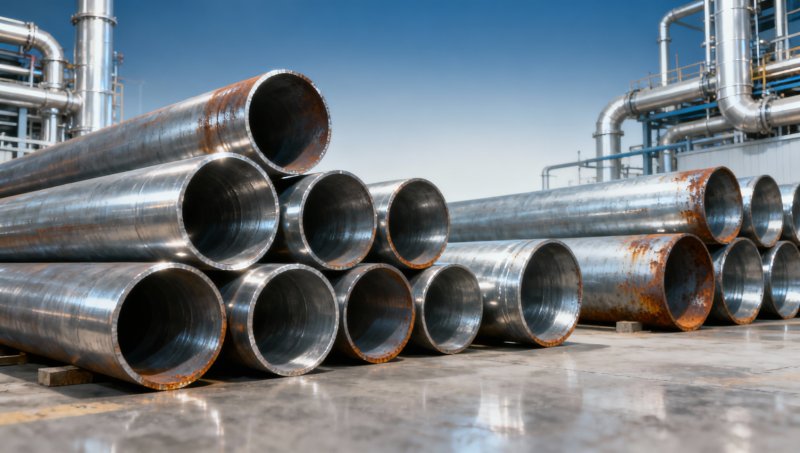
A pipe may meet basic dimensional requirements and still fail early if its material grade does not fit the operating conditions. This happens when buyers select steel mainly by nominal specification or unit cost, without checking pressure range, temperature fluctuation, medium composition, or weldability. In many industrial systems, a mismatch of even 1 grade level can significantly shorten service life.
For example, ASTM A106 Gr B is widely used for high-temperature service, while ASTM A53 may be chosen for general mechanical or low-pressure applications. If the pipe carries hot fluids above 400°F or works under cyclic pressure, using a lower-suitability option can increase the risk of thinning, deformation, or weld failure. The issue is not that one standard is good and another is bad, but that selection must follow the application.
Another overlooked issue is assuming all carbon steel behaves similarly. In practice, chemical composition, yield strength, wall thickness consistency, and heat treatment history all affect performance. Grades such as Q345, S355JR, or 16Mn may offer excellent structural capability, but pipe systems exposed to corrosive media, abrasion, or repeated thermal shock need more than strength alone.
Typical mismatch scenarios
- Choosing general carbon steel for mildly acidic or chloride-rich environments without corrosion allowance.
- Using thin-wall pipe in systems with pressure spikes of 15%–25% above normal operating range.
- Selecting a grade with acceptable strength but poor low-temperature toughness for outdoor winter service.
- Ignoring weld zone performance when the installation requires multiple field joints over 6 m to 12 m pipe lengths.
Before purchase, technical evaluation should include at least 4 checkpoints: service medium, temperature range, pressure range, and expected maintenance interval. In many projects, this basic review takes less than 1 day but can prevent months of repair work later.
The table below shows how selection errors usually begin, and what decision-makers should verify before approving a steel pipe order.
The key takeaway is straightforward: the cheapest pipe on a quotation sheet may become the most expensive line item over a 2-year maintenance cycle. Matching grade to operating conditions is one of the highest-value decisions in industrial steel procurement.
Corrosion planning often fails before the pipe is even installed
Many pipe systems are exposed to corrosion from day one, yet corrosion control is still treated as an optional upgrade instead of a core design variable. Buyers often ask whether galvanized pipe, black steel pipe, or coated carbon steel is cheaper, but the better question is which option fits the exposure profile for the next 5, 10, or 15 years.
Poor corrosion planning usually starts with incomplete environmental classification. Outdoor industrial sites may combine rainwater, UV exposure, dust, and temperature cycling from -10°C to 45°C. Marine or coastal areas add salt spray. Processing plants may expose pipes to alkaline washdown, acidic vapor, or abrasive particles. Under these conditions, untreated carbon steel can deteriorate far faster than expected, especially at weld seams, cut edges, threaded ends, and pipe supports.
This is why surface treatment must be discussed together with steel grade, not after the order is placed. Common finishes such as passivation, oiling, lacquer sealing, phosphating, anti-rust oil, galvanized coating, or black painting each serve different storage and service objectives. A surface treatment that is sufficient for 60–90 days of transport and warehouse protection may not be enough for multi-year field exposure.
Corrosion risk points buyers often miss
1. Welded and cut areas
Even when the base material is acceptable, coating damage at welded zones creates early corrosion entry points. If post-weld touch-up is inconsistent, rust can appear within 3–6 months in humid environments.
2. Hidden water traps
Pipe supports, flanges, low points, and enclosed channels can hold moisture longer than open surfaces. These zones need added drainage, coating attention, or a corrosion allowance in the wall thickness.
3. Storage before installation
Steel stored outdoors for 4–8 weeks without proper cover, spacing, or end protection may begin to corrode before it reaches the line. This problem is common in large projects where installation phases are delayed.
A realistic corrosion strategy should combine 3 layers of control: correct material choice, suitable surface protection, and proper site handling. Skipping any one of these can reduce the benefit of the other two.
The comparison below helps procurement and technical teams align surface protection with actual service conditions.
The selection should be based on exposure time, repair accessibility, and total lifecycle cost. In many industrial projects, paying slightly more for the right corrosion plan can reduce unscheduled maintenance by 1–2 intervention cycles per year.
Standards, tolerances, and traceability gaps create hidden failure risks
A pipe can look acceptable at delivery and still be risky if documentation, dimensional control, or traceability is weak. This is especially relevant for international sourcing, where buyers may compare ASTM, EN, JIS, and GB-based products in the same RFQ. If standards are mixed without engineering review, the result may be inconsistent chemistry, tolerance variation, or confusion during inspection and installation.
Good quality control begins with clear specification alignment. The order should define at least 6 items: grade, standard, dimensions, length, surface condition, and inspection requirements. Additional details such as end condition, heat number traceability, packing method, and test certificate format often make the difference between smooth delivery and site rejection.
Dimensional tolerance also matters more than many buyers expect. If diameter or wall thickness deviates beyond practical fit-up range, installers may face alignment issues, poor welding preparation, or extra machining time. Even a small deviation can slow installation across 100, 300, or 500 pipe pieces.
What a robust verification process should include
- Confirm the governing standard, such as ASTM, EN, JIS, or GB, before issuing purchase orders.
- Review mill test certificates for chemistry and mechanical properties rather than accepting summary statements only.
- Check dimensional tolerance against installation requirements, especially for wall thickness and straightness.
- Verify heat number marking or batch traceability for projects with strict QA/QC procedures.
- Inspect coating or surface condition after loading, unloading, and site storage.
In support applications around pipe systems, related steel components also need the same discipline. For example, brackets, supports, machine bases, or reinforcement parts are often fabricated from round bars or profiles. A practical option for such applications is Carbon Steel Round Bar, available in carbon steel grades including A53(AB), A106(A.B), 10#, 20#, 45#, S235JR, S355JR, ST37, ST52, X42 to X70, and 30CrMo, with diameters from 5–2500 mm and common lengths of 2 m, 5 m, 6 m, and 12 m.
For project teams, this type of supporting steel is relevant because pipe reliability also depends on surrounding fabricated parts. Poorly chosen support members can concentrate stress, increase vibration, or accelerate coating damage. Materials with excellent strength and wear resistance, when supplied to AISI, ASTM, DIN, JIS, GB, or EN references as required, can improve overall system stability in construction, water supplying, railing, handrail, fence, and industrial fabrication environments.
The table below highlights common compliance gaps that lead to downstream failures or commercial disputes.
For global procurement, standards are not just paperwork. They directly influence fit-up efficiency, inspection reliability, and service performance over the first 12–24 months of operation.
Installation, handling, and maintenance errors shorten pipe life faster than expected
Even correctly specified industrial pipes can fail early if they are mishandled during transport, storage, welding, or commissioning. In many cases, failure analysis points back to site practices rather than mill defects. This is why project owners, contractors, and maintenance teams should treat installation control as part of the material quality chain.
Transport damage is a common first step. Pipes dragged instead of lifted, bundled without proper separation, or stored directly on wet ground can develop coating breaks, end deformation, or localized corrosion. Once these defects are hidden under insulation, supports, or painted touch-up, they may go unnoticed until leakage appears months later.
Welding quality is another high-risk area. Excessive heat input, poor bevel preparation, contamination, or rushed field alignment can create weak joints. If the system then operates under vibration, temperature cycling, or pressure fluctuation, the joint becomes the first point of failure. For long pipe runs, even a small percentage of poor welds can create a major maintenance burden.
Four practical controls for longer pipe service life
- Store pipes on raised supports with drainage clearance, not directly on soil or standing water.
- Inspect 100% of visible coating damage before installation, especially at ends, lifting points, and weld prep zones.
- Apply qualified welding procedures and verify fit-up dimensions before field joining begins.
- Set inspection intervals based on service severity, often every 3 months, 6 months, or 12 months depending on environment.
Maintenance should be planned, not reactive
Reactive maintenance is expensive because it usually starts after leakage, shutdown, or contamination risk appears. A planned program should include wall loss checks, coating inspection, support condition review, and moisture trap assessment. In corrosive or outdoor service, annual inspection may be too infrequent; some systems require quarterly review.
For buyers comparing suppliers, after-sales support matters here. Reliable exporters do more than ship steel; they help define packing, marking, inspection scope, and delivery coordination so the material arrives in usable condition. This is especially valuable for multi-country projects where lead times of 2–6 weeks and phased installation schedules must stay aligned.
How buyers can reduce sourcing risk and choose a more reliable steel partner
Industrial pipe performance depends not only on product selection but also on supplier capability. A qualified steel manufacturer or exporter should be able to support standard specifications, custom processing needs, consistent documentation, and stable lead times. This is particularly important for distributors, EPC teams, plant operators, and commercial reviewers balancing cost against risk.
A useful supplier review framework should cover 5 dimensions: manufacturing capability, standards coverage, quality control, export experience, and communication speed. If one of these is weak, the buyer may face delayed clarification, inconsistent batches, or preventable non-conformance during inspection. Low initial pricing often hides these operational costs.
Hongteng Fengda supports global construction, industrial, and manufacturing projects with structural steel products, cold formed profiles, steel beams, angle steel, channel steel, and customized components. For buyers who need steel products aligned with ASTM, EN, JIS, or GB requirements, that capability helps reduce sourcing complexity and improve confidence in cross-border procurement decisions.
A practical procurement checklist
- Request clear standard references and available grade ranges before quotation comparison.
- Confirm production scope, including whether OEM or custom fabrication is possible.
- Ask about inspection process, certificate format, and batch traceability before order confirmation.
- Review typical delivery windows, such as 7–15 days for stock-related items or 3–6 weeks for customized production.
- Check packing and export handling details to reduce transit damage and unloading loss.
Who benefits most from this approach
This disciplined sourcing method benefits technical evaluators needing compliance clarity, procurement teams managing total landed cost, financial approvers reviewing risk exposure, QC staff monitoring acceptance consistency, and maintenance teams that will live with the long-term consequences of early material decisions.
Early pipe failure is usually preventable. When buyers align steel grade, corrosion protection, standards compliance, installation control, and supplier capability from the start, they reduce unplanned downtime, improve lifecycle cost performance, and build a more reliable project outcome.
If you are evaluating steel solutions for industrial, structural, or project-based applications, Hongteng Fengda can support specification review, customized supply planning, and export-oriented service. Contact us now to discuss your project, request product details, or get a tailored sourcing solution for safer and more dependable steel performance.
Please give us a message


Please enter what you want to find