Industrial steel tubing rarely fails without warning—more often, the first sign is a small but critical detail that goes unnoticed. For after-sales maintenance teams, the real challenge is not only fixing visible damage, but identifying the early conditions that lead to cracking, deformation, leaks, or structural loss.
In most cases, industrial steel tubing problems begin with surface damage, poor alignment, unbalanced loading, unsuitable support spacing, or unnoticed corrosion at contact points. When these issues are missed during inspection or service follow-up, minor defects can grow into shutdowns, safety incidents, and expensive replacement work.
This article focuses on the practical questions maintenance personnel ask most often: where failure usually starts, what warning signs matter, how to inspect more effectively, and which corrective actions reduce repeat problems. The goal is to help teams make better field judgments before a tubing issue becomes a major failure.
Why small details cause major industrial steel tubing failures
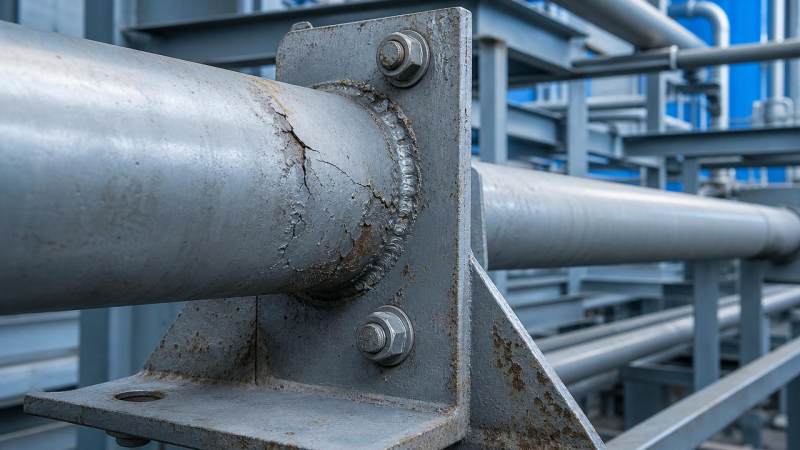
Most industrial steel tubing failures are progressive, not sudden. The tube may still look serviceable from a distance, yet local stress is already concentrating around one overlooked point. That point may be a scratch, dent, weld toe, unsupported span, clamp mark, or corrosion pit.
For maintenance teams, this matters because the visible break is often not the true starting point. The final crack or deformation usually appears where the material has already been weakened by repeated loading, environmental attack, or poor fit-up over time.
In service environments, steel tubing is expected to handle load transfer, vibration, movement, weather exposure, and sometimes temperature variation. If one connection is slightly misaligned or one support is carrying more than it should, stress does not stay evenly distributed.
That is why small defects become serious. Once stress becomes localized, the tubing may begin to yield, buckle, fatigue, or corrode faster in that exact area. The maintenance lesson is simple: the earlier the concentration point is found, the easier the repair decision becomes.
What after-sales maintenance teams should check first
When a customer reports a tubing-related issue, the first step is not immediate replacement. The first step is to determine whether the problem is isolated damage or evidence of a larger installation or operating condition. This saves time and prevents repeat failure.
Start with the service history. Check when the tubing was installed, what loads it carries, whether any process changes have been made, and if nearby equipment causes vibration, impact, heat, or moisture exposure. Failure rarely makes sense without operating context.
Then inspect the geometry. Look for bowing, twisting, flattening, denting, wall thinning, misalignment at joints, loosened connections, and gap changes at support points. These details often reveal whether the tubing has been overloaded, poorly supported, or forced out of position.
Next, examine the surface condition carefully. Coating damage, rust bleed, abrasion, scale loss, pitting, and discoloration are not cosmetic issues alone. They often indicate where environmental attack, friction, or trapped moisture has already reduced local durability.
Finally, compare the failed or suspect section with adjacent members. If only one location shows distress, the root cause may be impact or fabrication error. If similar signs appear across several points, the system design, support arrangement, or maintenance interval may need correction.
The overlooked details that most often trigger tubing failure
One of the most common starting points is surface damage created during transport, handling, or installation. A small gouge, clamp scar, or edge bruise may appear harmless, but it can act as a stress raiser when the tubing enters service.
Another frequent cause is poor fit-up during assembly. If connected components do not align naturally, installers may force the tubing into place. This introduces residual stress before the system even begins normal operation, reducing fatigue life from the start.
Incorrect support spacing is also a major issue. When the span is too long, industrial steel tubing may sag, vibrate excessively, or deflect under repeated service loads. Over time, this creates fatigue around supports, welds, and transition zones.
Contact corrosion is often overlooked because it develops in hidden areas. Moisture trapped under brackets, clamps, sleeves, or accumulated debris can attack the steel surface gradually. By the time external rust becomes visible, section loss may already be significant.
Weld-adjacent areas deserve special attention as well. Not every weld problem comes from poor welding quality. Sometimes the issue is undercut, uneven transition, spatter left in place, or coating discontinuity beside the weld, which creates a weak point under service stress.
Improper loading is another common trigger. Tubing designed for one structural role may later be used to support cables, secondary equipment, temporary platforms, or piping. These added loads are often undocumented, but they change stress distribution immediately.
How to tell whether the problem is corrosion, fatigue, or overload
Maintenance teams often need to make quick field judgments, especially when production cannot stop for long. A useful approach is to identify the dominant damage pattern instead of focusing only on the final visible defect.
Corrosion-related damage usually shows wall loss, pitting, scaling, flaking, or rust concentration in moisture-prone locations. It commonly appears near base plates, supports, crevices, splash zones, and covered contact surfaces where water or chemicals remain trapped.
Fatigue damage tends to appear as cracks starting from a specific initiation point. That point is often a notch, weld toe, surface scar, or area of repeated movement. The crack may be small at first, but it grows progressively under cyclic loading.
Overload damage more often results in bending, buckling, permanent deformation, ovalization, or tearing near the highest stress region. Unlike fatigue, overload may happen in one event, but repeated overloading can also create cumulative distortion before final failure occurs.
In practice, damage modes can overlap. Corrosion can reduce wall thickness, then vibration causes fatigue cracking in the weakened section. Or poor support creates deformation, which removes coating and accelerates corrosion. Good diagnosis means understanding this sequence, not just naming one defect.
Practical inspection methods that improve field decisions
Visual inspection remains the first and most valuable tool, but it must be systematic. Instead of scanning broadly, inspect by zones: connection points, support points, weld zones, mid-span sections, moisture traps, and areas exposed to movement or mechanical contact.
Use consistent lighting and inspect from multiple angles. Small cracks, dents, and coating breaks are easy to miss when viewed only from the front. A flashlight, mirror, straightedge, and thickness gauge can greatly improve detection quality during routine service work.
Photographic comparison is also useful. If maintenance teams document the same tubing sections during each service visit, changes become easier to identify. Progressive distortion, coating loss, or rust spread is often more obvious in comparison than in a single inspection.
Where risk is higher, simple measurement checks should be standard. Record wall thickness in corrosion-prone areas, support spacing, local deflection, and dimensional changes near loaded connections. These objective values help distinguish normal wear from structural concern.
If cracking is suspected, do not rely on surface appearance alone. Depending on the service importance, non-destructive testing such as dye penetrant, magnetic particle inspection, or ultrasonic evaluation may be necessary to define the actual defect extent.
How material selection and nearby steel components affect service life
Failure prevention does not depend only on the tube itself. In many industrial settings, tubing works alongside floor plates, channels, beams, supports, and custom steel fabrications. If nearby components are poorly matched to the service environment, tubing distress can increase.
For example, maintenance zones around equipment often require anti-slip and durable walking surfaces. In those areas, choosing a product such as SM400A Patterned steel plate can improve access safety while reducing slip risk during inspection and repair work.
This type of patterned plate is widely used in transportation, construction, machinery areas, shipbuilding, and floors around equipment. With thickness options from 2 mm to 8 mm and compliance with standards such as ASTM, JIS, DIN, GB, and ISO, it fits many industrial support environments.
For maintenance teams, the relevance is practical. Better platform stability, durable surface performance, and proper surrounding steel selection can reduce accidental impacts, poor technician footing, and uncontrolled loading on adjacent industrial steel tubing during service tasks.
Whether using tubing, beams, channels, or patterned plate, the best field outcome comes from coordinated material choice, correct installation, and regular inspection. Tubing failure is often a system issue, not a single-part issue.
Common maintenance mistakes that allow failure to repeat
One common mistake is replacing the damaged section without correcting the original stress condition. If the new tube is installed into the same misalignment, support gap, or overload situation, the replacement may fail in the same way.
Another mistake is treating corrosion only at the visible surface. Cleaning and repainting exposed rust helps, but if moisture remains trapped inside clamps, sleeves, or debris pockets, corrosion will continue beneath the repaired area and reappear later.
Some teams also underestimate the importance of documenting minor defects. A small dent or crack that seems stable during one visit may become the key failure origin months later. Without records, the progression is hard to prove and harder to manage.
Temporary repairs can create long-term risk as well. Extra brackets, welded patches, or improvised supports may solve an immediate shutdown problem, but they can also change stiffness and load paths. If these changes are not reviewed, new failure points may develop nearby.
Finally, communication gaps between site teams, suppliers, and end users often delay proper correction. Maintenance findings should be shared in a way that links symptoms, probable causes, urgency level, and recommended actions clearly enough for decision-makers to respond.
A simple failure-prevention checklist for after-sales teams
First, verify the actual service condition. Confirm whether the tubing is carrying its intended load and whether any added equipment, modifications, or environmental exposure changes have occurred since installation.
Second, inspect all high-risk zones in a fixed order: supports, welds, joints, contact points, moisture traps, mid-span areas, and any location showing impact marks or coating damage. Standard sequence reduces missed details.
Third, classify what you see. Separate cosmetic issues from structural concerns, but do not dismiss early indicators such as pitting, localized rust, small cracks, or alignment changes. These are often the beginning of larger failure.
Fourth, decide whether the action should be monitor, repair, reinforce, or replace. The right choice depends on wall loss, crack presence, deformation severity, load importance, and whether the root cause has been removed.
Fifth, document measurements, photos, probable causes, and recommendations. Good records improve future diagnosis, support warranty or service discussions, and help prevent repeated mistakes across similar projects or customer sites.
Conclusion: failure usually starts where attention is weakest
Industrial steel tubing does not usually fail because steel is unreliable. It fails because small but meaningful details are missed until the damage becomes obvious. For after-sales maintenance teams, the real value lies in identifying those details before they escalate.
Surface scars, misalignment, trapped moisture, poor support spacing, added loads, and hidden corrosion may seem minor during routine checks. In reality, they are often the true beginning of cracks, deformation, leakage, or structural loss.
The most effective maintenance approach is practical and disciplined: inspect systematically, judge damage patterns correctly, document changes over time, and correct the service condition rather than only the visible defect. That is how downtime, repair cost, and repeat failure can be reduced.
When teams understand where failure begins, they make better service decisions, protect customer operations more effectively, and extend the working life of industrial steel tubing with fewer surprises.
Please give us a message


Please enter what you want to find